
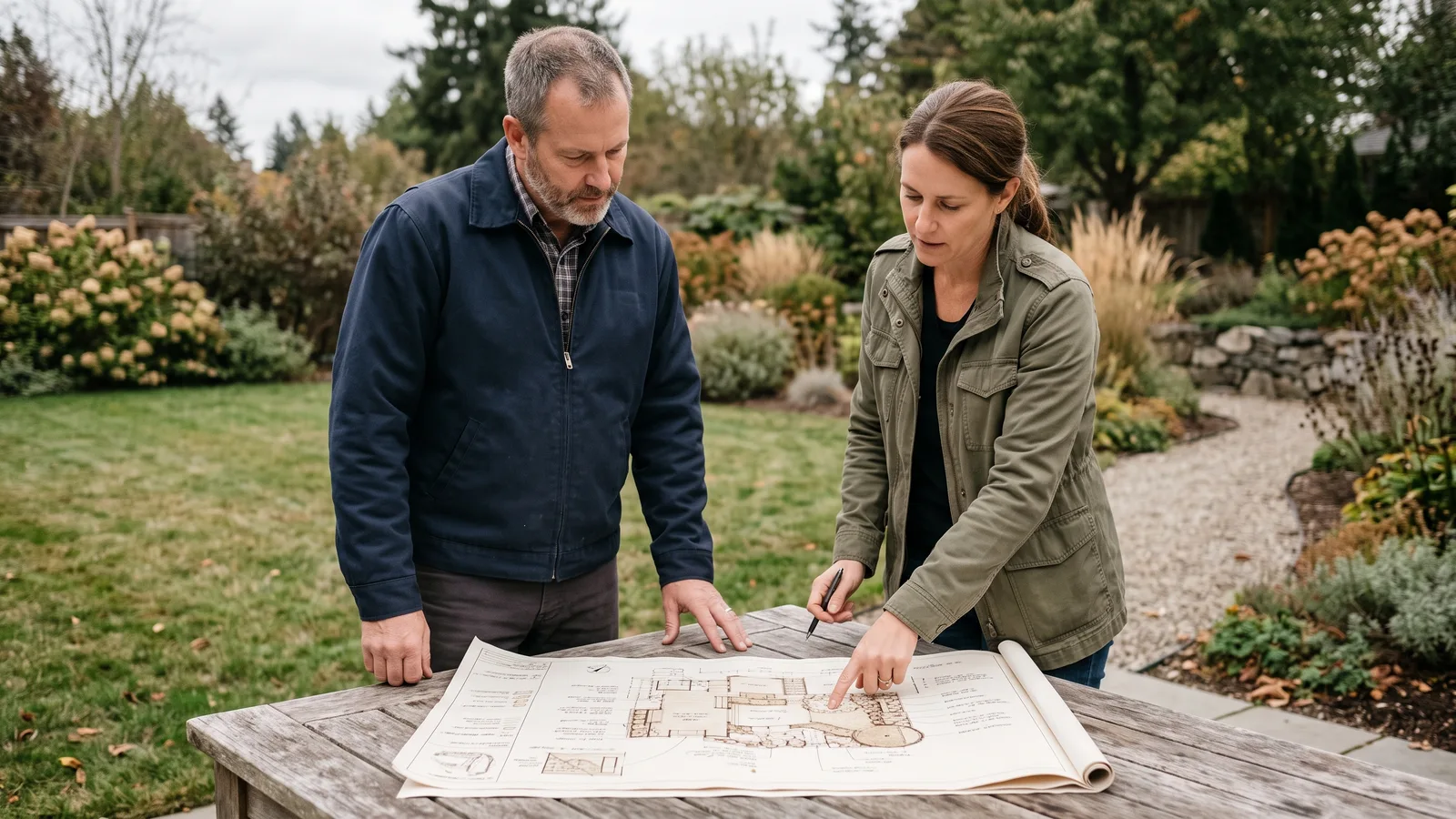
Few residential trades sit inside as dense a web of natural referral partners as outdoor living construction. A pool builder finishing a project has a client already asking about a shade structure nearby. A landscape architect drafting a master plan needs a build partner to execute it. A realtor staging a listing wants the backyard to show well before the sign goes up. Most of these partners find a firm through its outdoor living services page before any personal introduction ever happens, which is worth remembering when deciding where to send a referral partner looking for proof of past work. Most firms still treat these relationships as occasional favors instead of what they actually are, a structured lead channel worth building deliberately. A single strong relationship with a pool builder in a busy neighborhood can produce steadier volume over a year than an entire quarter of cold outreach, simply because the trust transfer from an existing relationship happens before the first phone call ever takes place.
Why outdoor living has more natural referral partners than most trades
A homeowner rarely thinks about a backyard in isolated trade categories. They think about the whole space, and the professionals who touch that space, pool builders, landscape architects, and real estate agents preparing a home for sale, are all talking to the same household at points that naturally overlap with an outdoor living project. That overlap is what makes this referral network different from a generic contractor-to-contractor exchange, the partners are not adjacent by coincidence, they are adjacent because they are solving pieces of the same project.
Pool builders, landscape architects, and realtors each offer something different
A pool builder's client has just committed to a major backyard investment and is primed to think about what surrounds the pool, the deck, the shade, the fire feature. A landscape architect is often the first professional a homeowner brings in on a larger master plan and genuinely needs a construction partner capable of executing the structural and hardscape elements of that plan. A realtor works on a much shorter timeline, usually pre-listing, and values a partner who can turn around a modest, sellable backyard improvement quickly rather than a full transformation. Treating all three the same way wastes the specific value each one offers. A pitch built for a pool builder, focused on shared design vision and long-term project size, will fall flat with a realtor who cares mostly about turnaround speed and a clean, photograph-ready result before a listing goes live.
Structuring a referral relationship instead of a one-off favor
A referral that happens once, because a project manager happened to mention a name, is not a channel, it is luck. A structured relationship starts with a direct conversation about how leads will flow both directions, what each side needs from the other, and how referred leads get tracked and followed up on. Without that structure, even a genuinely strong partnership produces an occasional lead rather than a dependable stream.
What each partner needs to keep referring
Referral partners keep referring when the relationship is reciprocal and low-friction. That means several things in practice:
- Fast, visible follow-up. A partner who sends a referral wants to know the lead was contacted promptly, not wonder weeks later whether anything happened. A quick confirmation back to the partner closes that loop.
- Reciprocity, not a one-way pipeline. A relationship where leads only flow toward the design-build firm rarely survives past the first few referrals. Actively sending leads back, a client asking about a pool or professional landscaping, keeps the exchange balanced.
- Clear scope boundaries. A partner needs to trust that a referred client will not be sold services that compete with the partner's own offering, which means agreeing upfront on where each firm's scope starts and ends.
Coordinating design decisions across partner scopes
Unlike a simple lead handoff, an outdoor living referral often requires actual design coordination. A covered structure built without input from the pool builder can end up shading the pool deck at the wrong time of day. A hardscape plan built without the landscape architect's master plan can conflict with drainage or planting beds already specified. The firms that get the most out of these partnerships treat early coordination meetings as part of the relationship, not an extra step, since a well coordinated project reflects well on every partner involved and produces exactly the kind of whole-space result worth photographing for future marketing.
Tracking referral volume like any other lead channel
A referral channel that is not tracked cannot be improved or even properly credited. Logging referral source at intake, the same way a paid ad source would be logged, shows which partners are actually producing signed work over time rather than relying on memory or general impressions of who has been helpful. This data also identifies which partnerships deserve more active investment, a coordinated co-marketing push, a shared open house, a joint listing on each firm's website, versus which ones stay informal.
Reviews and referrals reinforce each other
A structured referral network also compounds with repeat revenue from past clients, since a homeowner who returns for a second phase of backyard work is often the same homeowner a pool builder or landscape architect referred years earlier. The channel keeps paying long after the first project closes.
Ready to talk numbers on your own pipeline?
On the strategy call, we'll lay out the plan we'd run for your business and talk through how it fits your market.
Final thought
Pool builders, landscape architects, and realtors are not competitors to a design-build outdoor living firm, they are working the same backyard from a different angle. Treating those relationships as a structured, reciprocal, tracked channel rather than a list of names to call when things are slow turns a source of occasional luck into one of the steadiest lead pipelines available to this trade. The investment is mostly relationship maintenance, not advertising spend, which makes it one of the highest-return channels a design-build firm can build once the first few partnerships are in place.
Tagged