
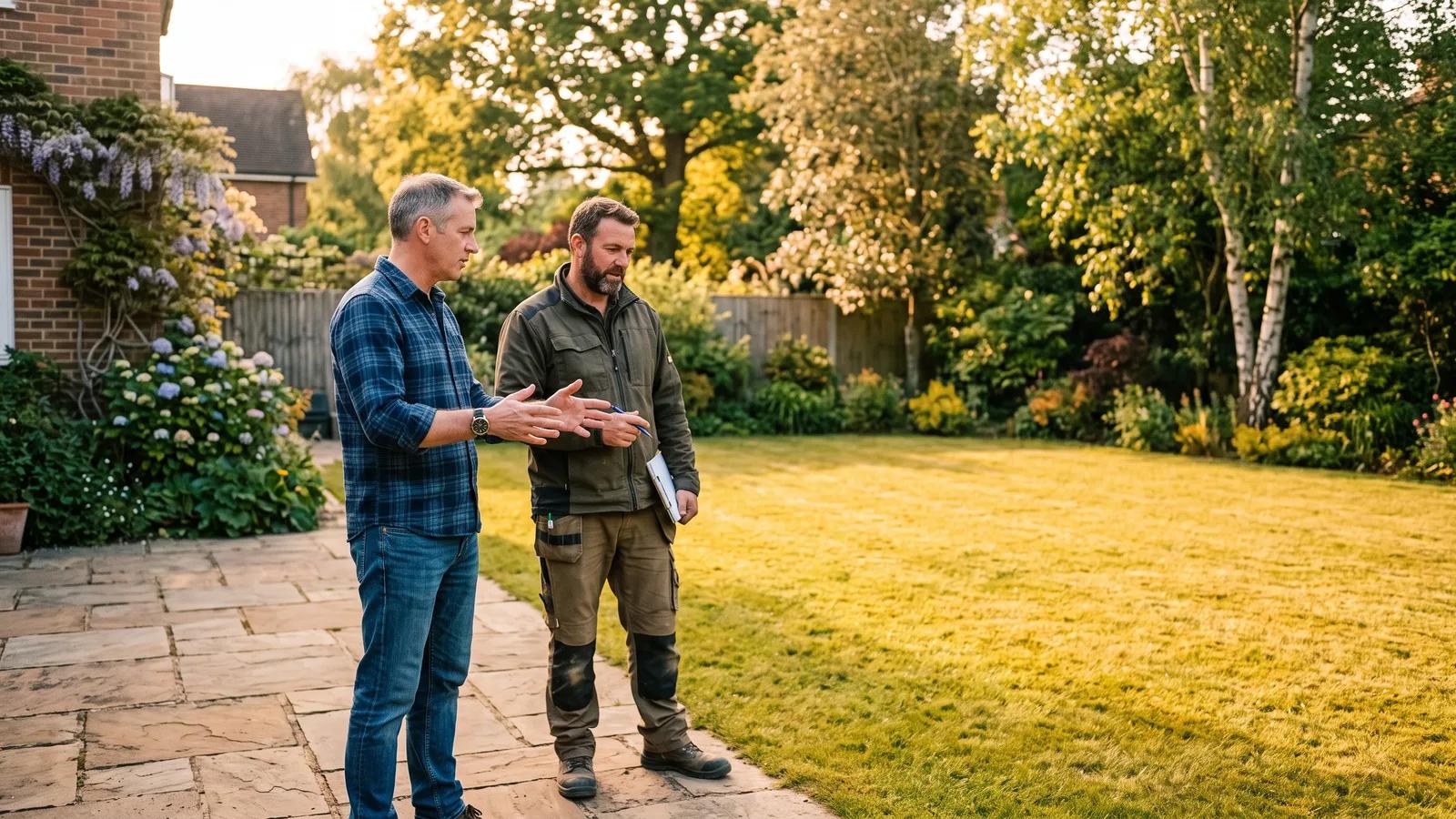
The final walkthrough on a covered patio or full backyard build feels like the end of the relationship, a signed completion form, a last invoice, a handshake. For most design-build firms it is treated that way too, and that is a mistake. A hardscape and structure client today is very often a fire feature, lighting, or phase-two client in a year or two, and a firm that plans for that instead of hoping for it captures revenue that would otherwise go to whichever competitor calls first next season.
Why one project often implies several more over time
Backyard transformations are rarely built to a homeowner's absolute final vision on the first pass. Budget constraints, timing, and simple prioritization mean most homeowners build the core of the space first, the patio, the covered structure, the primary hardscape, and defer the fire feature, the outdoor kitchen, or the lighting package to a later phase. That deferral is not a lost sale, it is a scheduled future project that the original contractor has a natural right of first refusal on, provided the relationship is maintained rather than left to fade after the final invoice clears.
Phased build plans that were never meant to end at phase one
The strongest version of this pattern starts during the original design consultation, not after the project is finished. When a design consultant lays out a full vision for the backyard and explicitly frames the current contract as phase one of that vision, with phase two named and roughly scoped even if it is not scheduled, the homeowner leaves with a mental model of an ongoing relationship rather than a single transaction. That framing alone makes a follow-up conversation eighteen months later feel like a continuation instead of a cold pitch.
This is also where seasonal climate differences between the United States and Canada matter for how a phase-two plan gets scheduled. A firm building in a milder climate might reasonably expect a homeowner to move on phase two within twelve to eighteen months, while a firm building in a region with a short outdoor season and a long winter shutdown often sees that decision stretch across two or three build seasons instead. The follow-up cadence should reflect that real timeline rather than assuming every region moves at the same pace.
Maintenance and seasonal refresh as a real revenue line
Beyond phased expansion, outdoor structures and hardscape genuinely need periodic attention, sealing pavers, restaining or resealing wood and composite structures, adjusting lighting or fire feature components after a season of weather exposure. Few home services purchases open this many natural, spaced-out touchpoints. Treating this maintenance need as a real service line, with its own outreach cadence, turns what many firms leave as an informal favor into a scheduled revenue stream that also keeps the firm's name in front of the homeowner every season.
- Sealing and staining reminders. A yearly or every-other-year outreach timed to the season a homeowner's specific materials need attention, sent as a helpful reminder rather than a sales pitch.
- End-of-season structural check-ins. A brief offer to inspect fasteners, footings, and roofing components before winter, which both protects the homeowner's investment and gives the firm a legitimate reason to be back on the property.
- Phase-two design refresh. Roughly a year after project completion, a check-in that revisits the original phased vision and asks whether the homeowner is ready to move forward with the deferred piece, often the same fire feature or lighting bundle discussed but not built the first time around.
Repeat clients are cheaper to reach
Assigning a maintenance line an actual name and a place on the service menu, rather than leaving it as an informal favor a crew handles when asked, changes how homeowners perceive it too. A homeowner who understands that sealing and seasonal inspection are a defined, recurring service is more likely to book it proactively than one who only thinks to call when something already looks worn. That shift alone, from reactive favor to scheduled service, is often what turns a maintenance line from an occasional afterthought into dependable, repeat revenue.
Structuring proactive outreach without feeling like a sales pitch
The line between a helpful check-in and an unwelcome sales call matters here. Outreach that leads with the homeowner's interest, a seasonal maintenance reminder, a note that a supplier just released a new fire feature line that fits the deferred phase-two plan, reads as service. Outreach that opens with “are you ready to buy phase two” reads as a pitch and tends to underperform. Building this into a simple, repeatable cadence, timed alongside review requests rather than as a separate scramble, keeps the outreach consistent without requiring a dedicated follow-up team.
Protecting repeat revenue from competitor outreach
A satisfied customer is not automatically a loyal one. If a competitor's ad for fire features or lighting reaches that same homeowner first, next season's project can go elsewhere even after a strong original experience. The defense is straightforward: stay visible through the maintenance and phase-two outreach cadence above, and make sure the completed project itself is protected by clear warranty communication that gives the homeowner an ongoing reason to call the original firm rather than shop a new one when something needs attention. A firm that is easy to reach and known to stand behind its work has a real structural advantage over a competitor's cold ad, regardless of price.
1 in 3
Illustrative share of finished backyard projects that were originally scoped as phase one of a larger vision. A firm that names phase two at the consultation stage keeps far more of that future revenue in-house.
Ready to talk numbers on your own pipeline?
On the strategy call, we'll lay out the plan we'd run for your business and talk through how it fits your market.
Final thought
A finished backyard project is not the end of a customer relationship, it is the beginning of one, provided a firm treats it that way. Framing phase-two work during the original consultation, building a genuine maintenance outreach cadence, and protecting that relationship with strong warranty communication together turn a single high-ticket transaction into years of lower-cost, higher-trust repeat revenue. Firms that build this deliberately capture value that firms treating every project as a one-time sale simply leave on the table.
Tagged