
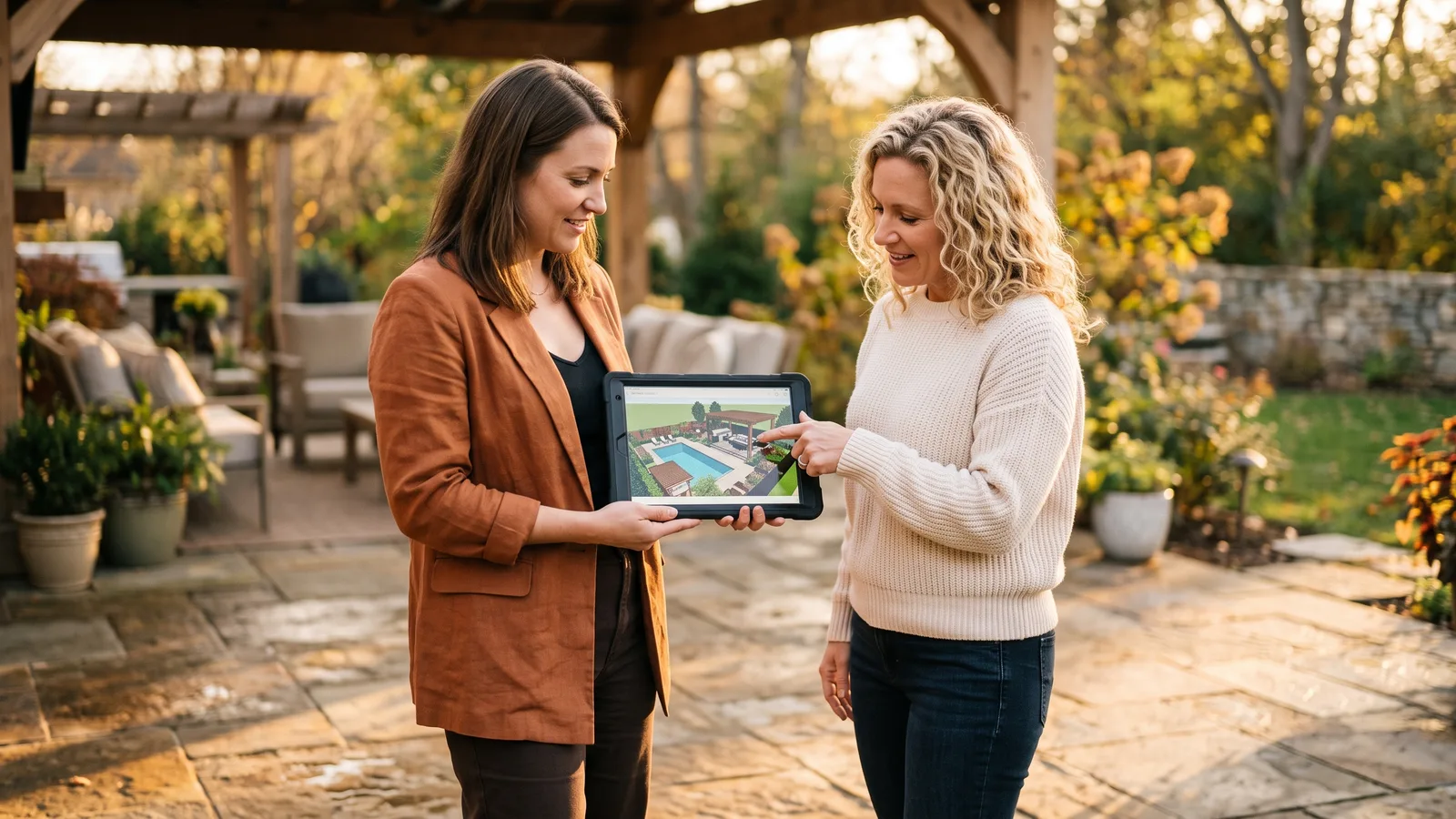
A homeowner who walks into a design consultation with a saved photo of a specific fire pit layout or a particular pergola roofline is not a blank slate, they already have a trend in mind. Ignoring that reference loses the room fast. But a firm whose every ad campaign chases whatever look is newest starts to look less like an authority and more like it does not have an opinion of its own. The two problems look opposite but come from the same place, treating trend awareness as a marketing decision instead of a design one.
Why homeowners arrive with a trend already in mind
Renovation media and social platforms move faster than any single design-build firm's project cycle, and homeowners spend months absorbing that content before ever picking up the phone. By the time they book a consultation, most have a folder of saved images, a rough sense of the materials they like, and often a specific phrase in mind, a particular roofline shape, a stacked stone fire feature style, a certain lighting look. Dismissing that research or steering the conversation away from it reads as condescension. Acknowledging it and building the conversation around it, even when the final design ends up somewhere different, keeps the homeowner engaged instead of defensive.
The difference between covering a trend and chasing it
Covering a trend means talking about it, showing examples of it, and helping a homeowner understand whether it fits their home. Chasing a trend means restructuring the brand's identity around whatever look is currently popular, changing the visual language of ads, the showroom display, and the sales pitch every time a new aesthetic gains traction. The first builds authority. The second signals that the firm does not have a design point of view of its own, which is a strange thing to project when the entire service being sold is design expertise.
Content that references trends without over-committing the brand
The safest structure is a clear separation between trend content and brand content. A blog post or social series that walks through a current design direction, why it is popular, what it costs to execute well, which homes it suits, can reference the trend directly without the firm's own visual identity shifting to match it. The firm's logo, color palette, and core messaging stay constant. The trend lives inside the content as a topic being discussed, not as a rebrand of the business covering it.
- Name the trend honestly. Say what it is, where it came from, and why homeowners are drawn to it, rather than presenting it as the firm's own new signature look.
- Be honest about durability. Some trend elements age well structurally and some are mostly cosmetic, and telling a homeowner which is which builds more trust than enthusiasm alone.
- Show, do not force, fit. Note which home styles a trend suits well, and just as importantly, which ones it does not, rather than pitching it as universally right.
Using trend content in the winter planning season
Design trend content performs especially well during the winter research window, when homeowners are browsing ideas rather than comparing final quotes. This is the same window covered in the twelve-month marketing calendar, and trend-focused posts and creative fit naturally into that phase because they meet the homeowner where they already are, forming opinions, not yet ready to sign. A homeowner who spends winter reading a firm's honest take on which backyard design directions are holding up and which are fading arrives at the spring consultation already trusting that firm's judgment.
Pairing trend posts with portfolio proof
Trend content works best paired with real finished projects, not stock imagery or rendered concepts. A post discussing a popular fire feature layout lands harder next to an actual finished project shot the same way, which is why disciplined portfolio photography standards matter beyond the project gallery itself, they become the proof behind every trend claim the firm makes in content. A trend claim with no photographic backing reads as commentary. The same claim next to a completed backyard reads as expertise.
Keeping the core brand identity stable across trend cycles
A few practices keep a firm's brand from drifting every time a design cycle turns over, starting with a firm's broader outdoor living services page staying the fixed reference point while trend content around it keeps moving:
- Separate the trend voice from the brand voice.Trend commentary can be current and even a little opinionated, while the firm's core brand messaging, what it stands for and who it serves, stays fixed across every campaign.
- Keep the showroom as the stable reference point.A display space built around durable material and structural choices gives homeowners a physical anchor that does not need to be rebuilt every time a trend shifts, even while trend content online keeps moving.
- Let ad creative rotate, not the brand foundation. Creative angles in paid campaigns can test different trend hooks without touching the underlying brand positioning, logo, or messaging pillars that stay constant year over year.
The brand-whiplash risk
Ready to talk numbers on your own pipeline?
On the strategy call, we'll lay out the plan we'd run for your business and talk through how it fits your market.
Final thought
Homeowners want a design-build firm that understands current trends and has an honest opinion about which ones will still look good in a decade. They do not want a firm whose own identity seems to change every season. Covering trends in content, backed by real portfolio work, builds exactly the authority a firm needs during the research phase, while keeping the brand's core identity untouched protects the trust that gets a project across the finish line once the trend has already faded into the next one. The goal is never to predict which look wins next season, it is to be the firm homeowners trust to tell them the truth about whichever look they arrive already liking.
Tagged