
Most contractors ask for a review once, at the final walkthrough, when the crew is packing up trucks and the homeowner is already thinking about the next thing on their list. A backyard transformation runs for weeks, which means that single ask ignores every other moment along the way when the homeowner was genuinely excited about the project, moments that make for far better reviews than a rushed request at the very end. A review written while packing up mentally for the next task on a busy homeowner's list tends to be short and generic. A review written at the peak of genuine excitement tends to be specific, detailed, and far more persuasive to the next homeowner reading it.
Why one review-request moment is not enough for a long build
A single-visit service call, a repair or a one-day install, only has one natural review-request moment, right after the work is done. A multi-week design-build project is different. Enthusiasm does not build steadily toward one peak at the end, it spikes at several distinct points, when the hardscape first takes visible shape, when a fire feature is lit for the first time, when the family uses the finished space for the first evening. Treating a multi-week project like a one-day job wastes most of those peaks and leaves the firm relying on whatever mood the homeowner happens to be in during the final walkthrough. That is a narrow window to gamble the whole review strategy on, especially since a final walkthrough often comes with a punch list of small remaining items, which is not always the moment a homeowner feels most generous.
Mapping review-worthy milestones across the project timeline
Rather than waiting for the end, a firm can plan review requests around three natural high points that occur at different stages of most projects.
The hardscape reveal
The moment the paver pattern or poured surface is finished and visible for the first time is often the single biggest emotional shift in the whole project, the yard suddenly looks like something real rather than a construction zone. A short, low-pressure message at this point, checking in on how things are going rather than directly asking for a review, keeps the relationship warm and sets up a natural request later without asking for anything twice in the same way. Even a short photo update from the crew, sent the same day the surface is finished, does more for the relationship at this stage than any formal review link would.
First use of the finished space
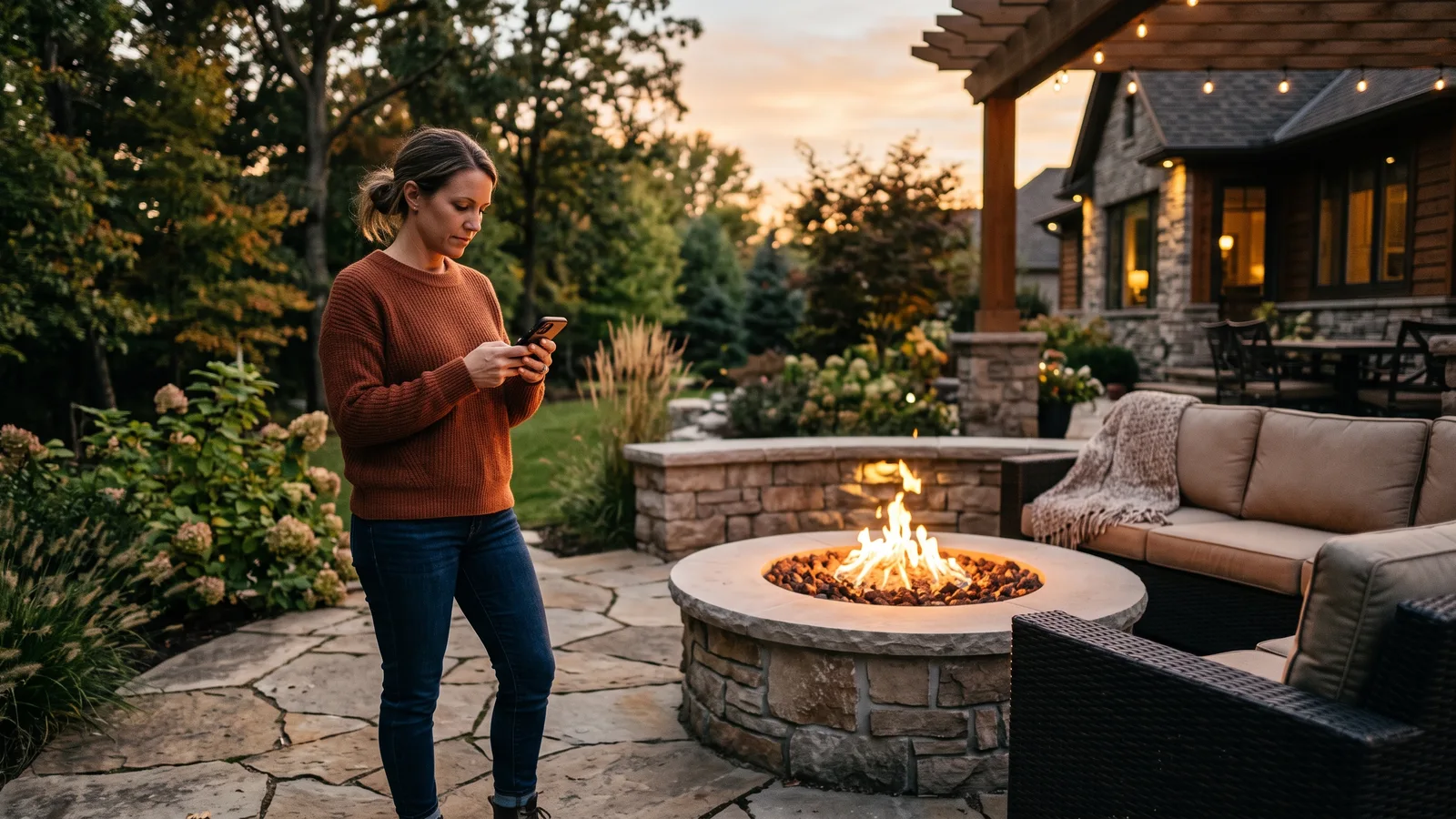
Once the structure, lighting, and any fire feature are complete but before the absolute final walkthrough, many homeowners host their first evening in the new space, often before every last punch-list item is closed out. This is frequently the most emotionally charged moment of the entire project, seeing the design finally function as intended rather than existing as drawings and framing. A review request timed to this moment, a few days after the first real use, tends to produce more detailed, enthusiastic feedback than one requested the same day the crew physically leaves.
The final walkthrough
The final walkthrough is still worth a request, but it should be framed differently than the earlier ones, less “how do you feel about the project” and more “now that everything is complete and you have had a chance to live with it, would you be willing to share that experience.” Because earlier touchpoints have already built the relationship, this final ask lands as a natural close to the process rather than a cold request from a firm the homeowner has not heard from since the crew left.
Spacing requests so they do not feel repetitive
Three touchpoints only work if they are clearly distinct from each other, not three versions of the same message. A few practices keep the sequence from feeling like nagging:
- Vary the ask, not just the timing. The hardscape-reveal message checks in without asking for anything, the first-use message asks for a review directly, and the final walkthrough message asks for a specific detail, like the favorite part of the finished space, that produces richer feedback.
- Tie each request to a real milestone. A message sent because a milestone genuinely happened, not on a fixed calendar countdown, reads as attentive rather than automated, even when the underlying process is systematic.
- Stop asking once a review lands. A homeowner who leaves a review at the hardscape-reveal stage should not receive another direct ask later in the project, a thank-you and continued good service are enough from that point forward.
Reviews compound with referrals
This milestone approach also fits neatly into a firm's broader annual marketing calendar, since summer is when the largest volume of projects reaches these milestones at once, making it the busiest review-collection season of the year even while paid lead generation activity naturally pulls back.
The strongest of these reviews are worth featuring directly on a firm's outdoor living services page, since a homeowner comparing firms during the research phase reads that page before ever picking up the phone.
Reviews collected across a multi-week build also tend to describe the process, not just the finished product, which is exactly the kind of detail a homeowner considering ongoing maintenance or a future phase wants to read before committing to a returning relationship with the same firm.
Ready to talk numbers on your own pipeline?
On the strategy call, we'll lay out the plan we'd run for your business and talk through how it fits your market.
Final thought
A multi-week build is not a liability for review collection, it is an advantage most single-visit trades do not get. Mapping three distinct milestones, the hardscape reveal, first use, and the final walkthrough, and varying the ask at each one produces more reviews, richer detail in those reviews, and a stronger relationship with the homeowner than a single request squeezed into the last five minutes on site ever could. Build the sequence into the project management process once, alongside the crew schedule and the client communication plan, and it runs on its own for every project after that.
Tagged