
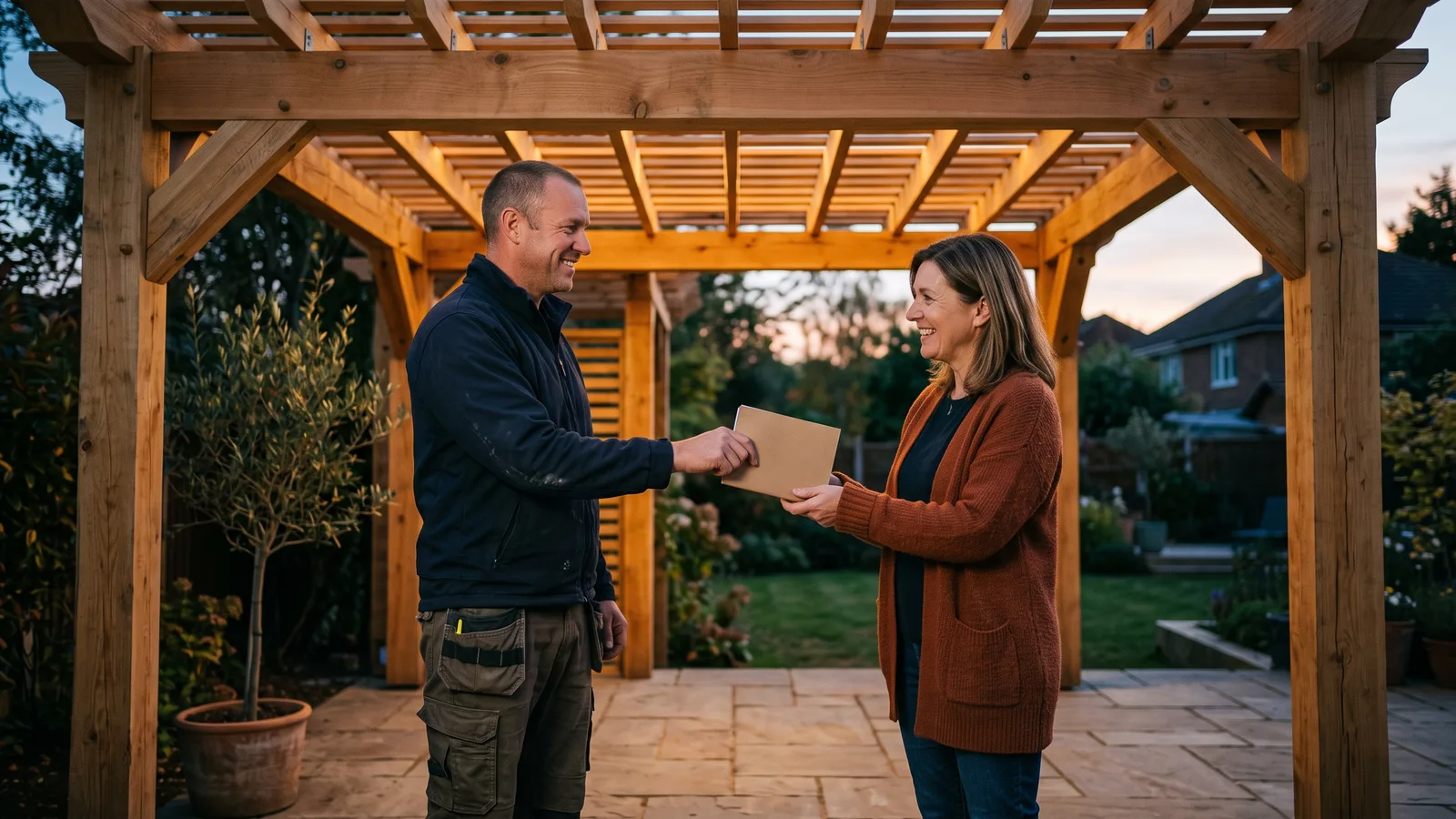
A review request sent three days after an install competes with a dozen other emails in the customer's inbox, and usually loses. The moment a pergola customer is most enthusiastic is the final walkthrough itself, standing under a structure they can finally see finished and in use. Building the review ask into that moment, with a specific prompt about what to mention, produces more reviews and better ones than a generic follow-up ever will.
Why pergola reviews lag behind the completed install
Reviews matter more for a pergola company than for many other home improvement categories, since a pergola is a discretionary purchase a homeowner spends real time researching before ever picking up the phone. A search results page thin on recent reviews reads as a smaller or less established operation, even when the crew behind it is excellent, simply because the proof a buyer is looking for is not visible yet.
Most review requests go out through an automated email or text sent once the invoice closes, days after the crew has already moved on to the next job. By then, the emotional peak of seeing the finished structure has faded into ordinary life, and the request competes with everything else in a busy inbox. The customers who still leave a review at that point are usually the most enthusiastic ones, which means the review pool skews toward a small, self-selected group instead of reflecting the typical experience.
That skew matters more than it seems. A review pool built only from the most enthusiastic customers tends to read as generic praise, great crew, love it, without the specific detail that actually helps a hesitant buyer decide. Collecting reviews closer to the moment of completion, from the full range of customers, not just the most vocal ones, produces a more honest and more useful picture of what working with the company is actually like.
The best moment to ask for a review
The final walkthrough is the single best moment available. The structure is complete, the customer is standing under it, often for the first time seeing the whole thing without tools and materials scattered around it, and the installer is right there to answer any last question. Enthusiasm is at its highest point of the entire project, and asking directly, in person, while that feeling is fresh, converts at a rate no email ever matches. It also avoids the awkwardness of asking a customer to think back and reconstruct their experience days later, when the details that made the project stand out have already blurred into a general impression.
What a useful pergola review actually mentions
A generic five-star rating helps a little. A review that mentions something specific, the crew finished in two days as promised, the louvered roof works exactly as demonstrated, the yard was left clean, helps far more, because future buyers researching the same decision are looking for exactly those details. A simple prompt during the ask, something like mentioning the timeline or the part of the project they were most nervous about, steers the review toward language that actually persuades the next reader. A customer who was nervous about a motorized roof performing as promised, for instance, and now mentions in the review that it has worked exactly as demonstrated, is answering the exact question the next hesitant buyer is silently asking.
Building the ask into the final walkthrough
The ask works best as a natural extension of the handoff, not a separate sales moment. Right after the same walkthrough where the crew captures the finished photos, the installer can hand over the care guide and mention the review request in the same breath, this project turned out great, if you have two minutes it would really help other homeowners deciding on the same thing if you left a quick review of how it went. That framing keeps the ask genuine rather than transactional. Handing the customer a card or a short link right there, rather than promising to send one later, removes the last bit of friction between the intention to leave a review and actually doing it, which is where most good intentions quietly die.
Make the ask specific, not generic
Turning review language into future ad copy
Reviews collected this way become more than social proof sitting on a profile page, the specific phrases customers use, finished exactly when they said, handled the permit paperwork for us, survived the first real storm without a problem, are language a dealer could never write convincingly on their own but can quote directly in ad copy and landing pages. That same enthusiastic moment under the finished structure is also the natural opening to raise a referral conversation, and to flag upcoming add-ons like screens before the order that arrives two seasons after the build catches everyone off guard.
Over a full season, a company that consistently asks for reviews at the walkthrough builds a much larger and more current profile than one relying on automated follow-ups alone. That volume matters for search visibility as much as it matters for persuasion, a steady stream of recent, specific reviews signals an active, trustworthy business in a way a handful of reviews from several years ago cannot.
Ready to talk numbers on your own pipeline?
On the strategy call, we'll lay out the plan we'd run for your business and talk through how it fits your market.
Final thought
Reviews are not a marketing task to automate away from the crew, they are a conversation that works best face to face, at the exact moment the customer is proudest of the decision they made. Building a simple, specific ask into the final walkthrough turns review collection from a hit-or-miss email campaign into a consistent part of how every job ends.
Tagged