
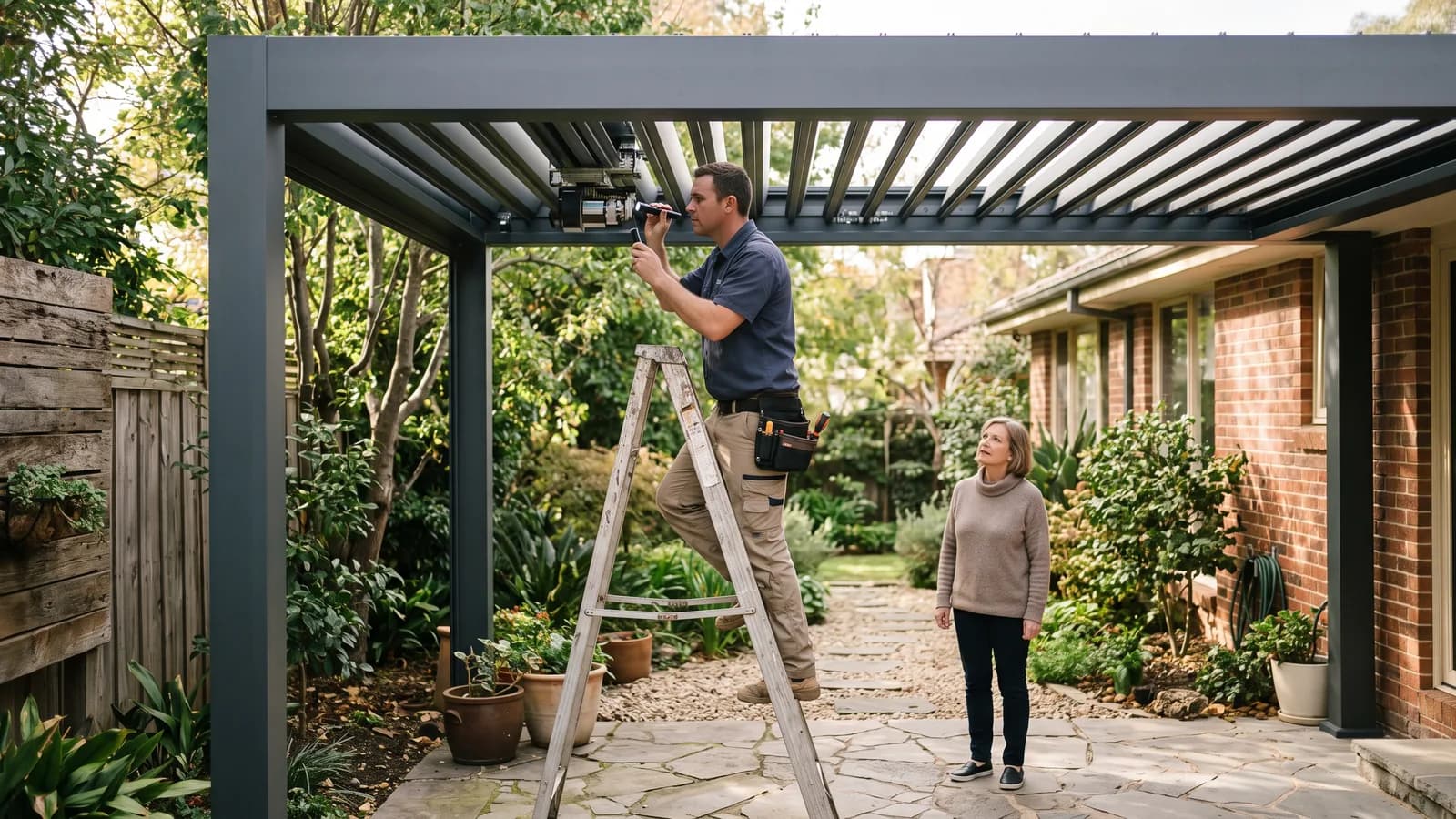
Most pergola dealers treat the sale as finished the moment the crew packs up after final walkthrough. That leaves real revenue sitting on the table. A customer who bought a standard cedar build often adds screens or lighting a season or two later, and a motorized roof system eventually needs service. None of that happens on its own, it takes a simple system for staying in touch that does not feel like a sales pitch.
The math on this is worth sitting with for a moment. Acquiring a new customer costs real ad spend and rep time regardless of how efficient the funnel is. A dealer who lets that relationship go quiet the day the crew drives away is effectively paying full acquisition cost for every future dollar of revenue too, even the dollars that would have come easily from a customer who already trusts the business and just needs a reason to call back.
Where repeat revenue actually comes from after the install
A customer's relationship with their pergola keeps changing after the crew leaves. They live under it through a full season and notice what is missing, bugs at dusk that a screen would solve, evenings that end early because there is no lighting, a summer storm that makes them wish the roof closed automatically instead of the fixed style they chose to save money the first time around. Each of those observations is a legitimate upgrade opportunity, but only if the dealer is still the name that comes to mind when the customer decides to act on it.
A customer's network is also a quiet source of the same repeat opportunity. A neighbor who admires the finished pergola and asks who did the work is a referral in the making, but only if the original customer has a reason to think about the dealer again rather than having to dig through old paperwork to remember a name. Staying in touch keeps the dealer top of mind for that conversation as much as it does for the customer's own next purchase.
Screens, lighting, and seasonal service requests
Screens and privacy panels are the most common add-on, usually requested once a customer has lived through a season of bugs or wanted more shade later in the day than the roof alone provides, and this is the same conversation that structuring the screens, lighting, and heater upsell at the original consultation already introduced once, it is simply happening a season or two later than the original sale. Lighting upgrades follow a similar pattern, a customer who skipped integrated lighting at install time to control the initial budget often reconsiders once they see how much more the space gets used after dark on a neighbor's structure. Motorized roof systems bring a third category entirely, seasonal service and eventual motor or sensor maintenance, which clear warranty communication sets the customer up to expect rather than be surprised by.
Building a simple system to stay in touch after year one
The system does not need to be complicated to work. A note in the customer file logging what was installed and what was discussed but deferred, screens considered but skipped, lighting mentioned in passing, gives a dealer something concrete to reference months later instead of a generic check-in. A seasonal message timed around typical add-on demand, not a fixed calendar date, tends to land better than a random reminder disconnected from when a customer is actually thinking about their outdoor space.
The deferred item is the easiest upsell
Timing outreach around the season, not the calendar date
A message that arrives right as the weather turns warm again lands very differently than one sent in the middle of winter. In most of the United States that window opens earlier than it does across much of Canada, so a dealer working both sides of the border should time outreach against the regional season rather than a single fixed month applied everywhere. Reaching out just before the season a customer is about to start using their pergola again, rather than on the anniversary of the install date, is what makes the message feel relevant instead of automated.
Treating repeat revenue as part of the original unit economics
Once a system for staying in touch is actually running, the value of an original install stops being just the number on the first invoice. A customer who adds screens one season and lighting the next, and eventually books a service call on a motorized roof, is worth meaningfully more over time than the same install with no follow-up at all. That shift changes how a dealer should think about acquisition cost too, a program built the way a manufacturer dealer program is structured, with co-op support and local proof layered on top, becomes easier to justify once repeat revenue is counted as part of what a single customer relationship actually returns.
None of this requires new software or a dedicated role at a small operation. A shared spreadsheet noting what was installed, what was discussed but deferred, and when the next seasonal outreach is due captures most of the benefit. The discipline is in actually using it consistently, not in the sophistication of whatever tool is tracking it.
Ready to talk numbers on your own pipeline?
On the strategy call, we'll lay out the plan we'd run for your business and talk through how it fits your market.
Final thought
The install is not the end of the relationship, it is the beginning of a longer one that most dealers leave to chance. A simple system for tracking what was deferred, timing outreach to the season, and following up on service needs before a customer has to chase the dealer down turns repeat revenue into something closer to a habit. Over a few years, that habit changes the real return on every customer acquired, not just the first one.
Tagged