
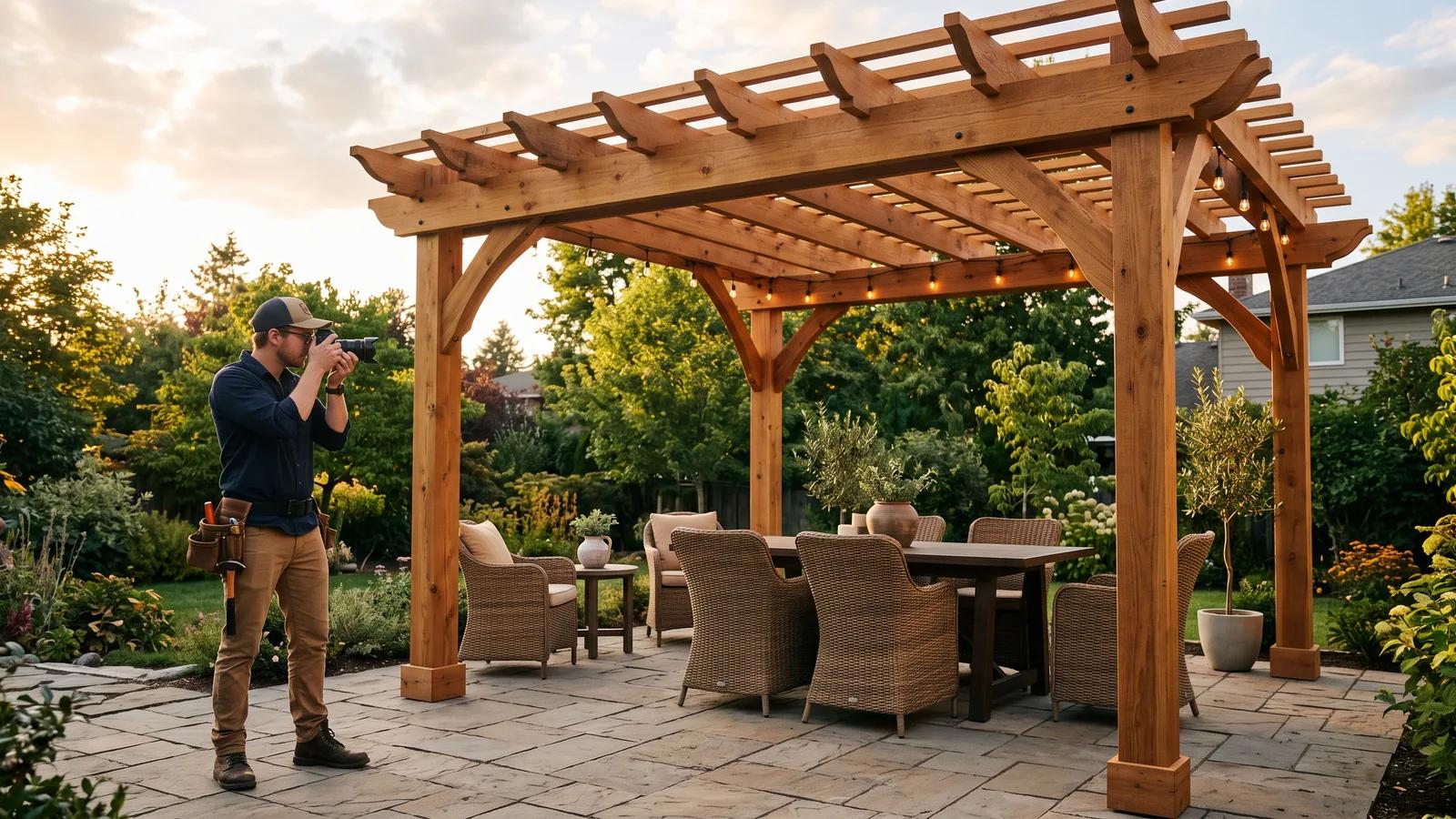
A finished pergola is the best advertising a dealer will produce all season, but only if someone captures it properly before the crew packs up and drives away. Most jobs end with a quick phone photo taken in flat midday light that undersells the structure and the shade it actually creates. A simple, repeatable checklist turns every completed install into real content instead of a one-off snapshot that never leaves a phone's camera roll.
Why photography sells the pergola before the rep does
Every dealer running ads is competing for the same handful of seconds a homeowner spends scrolling past a feed. In that window, the photo either stops the scroll or it does not, and no amount of clever ad copy compensates for an image that looks like it was taken by accident. Treating photography as a marketing input, not an afterthought, changes how much of that scroll-stopping work the rest of the campaign has to do.
The next buyer's first impression of the work rarely comes from a testimonial, it comes from a photo in an ad or on a landing page. A weak photo, harsh shadows, a cluttered yard, a phone held at an awkward angle, undercuts the quality of the actual craftsmanship underneath it. Buyers cannot inspect joinery through a screen, so the photo is doing the selling the finished product would do in person.
This matters more for a pergola than for most home improvement categories, because the product is defined by open space and light passing through it, not a sealed box like a window or a door. A bad photo does not just look unprofessional, it fails to communicate the actual thing being sold, dappled shade, an open-air gathering space, a structure that changes the way a yard gets used. A strong photo communicates all of that in a glance.
What a usable before-and-after photo actually captures
A usable before photo shows the bare yard from roughly the same angle the after photo will use, which lets the transformation read clearly rather than requiring the viewer to imagine it. The after photo needs the full structure visible, not cropped at the edges, with enough of the surrounding yard in frame to give a sense of scale. A tight shot of just the roofline might look dramatic but tells a prospective buyer almost nothing useful about the finished space.
A second angle matters almost as much as the primary shot. One photo taken straight on and one taken from an offset corner together give a marketing team more options later, the corner angle often reads better in a square social crop, while the straight-on shot works better as a wide landing page hero image. Crews do not need to think through the eventual use case on site, they just need to capture both angles so someone else can decide later.
Lighting, angle, and staging on install day
Midday sun creates hard shadows that flatten detail and wash out the wood grain or aluminum finish. Early morning or late afternoon light is softer and more flattering, and a crew that plans the final photo for that window, even if it means a short wait after the last fastener goes in, gets a dramatically better result. Staging matters too, a couple of outdoor chairs and a small table placed under the structure does more to sell the lifestyle than an empty frame ever will.
Weather cooperation is not always available, and a crew finishing under an overcast sky should not skip the photo entirely. Flat light is less flattering than golden hour but still produces a usable image, and a quick return visit a few days later, timed for better light, is worth the ten-minute trip for a job that will anchor a season of ad creative.
Building a repeatable photo checklist for every crew
Consistency across crews is what turns individual good photos into a real content library. A short written checklist, shoot before clearing the site, match the before and after angle, shoot during golden hour when the schedule allows, stage furniture if any is on site, removes the guesswork and makes the habit stick even on a crew's busiest week. The same discipline that produces a strong photo also produces the kind of finished-product moment that makes asking for a review at the final walkthrough feel natural rather than tacked on.
Five minutes, real return
Turning a strong photo library into ad and landing page assets
A growing library of well-shot before-and-afters does more than fill a website gallery. It becomes the raw material for seasonal ad creative, landing page hero images, and the kind of visual proof that supports referral conversations with deck builders and landscape designers who want to see real finished work before sending a client. It also strengthens a showroom or display model strategy, since a display model backed by a library of real installs in real backyards reads as far more credible than the display model alone.
Organizing the library matters as much as building it. A simple folder structure by month and material, cedar, aluminum, motorized, lets whoever handles marketing pull a relevant image quickly instead of scrolling through months of unsorted photos looking for one good shot of a specific build type when a new ad concept needs it that week.
Ready to talk numbers on your own pipeline?
On the strategy call, we'll lay out the plan we'd run for your business and talk through how it fits your market.
Final thought
Photography is not a task to squeeze in when there is time left over, it is part of the job that produces every job after it. A crew that treats the last five minutes on site as seriously as the install itself builds a marketing asset library that compounds with every completed pergola, instead of starting from zero every time a new campaign needs a fresh image.
Tagged