
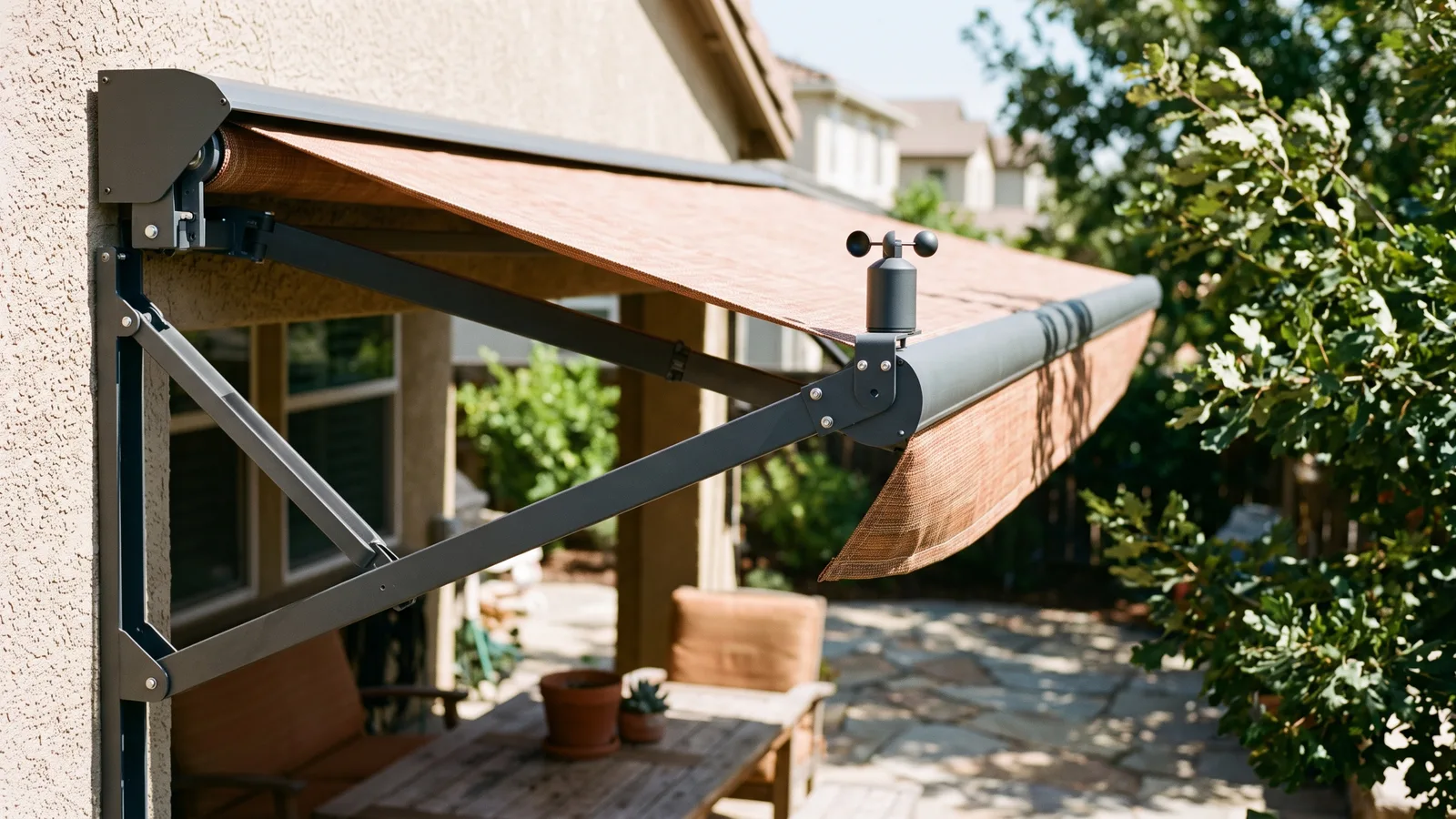
Sensor technology on a motorized retractable awning gets pitched the wrong way more often than not: as a line item on a feature list instead of an answer to a specific worry a homeowner already has. The wind sensor and the sun sensor each solve a real problem, and naming that problem out loud does more to move a sale than any description of how the hardware itself works.
Why sensor technology gets pitched as a spec instead of a benefit
It is easy to fall into spec language when explaining a motorized upgrade: automatic retraction, wind speed thresholds, sunlight detection. All of that is accurate, and none of it tells a homeowner why they should pay more for it than a manual crank unit. A homeowner does not lie awake worrying about wind speed thresholds. They worry about specific things happening to their own house, and the sales conversation lands better once it connects the technology to those specific worries instead of describing the mechanism.
This pattern shows up across a lot of product-heavy sales conversations, not just awnings, but it is especially costly here because the sensor upgrade often carries a meaningful jump in price over a base manual unit. Homeowners weighing that jump need a reason that feels personal, not a spec sheet that reads the same for every customer regardless of how they actually use their patio.
The worry a wind sensor actually resolves
A wind sensor exists to answer one question a homeowner rarely asks directly but almost always thinks about: what happens to the awning if a storm rolls in while nobody is home to retract it. A manual unit left extended during a sudden gust can bend a frame arm or tear fabric, and that risk sits quietly in the back of a homeowner's mind every time they leave the house with the awning out.
Storm damage while the homeowner is away or asleep
The wind sensor removes that risk by retracting the awning automatically once wind speed crosses a set threshold, whether the homeowner is at work, asleep, or simply not thinking about the weather. Framing it that way, as protection against a specific damage scenario rather than a convenience feature, gives the homeowner a concrete reason to value the upgrade instead of treating it as an optional extra.
The worry a sun sensor actually resolves
A sun sensor solves a different, more everyday problem. Most households set a manual awning based on habit, out first thing in the morning, in before dinner, regardless of where the sun actually is on a given day. That routine rarely matches actual sun exposure, which shifts with the season and the angle of the light, so a manual unit is either out when it is not needed or retracted when the glare is at its worst. Over a full summer, that mismatch adds up to a lot of afternoons where the patio simply does not get used because the awning was set for a different time of day.
Why manual timers never match actual sun exposure
A sun sensor extends the awning automatically once direct light crosses a set intensity and retracts it once that light passes, so the shade lines up with the actual sun rather than a fixed morning and evening routine. For a household that spends real time on the patio through the week, that consistency is the difference between an awning that gets used the way it was intended and one that quietly stops getting adjusted after the first few weeks.
Name the worry before the spec
Positioning the upgrade against a base manual unit
Once the worry is named, the upgrade conversation is really a comparison between a system that requires the homeowner to remember and react correctly every single time, and one that reacts on its own. That framing tends to land better than a straight price comparison between manual and motorized, because it puts the homeowner's own attention and memory on one side of the scale instead of just dollars. Most homeowners, once asked directly, will admit they forget to retract a manual awning more often than they would like, and naming that ordinary forgetfulness out loud is far more persuasive than any technical description of how the sensor hardware works. It also sets up the earlier retractable versus fixed decision as something that continues into a second, related choice once retractable has already been settled on.
This framing also heads off objections that would otherwise surface later as service calls. A homeowner who understands upfront what the sensor protects against is far less likely to call back confused about why a manual unit they chose to save money on was damaged in a storm, and the warranty conversation becomes simpler once the sensor's role in preventing damage, rather than covering it after the fact, is already understood.
Ready to talk numbers on your own pipeline?
On the strategy call, we'll lay out the plan we'd run for your business and talk through how it fits your market.
Final thought
Wind and sun sensors are not a hard sell once the conversation starts from the worry instead of the spec sheet. A homeowner who hears “this retracts on its own before a storm can damage it” or “this tracks the actual sun so you are not guessing when to adjust it” understands the value immediately, in a way that a list of technical capabilities never quite manages. Selling the worry instead of the feature is a small shift in language that changes how often the motorized upgrade gets chosen over the base manual unit, and it holds up consistently across households with very different budgets and very different reasons for wanting an awning in the first place.
Tagged