
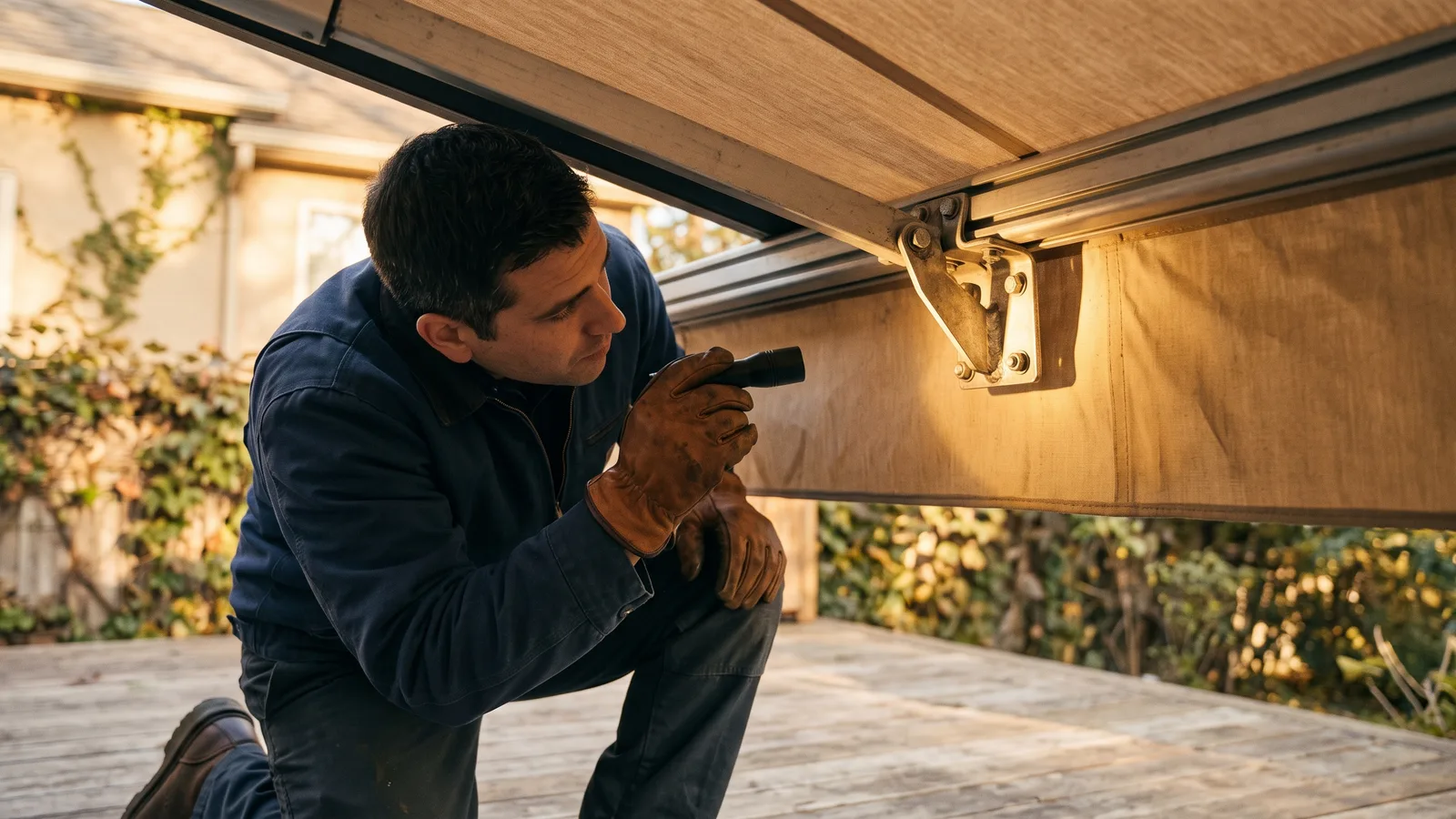
Warranty coverage on an awning is rarely a single number. Fabric, frame, and motor components usually run on different terms with different failure modes, and fading from sun exposure gets treated differently from a torn seam or a motor that stops responding. Blending all of that into one confident-sounding promise during the sale creates a service problem later, when a homeowner calls about fading and expects a full replacement that was never actually covered.
Why awning warranties are rarely a single number
Manufacturers structure warranties around how each component actually fails, not around a tidy marketing message. A frame is largely a structural and finish question, a fabric is a material exposed continuously to sun, rain, and temperature swings, and a motor is an electrical and mechanical component with its own separate failure patterns. Collapsing these into a single warranty pitch during the sale, something close to a flat number of years covering everything, sets an expectation that no manufacturer's actual paperwork supports.
This matters more for awnings than for many other exterior products because the fabric component sits outdoors, extended, for months at a time, taking direct exposure in a way a roof shingle or a siding panel simply does not. That exposure means the fabric is genuinely the component most likely to show visible change first, which makes it the one most likely to generate a warranty call, and the one where a vague promise causes the most damage once that call happens.
Fabric, frame, and motor components on different terms
In practice, frame warranties tend to run longer than fabric warranties, since a well-finished frame degrades slowly compared to a fabric exposed to ultraviolet light every day it is extended. Motor warranties usually run somewhere in between, covering defects in the mechanism itself but not damage caused by leaving a motorized unit extended through conditions it was not designed for. A dealer who can explain these three terms clearly, without checking paperwork mid-conversation, comes across as more credible than one who quotes a single blended number.
Setting expectations about fading and ordinary wear
Fading is the single most common source of warranty confusion. Fabric exposed to direct sun for years will lighten gradually, and that gradual change is normal wear, not a defect, even though it is the kind of thing a homeowner notices and calls about. Warranty terms for fading typically cover a specific, measurable threshold of color loss within a set period, not any visible change at all. Explaining that distinction during the sale, rather than during a frustrated service call years later, keeps the relationship intact.
What to put in writing versus what to explain verbally
Every specific term, coverage period, and threshold belongs in writing, handed to the homeowner as part of the sale documentation, not summarized from memory. Verbal explanation still has a role: it is where a dealer translates the written terms into plain language, walking through what a typical fabric warranty claim looks like or how a motor defect gets diagnosed. The verbal walkthrough builds understanding, but the written terms are what actually govern the claim, and the two should always say the same thing. Listing the exact components and terms covered on a dealer's own services page, alongside the installation and re-cover work also on offer, gives homeowners a reference they can check later without having to dig through a manufacturer packet.
Never round up from memory
Handling the warranty call that arrives a year or two later
When a homeowner does call about a fading fabric or a frame issue, the same component-by-component structure that was used during the sale should guide the service conversation. Confirming which component the issue actually involves, checking it against the written term for that specific component, and explaining the result clearly protects the relationship even when the answer is that the issue falls outside coverage. Most homeowners accept a clear, specific no far better than a vague answer that leaves them wondering whether they are being brushed off. The same objections that come up during the original sale tend to resurface here, which is one more reason to handle them consistently both times.
How clear warranty conversations protect the review pipeline
A homeowner who feels misled by a vague warranty promise rarely stays quiet about it, and that kind of complaint does more damage to a dealer's reputation than almost any other service issue, because it reads as dishonesty rather than a simple product limit. Service calls and re-cover work already represent a real second revenue stream for most dealers, and that pipeline depends on trust built during the original sale. Being precise about coverage upfront, even when it means naming a limit the homeowner did not expect, is also part of how a dealer represents the manufacturer relationship behind the product honestly, rather than promising more than either party actually stands behind.
Ready to talk numbers on your own pipeline?
On the strategy call, we'll lay out the plan we'd run for your business and talk through how it fits your market.
Final thought
Treating fabric, frame, and motor warranties as three separate conversations instead of one blended promise takes a few extra minutes during the sale and prevents a much harder conversation later. Homeowners do not need every warranty to be generous, they need it to be accurately described, so that a call two years later about fading fabric or a frame issue matches what they were told at the time of purchase. That consistency is what protects both the service relationship and the reviews that follow it, and it is a discipline that costs nothing to build into the standard sales script once the terms themselves are written down clearly.
Tagged