
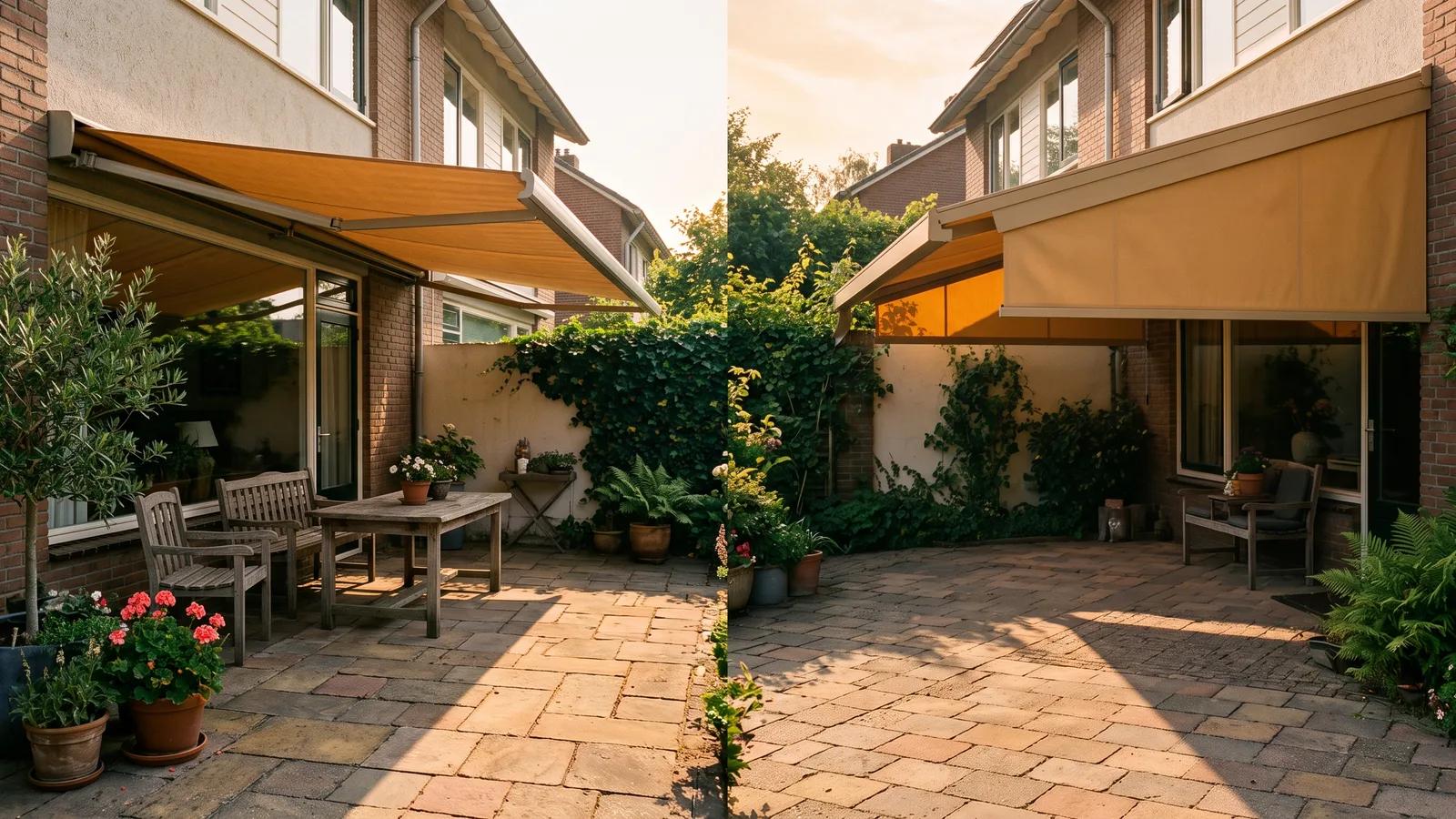
The retractable versus fixed question is usually the first real fork in an awning sale, and it gets asked backward more often than not. Homeowners hear a rundown of frame materials and motor options before anyone has asked how the space actually gets used through the week. Once the conversation starts with use case instead of mechanism, the retractable-or-fixed answer tends to fall out on its own, and everything left to discuss is fabric, frame, and price.
Why this question gets asked backward
It is easy to default to a product tour: explain how a motorized arm retracts, show a manual crank as the budget option, describe a fixed metal or fabric structure as the low-maintenance choice. That sequence treats the two categories as competing versions of the same product, ranked by sophistication, when they actually solve different problems. A homeowner listening to a features comparison has no way to know which set of features applies to their own patio, so they either stall on the decision or default to whichever option sounded more impressive.
Leading with mechanism instead of use case
Starting with mechanism also front loads the wrong kind of question. A homeowner who has not yet decided whether they want sun exposure on some days and shade on others will hear a pitch about motor speed and remote controls and respond with silence, because the pitch has not yet earned the right to talk about mechanism. The fix is simple to state and easy to skip under time pressure: ask about the space before describing the product.
The use-case framing that clarifies the decision
Retractable awnings suit homeowners who want flexibility, sun on a cool morning, shade during a hot afternoon, and full sun again for an evening gathering. Fixed awnings suit homeowners who want permanent, low-maintenance coverage over a grill, an entry door, or a window that takes direct afternoon light every day of the season regardless of weather. Neither is a downgrade of the other. They answer different questions about how often the coverage needs to change.
Questions that surface how the space actually gets used
A short set of questions does most of the work: does the household want morning sun on the patio, is the space used for entertaining where full retraction matters, is there a specific window or entry that takes harsh light every afternoon, and does anyone in the home have a strong preference for an unbroken sightline when the awning is not needed. The answers point toward retractable or fixed well before frame color ever comes up.
Where motorization changes the retractable conversation
Once a homeowner is leaning retractable, the next fork is manual versus motorized, and that decision is really about how often the awning will actually get adjusted. A motorized unit with wind and sun sensors solves a different worry than a manual crank does, protecting the fabric during a sudden gust and retracting on hot afternoons without anyone remembering to do it by hand. For households that use the patio daily, that convenience tends to justify the upgrade on its own, separate from any budget conversation.
Anchor on frequency of use
When fixed is the right recommendation, even if it is the lower-margin sale
There are consultations where the honest answer is fixed, even though the retractable and motorized upgrades carry a higher ticket. A covered entry that always needs shade, a grill area that never needs full sun, or a homeowner who explicitly says they do not want one more thing to maintain are all situations where recommending fixed protects the relationship. Dealers who steer every consultation toward the higher-margin option regardless of fit tend to see it show up later as buyer's remorse dressed up as a fabric or wind damage complaint, when the real issue was a mismatch between product and use case from the start.
Moving from mechanism to fabric, frame, and price
Once the use-case question is settled, the rest of the consultation moves faster because the remaining decisions are genuinely easier: fabric color and pattern, frame finish, and the price that follows from size and features. Homeowners who have already resolved the bigger structural question are noticeably more willing to commit to the smaller ones in the same visit, which shortens the sales cycle and reduces the number of follow-up calls needed to close. This is also where bringing physical fabric and frame samples into the conversation earns its place, since a homeowner who has already decided on retractable versus fixed is far more willing to hold a swatch against their own siding than one still weighing the bigger structural question.
The sequencing matters because each decision narrows the field for the next one. A homeowner who knows they want motorized retractable coverage for a daily-use patio is choosing fabric and frame within a much smaller, more relevant set of options than one still comparing retractable against fixed in the abstract. Salespeople who rush past the use-case question to get to colors and pricing often find themselves circling back later once the homeowner realizes the product itself was never confirmed, which costs more time than the extra five minutes of framing would have.
Ready to talk numbers on your own pipeline?
On the strategy call, we'll lay out the plan we'd run for your business and talk through how it fits your market.
Final thought
The retractable versus fixed decision is not a ranking of better and worse products, it is a question about how a homeowner actually uses their outdoor space through the week. Leading a consultation with use case instead of mechanism gets to the right answer faster, avoids steering people toward the wrong structure for their situation, and clears the way for the fabric and price conversation that actually closes the sale. Walking through both categories side by side on a dealer's residential awning services page before the first appointment gives homeowners the same use-case framing in advance, so the in-home consultation starts further along than it otherwise would. It is a small sequencing change with an outsized effect on how many consultations end in a signed order the same day.
Tagged