
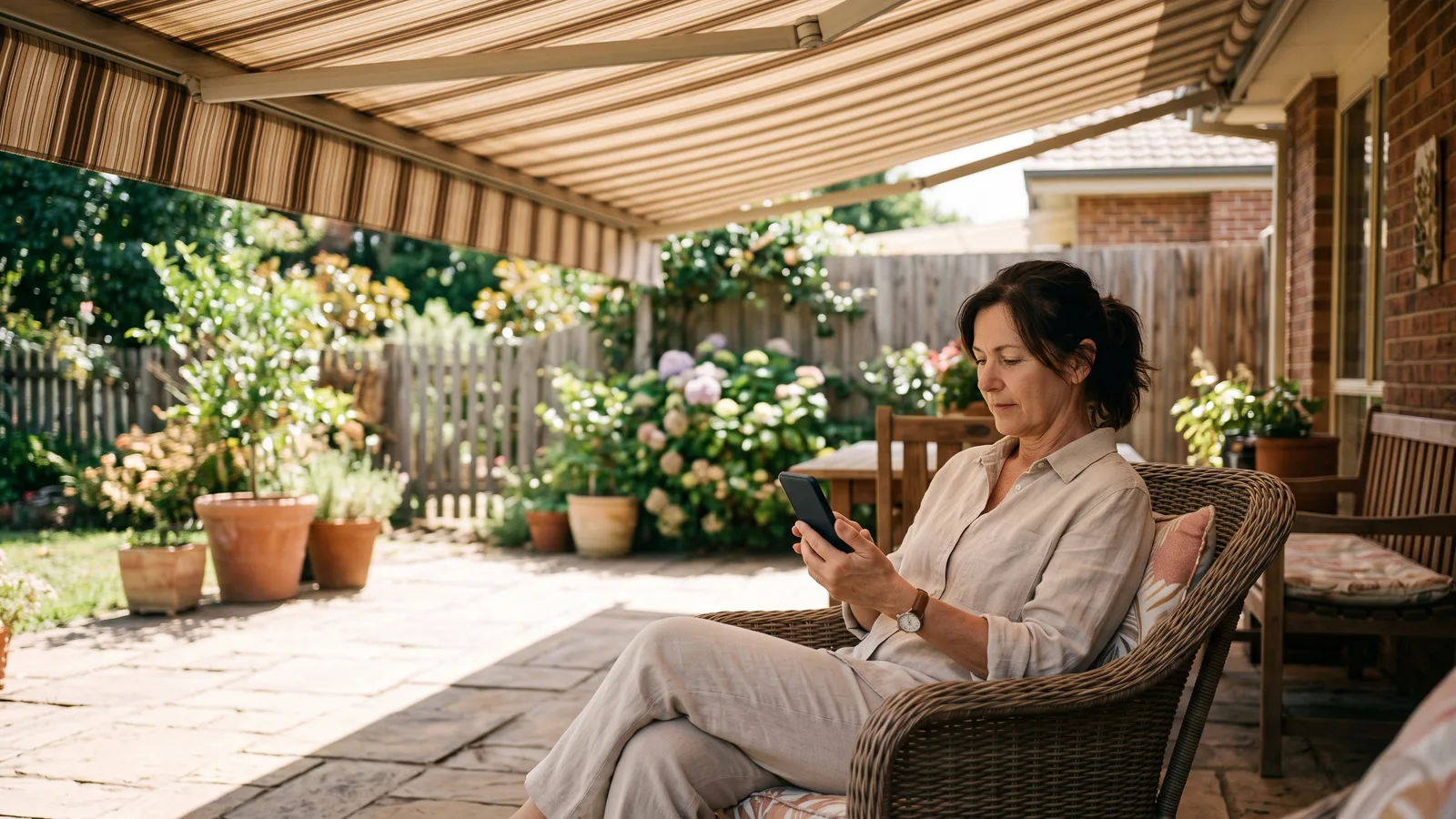
Asking for a review the moment the crew pulls out of the driveway catches a homeowner at the wrong point in the experience. They are relieved the project is finished, but they have not yet retracted the awning before a storm, sat under it during a hot afternoon, or noticed how much cooler the room behind it stays. Review timing matters more than review scripting, and the day-of-install ask misses the moment when satisfaction is actually highest.
Why the day-of-install review request captures the wrong moment
A review written the same day the crew leaves tends to describe the installation process, the crew was on time, the cleanup was tidy, rather than the product itself. That is useful, but it is not the review that convinces the next homeowner to book a consultation. What sells the next job is a review describing how the space actually gets used: the shade during a summer cookout, the sensor retracting the fabric automatically before a gust of wind, the difference in how the patio feels now compared to before. None of that is available to describe on day one.
There is also a practical downside to asking too early: a homeowner who has not yet used the awning through a real weather event does not have much to say, so the review that results tends to be short and generic, a sentence or two about a friendly crew rather than a paragraph a future customer will actually read closely. A thin review still counts toward a star rating, but it does very little of the persuading that a detailed one does.
Mapping satisfaction against the ownership timeline
Satisfaction with an awning builds in stages, and each stage produces a different kind of review. Asking too early captures relief that the job is done. Asking at the right point captures genuine enthusiasm about the product itself.
First use, first weather event, and the settling-in period
The first stage is simply using the awning a few times, extending it on a sunny afternoon and noticing the difference. The second stage is the first real weather event, a windy evening or an unexpected storm, where a motorized unit with a wind sensor proves itself by retracting on its own before anyone has to run outside. The third stage is the settling-in period, a few weeks in, once the awning has become part of the household routine rather than a novel new addition. Each of these stages produces a stronger, more specific review than the day the crew left.
The exact length of that timeline shifts with the season an install happens in. An awning installed early in the season may see its first real weather event within a couple of weeks, while one installed later might not face a genuine storm until the following year. Rather than fixing the outreach to a set number of days on the calendar, tying it to the actual weather in the customer's area keeps the timing accurate regardless of when the install happened.
What to ask for at each stage
Each of these touchpoints should feel like a natural check-in rather than a scripted step in a sequence. A short, specific message beats a long, generic one at every stage, and the goal is simply to be present at the moments when the homeowner is actually forming an opinion about the awning, not to automate a review pipeline that feels impersonal.
- Right after install. A short thank-you message and a note that a review request will follow once they have had a chance to use it, setting the expectation without asking yet.
- After the first weather event. A check-in asking how the awning handled the wind or storm, which is also the moment a wind sensor story writes itself into a review without any prompting.
- A few weeks in. The actual review request, framed around how the space has changed, not just whether the install went smoothly.
Let the weather do the asking
Turning strong reviews into referral conversations
A homeowner who leaves a detailed, enthusiastic review is also a homeowner worth asking directly whether they know anyone else thinking about shade for their own patio or deck. That conversation flows naturally once trust and satisfaction are both established, far more naturally than a cold referral ask ever would. A referral relationship with adjacent outdoor trades works the same way, both depend on reaching people at the moment satisfaction is highest rather than whenever it happens to be convenient to ask. Reviews collected on this timeline also feed directly into the re-cover and service outreach a dealer sends years later, since a homeowner who left a glowing review is also more likely to respond when it is time to talk about new fabric. The same reviews are also worth resurfacing during slower months, since keeping the dealer profile visible when competitors go quiet often means simply sharing a recent, well-earned review rather than producing something new from scratch.
Not every strong review needs to become a referral ask in the same message. Sometimes the better move is to simply thank the homeowner for the review and circle back to the referral question a few weeks later, in its own conversation, so it does not read as though the review itself was requested in exchange for something. Keeping the two asks separate, even by a short interval, preserves the authenticity of both.
Ready to talk numbers on your own pipeline?
On the strategy call, we'll lay out the plan we'd run for your business and talk through how it fits your market.
Final thought
The best awning review is not written on installation day, it is written after the homeowner has actually lived with the shade through a hot afternoon and a rough evening of wind. Building the request around that timeline, a thank-you at install, a check-in after the first storm, and the real ask a few weeks later, produces reviews that describe the product instead of the paperwork, and those are the reviews that actually move the next consultation forward.
Tagged