
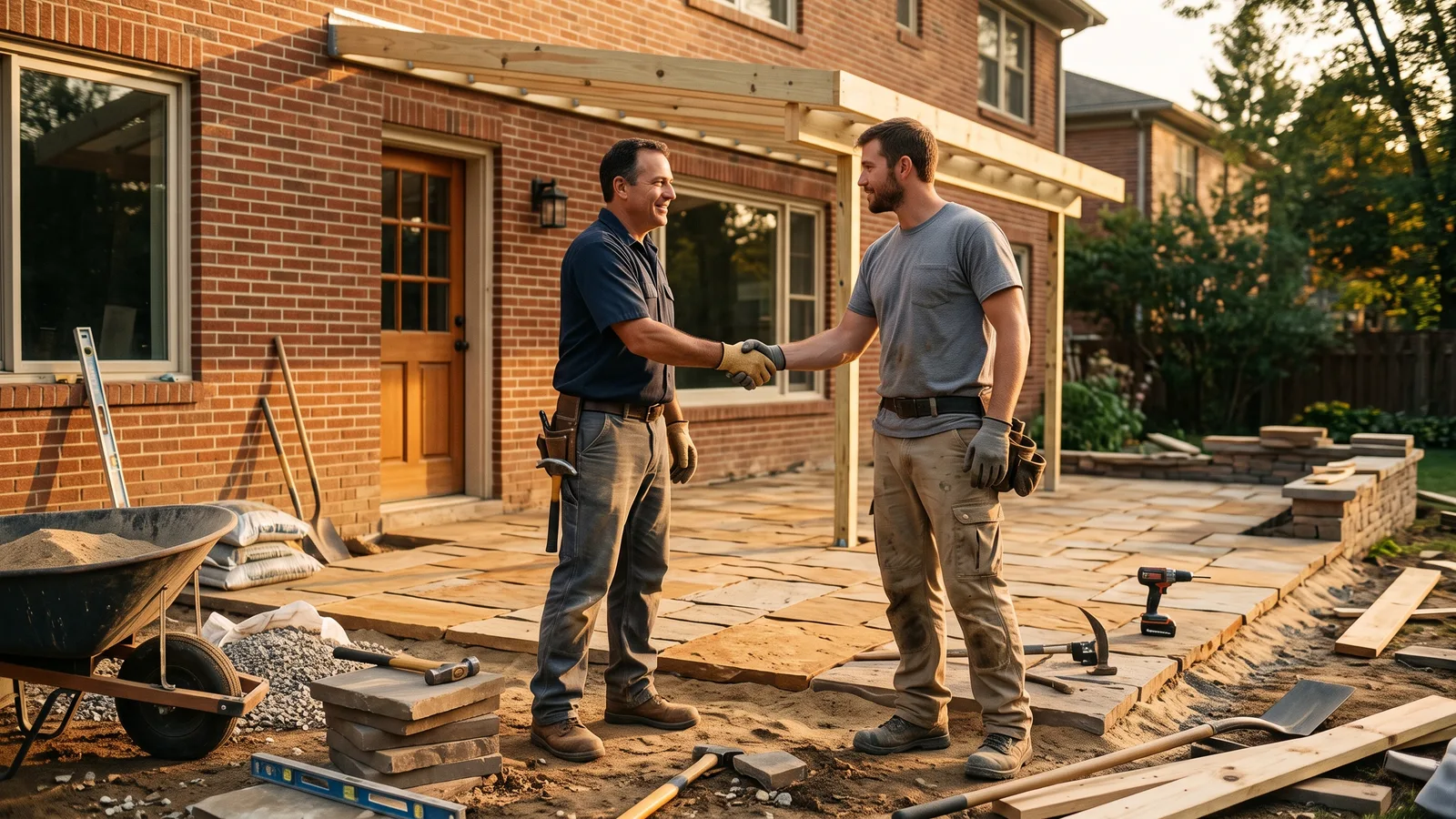
Patio builders, pool contractors, and landscapers spend their workdays standing in the exact backyards where an awning conversation makes sense. They see the bare wall over the patio door, the pool deck with no shade, and the client already mid-project and thinking about outdoor comfort. A referral relationship with those trades costs nothing to start, but most dealers let it stay an informal handshake that quietly stops producing once either business gets busy.
Why adjacent outdoor trades are a natural referral source
A patio or hardscape crew is on site for days or weeks at a time, long enough for the client to mention wanting shade over the new space. A pool builder hears the same thing from clients thinking about how they will actually use the deck on a hot afternoon. A landscaper redesigning a backyard is often the first person to hear that the client wants somewhere shaded to sit. None of these trades install awnings themselves, so pointing the client toward a dealer costs them nothing and makes them look more useful to their own customer.
The reverse is just as real. An awning consultation regularly surfaces a homeowner who also wants a new patio surface, a pool resurfacing, or a landscaping refresh, and a dealer with nowhere to send that conversation is leaving the same kind of goodwill on the table.
The seasonal overlap makes the arrangement even more valuable. Patio builders, pool contractors, and awning dealers all see demand climb in roughly the same spring and early-summer window, in both the United States and Canada, which means a referral partner is thinking about outdoor comfort projects at the same time the awning dealer is. A partnership formed during a slower month, before either business is fully booked, has a much better chance of actually being used once that shared busy season arrives.
Structuring a two-way referral relationship
An informal agreement to “send each other business” rarely survives contact with a busy season, because there is nothing written down to remind either side what was promised. A simple, written structure works better:
- Name the trigger. Define exactly what earns a referral, a client who mentions wanting shade, a bare wall spotted during a walkthrough, so both sides recognize the moment without guessing.
- Set a response window. Agree on how quickly a referred lead gets a call back, so a warm introduction does not go cold while it sits in someone's inbox.
- Decide how credit is tracked. A shared log, even a simple shared spreadsheet, of who referred whom keeps the relationship honest without requiring a formal commission structure on either side.
- Agree on a reciprocal gesture. Whether that is a modest thank-you, a mention on each other's website, or a simple agreement to recommend each other by name, deciding this up front avoids an awkward guessing game once the first referral actually converts into a signed job.
What makes a referral partnership survive a busy season
The relationships that hold up are the ones built on a habit rather than a one-time conversation. A short check-in every few months, even a text asking how the other business's season is going, keeps the dealer top of mind when the patio crew is standing in a backyard with a client asking about shade. The partnerships that fade are almost always the ones where the only contact happened once, at the start, and neither side followed up once things got busy.
A referred job that closes and goes well is also worth circling back to the partner about once the homeowner is settled in. The same patience that applies to asking a customer for a review applies here: a quick note to the referring contractor once the job is done and the homeowner is happy does more for the relationship than silence until the next referral happens to come up.
Keep the ask specific
Where to meet these contractors before pitching a partnership
Local trade associations, supplier counters, and permit offices are where these trades already overlap. A hardscape supplier or a pool equipment distributor often serves the same contractors an awning dealer would want to meet, and a conversation at the counter is a far more natural opening than a cold outreach message. Community events built around outdoor living, home shows in particular, put several of these trades in the same room at once, which makes them worth attending even outside the awning dealer's own booth traffic.
A homeowner who already trusts a patio contractor is more receptive to a shade recommendation from that contractor than from a cold ad, which is part of the case for bundling an awning with adjacent outdoor living upgrades when the timing allows for a joint proposal rather than two separate sales processes.
A showroom or installation site also works as an informal meeting ground. Inviting a patio builder or landscaper to see fabric and frame samples in person, rather than only describing the product over the phone, gives them something concrete to picture when a client mentions shade later. It also signals that the partnership is being taken seriously rather than treated as a one-line mention on a business card.
Tracking referral volume so the relationship stays worth maintaining
A referral relationship should earn its place the same way any other lead source does. Tracking how many referrals came from each partner, how many turned into signed jobs, and how quickly they were followed up on shows which partnerships are actually producing and which ones are just a friendly lunch every quarter. This same tracking discipline matters for staying visible between referral conversations, since keeping the dealer profile warm during slower stretches makes a partner more likely to think of the dealer first when a client mentions shade.
A short annual review of the relationship, even a ten-minute conversation once the busy season ends, is worth the time. It is the moment to ask honestly whether referrals flowed in both directions or mostly one way, and whether the response window agreed on at the start actually held once both businesses got slammed. A partnership that only ever sends leads one direction is not really a two-way arrangement, and naming that plainly is easier at the end of a season than in the middle of one.
Ready to talk numbers on your own pipeline?
On the strategy call, we'll lay out the plan we'd run for your business and talk through how it fits your market.
Final thought
Adjacent outdoor trades are already standing in the backyards where awning conversations start, and a referral relationship with them costs nothing but a little structure and consistency. Naming the trigger, agreeing on a response window, and checking in regularly turns a handshake that fades after one busy season into a lead source that keeps producing year after year, in both directions.
Tagged