
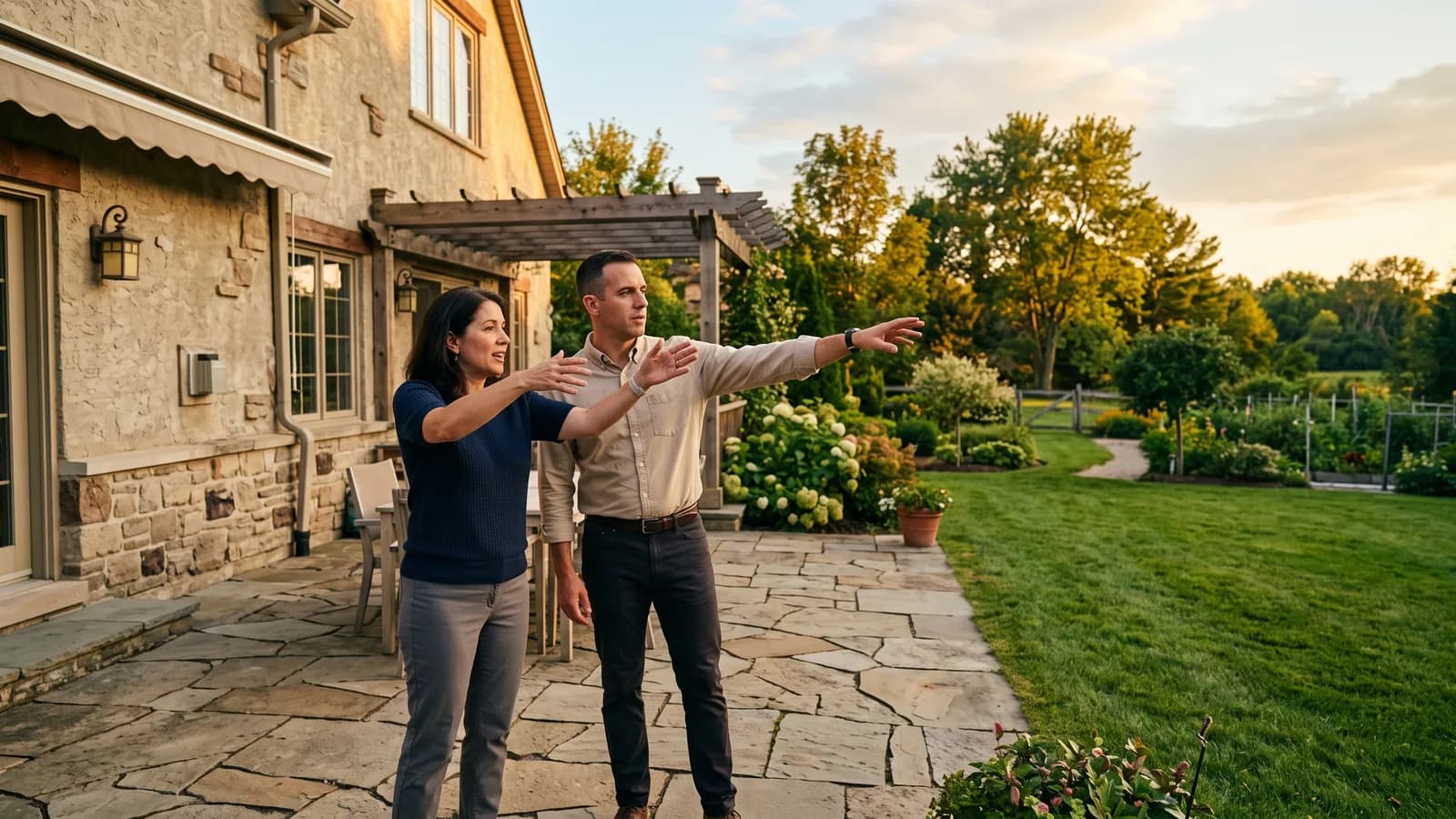
A homeowner who calls about awning pricing rarely means only the awning. They usually mean the patio does not work the way they want it to, too much sun at dinner time, nowhere comfortable to sit past seven in the evening, a corner that never gets used. The awning is the fix they thought to search for. Treating the consultation as a chance to hear the rest of that problem, without turning it into a pitch, tends to surface a bigger project the homeowner had not yet connected to their original call.
Why an awning inquiry often signals a broader outdoor living problem
Homeowners generally do not wake up wanting an awning as an object. They want to actually use a space that currently sits empty most of the day because it is too hot, too exposed, or too unfinished to feel worth sitting in. An awning solves the sun problem directly, but it does not solve a lack of seating, poor evening lighting, or a patio surface that has been cracking for three summers. Those problems were often already on the homeowner's mind before the awning inquiry ever went out, just not framed as connected work.
Recognizing that pattern changes what the consultation is for. It is still, first and foremost, an appointment to measure, price, and recommend an awning. But a rep who listens for the shape of the broader space, not just the wall the structure mounts to, is positioned to notice when the awning is one piece of a larger backyard project the homeowner has not yet said out loud.
Questions that surface adjacent needs without overselling
The goal is not to pitch lighting or seating on top of an awning quote. It is to ask a few open questions that let the homeowner volunteer what else bothers them about the space, if anything does. A short set that works without feeling like a sales script:
- How does the family actually use this space now? The answer often reveals a gap the awning alone will not close, like no comfortable place to sit once the shade is up.
- What time of day does the family spend out here most? If the answer is evening, lighting is probably already a background frustration worth asking about directly.
- Anything else about the space you have been meaning to deal with? A direct, low-pressure version of the same question, asked once trust is established, often gets an honest answer.
Reading the backyard, not just the wall the awning attaches to
A measurement visit naturally puts the rep in the backyard, not just at the mounting wall, and that vantage point is worth using. Cracked pavers, a bare patch where furniture clearly used to sit, an outdoor kitchen frame that was never finished, these are visible signals a rep can notice without saying a word about them unprompted. Mentioning an observation as a question, rather than a suggestion to buy something, keeps the conversation in the homeowner's hands: “I noticed the paver seams near the door look like they've shifted a bit, has that been on your radar?” opens a door without pushing anyone through it.
When to bring in a referral partner instead of expanding scope directly
Not every adjacent need belongs on the awning dealer's own scope of work. Lighting, hardscaping, and structural carpentry are each their own trade, and a dealer who tries to sell all of it directly risks stretching past what the crew can actually deliver well. The stronger move, once a genuine adjacent need surfaces, is a warm handoff to a trusted partner rather than an in-house pitch for work outside the dealer's core competency. A referral relationship with clear two-way terms makes that handoff smooth instead of awkward, and it keeps the dealer's own crew focused on the awning work it does best.
This is also where a dealer's list of services matters, since it tells the homeowner up front what the dealer handles directly versus what gets referred out, and it avoids a moment mid-consultation where scope has to be walked back.
Keeping the original awning consultation from feeling hijacked
The line between a helpful observation and an overreaching pitch is thin, and homeowners notice quickly when a consultation stops being about what they asked for. The safest rule is to let the homeowner raise the broader project, or answer honestly when asked a direct question, rather than leading with it. A rep who spends the first half of the visit talking about lighting packages before the awning has even been measured has lost the thread of why the appointment was booked in the first place, and that shows up later as a homeowner who feels sold to rather than served.
It also matters for close rate. Peak-season leads already cost more because every dealer is bidding for the same attention, so a consultation that loses the homeowner's trust by overreaching wastes a lead that was expensive to generate in the first place. Staying disciplined about scope protects the conversion the appointment was actually booked for.
Let them lead the expansion
Ready to talk numbers on your own pipeline?
On the strategy call, we'll lay out the plan we'd run for your business and talk through how it fits your market.
Final thought
An awning inquiry is often the visible tip of a homeowner's broader frustration with an outdoor space that does not work for them yet. Listening for that, asking a few honest questions, and referring out what falls outside the dealer's own scope turns a single-item consultation into a relationship that can grow over seasons, without ever making the original visit feel like it was about anything other than the awning the homeowner called to ask about. This is a discipline worth protecting, since the brand a dealer builds over years of consultations rests on homeowners trusting that the visit stayed focused on what they actually asked for.
Tagged