
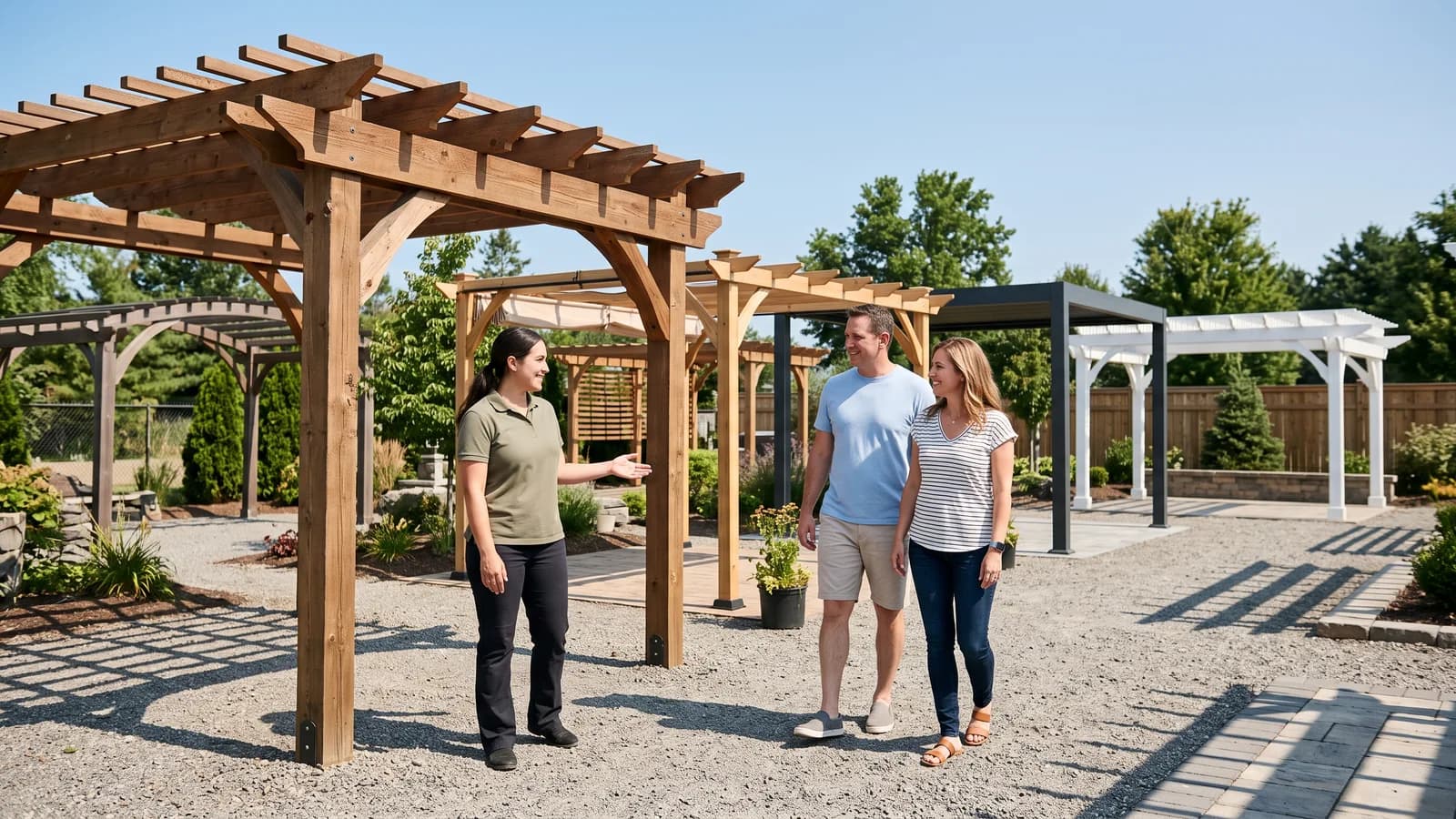
A display pergola sitting quietly in a showroom lot does very little on its own. It takes staging, a staff member close enough to start a conversation, and an easy next step for the person who just walked underneath it and felt the shade for the first time. Miss any one of those three pieces and the lot becomes somewhere people wander on a Saturday afternoon instead of a source of booked consultations.
The advantage a showroom has over a website is a genuinely physical one, and it disappears the moment the lot is treated as decoration rather than as inventory doing sales work on its own. A dealer investing in a proper display setup, multiple materials, a working roof system, real staffing hours, is not spending on curb appeal, it is building a lead-generation channel that a website alone cannot replicate.
Why a display model changes the sales conversation
A photo of a finished pergola on a website communicates shape and color, nothing more. Standing underneath a real one changes what a buyer knows. They feel the density of a cedar beam, run a hand along a powder-coated aluminum post, or hear a louvered roof close over their head on a hot afternoon. That direct sensory proof compresses a skepticism gap that would otherwise take an entire home consultation to close, and it does it before a rep has said a single word.
It also changes the tone of the eventual home consultation itself. A buyer who has already stood under a display model arrives with fewer basic questions and more specific ones, which stain color works with the house, how the roof looks with the beams a shade darker, whether the screens roll as smoothly in their own yard as they did at the lot. That shift shortens the consultation and lets the rep spend the visit on the buyer's actual property instead of re-explaining material basics a photo never communicated clearly enough the first time.
What a display model needs to do that a photo cannot
One display is a single data point. A lot with two or three models side by side, say a cedar structure next to an aluminum one with a motorized roof, lets a visitor compare weight, finish, and shade coverage directly instead of imagining the difference from a brochure. Running the louvered roof for a visitor on request, and keeping a screen or a lighting kit mounted on at least one model, does more to answer the “what would this actually feel like in my yard” question than any amount of copy on a landing page. A small placard on each model with a rough price range and a typical install window lets a browsing visitor self-serve some of that information before staff ever approaches.
Turning showroom visits into booked consultations
The goal of a showroom conversation is not to close a sale on the spot, it is to get a home visit on the calendar. A greeting within the first minute or two, a few questions about the visitor's yard and what they are picturing, and a direct offer to schedule a measure works better than a full pitch delivered standing in a parking lot. For the visitor who wanders through without ever talking to staff, a simple card or quick response (QR) code posted at each display, leading to a short booking form, captures the ones who would otherwise leave and never follow up. The same discipline that gets a visitor from the lot onto the calendar is what makes a satisfied customer worth asking for more than just a review, a referral structure that survives past the first introduction turns a showroom regular into a source of new visitors on its own.
Staff working the lot should also be tracking which display gets the most attention and which questions come up repeatedly, since that pattern is a cheap, ongoing source of insight into what the local market actually wants. A lot where every visitor lingers longest at the louvered roof model is telling a dealer something about local demand that a keyword report never will, and it is worth feeding that observation back into what gets built out next or promoted harder in upcoming ad creative.
A visitor who books a design consultation straight off the lot during the quieter months is doing the same thing further upstream that a winter consultation does for locking spring crew slots, claiming a spot before the surge hits rather than competing for one once every calendar in town is already filling up.
The unattended lot problem
Using the display model in ads and landing pages
The same structures built for foot traffic are worth reusing in cold audience creative and on local landing pages. Shooting the lot in early evening, with lighting on and a couple of chairs staged underneath, produces footage that reads as a lived-in outdoor space rather than a catalog shot, which is the same distinction that makes lifestyle-first creative for cold audiences outperform a static product photo. Listing the showroom address and hours on a service-area landing page also gives a hesitant buyer a low-pressure way to move forward, a visit to look before a visit to commit, which some buyers need before they will fill out a form at all.
Staffing the display for casual foot traffic, not just booked visits
Most of a showroom's traffic on a given weekend was not scheduled, it is people already out shopping a nursery or a deck supplier nearby who noticed the structures and stopped. Covering those hours with rotating staff, rather than only staffing when an appointment is on the books, is what actually captures that traffic. The staffing ramp should follow the regional calendar rather than a fixed date on paper, outdoor living traffic in much of Canada and the northern United States starts building a few weeks later in spring than it does farther south, and a lot left unstaffed during that early window loses visitors it will not get a second chance at.
Weekday coverage is worth planning for too, even though it looks lighter than weekend traffic on paper. A homeowner who drives past during a weekday lunch break or on a day off is often a serious buyer precisely because they are not squeezing the visit into a crowded Saturday errand list, and a locked gate during those hours quietly signals that the business is not really open for the casual walk-in it is trying to attract.
Ready to talk numbers on your own pipeline?
On the strategy call, we'll lay out the plan we'd run for your business and talk through how it fits your market.
Final thought
A display pergola earns its keep by doing something a photo cannot, letting a buyer stand under real material and feel the shade before committing to anything. That advantage only shows up in the numbers if the lot is staged to answer real questions, staffed during the hours casual traffic actually shows up, and connected to an easy next step for the visitor who never talks to a person at all. Treat the showroom as a lead-generation asset with its own conversion path, not a static display waiting for someone to notice it.
Tagged