
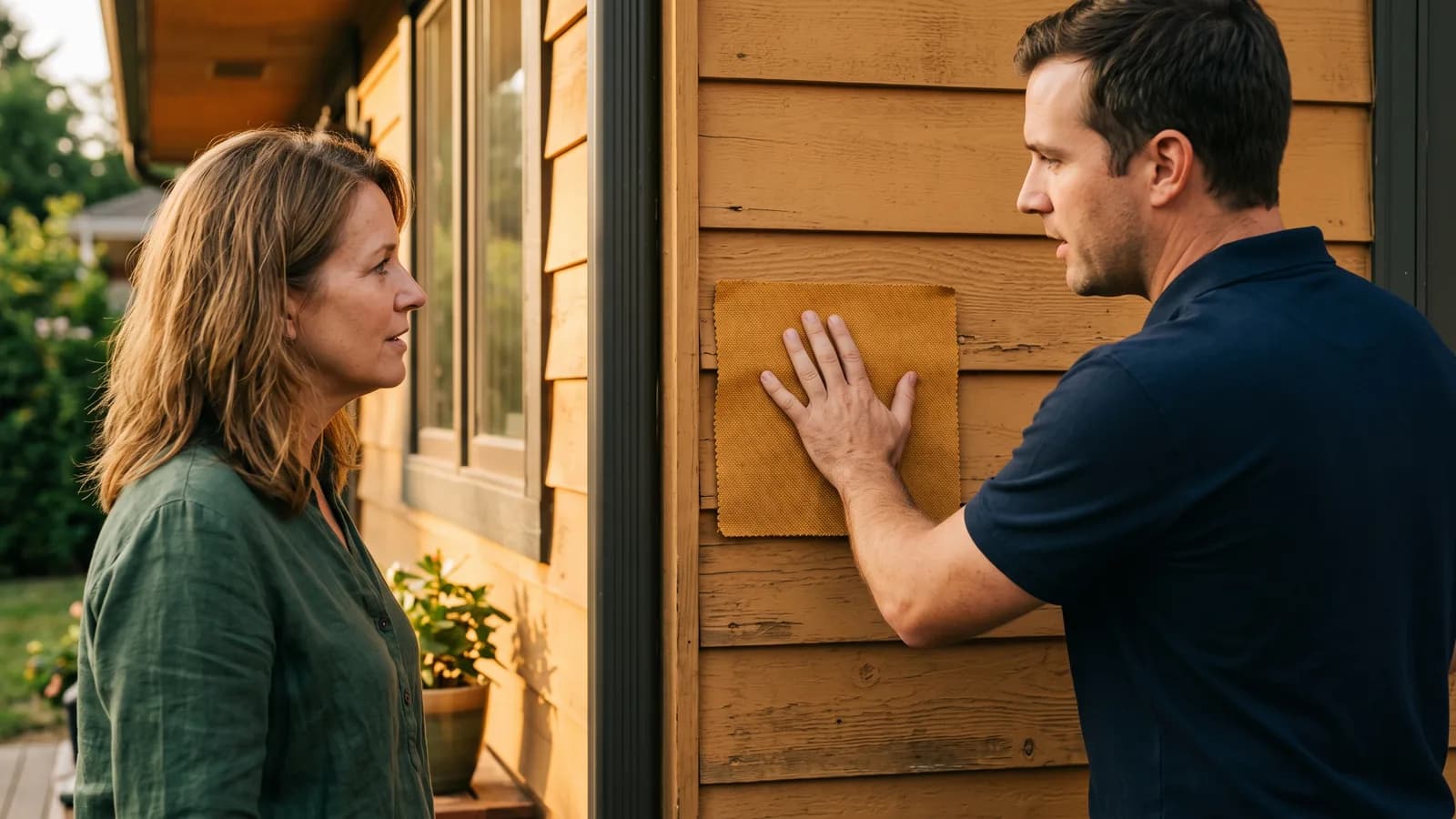
Color and material decisions stall more awning sales than price does. A structure mounted to the front of a house is visible from the street and stays in place for years, so homeowners are far more cautious about committing to a fabric and frame combination sight unseen than they would be about something replaced or tucked away indoors. A photo on a screen rarely resolves that hesitation the way a physical sample held against the actual siding does.
Why color and material decisions stall more sales than price
Price objections tend to be concrete and addressable: a homeowner can compare a number against a budget and decide. Color and fabric hesitation is fuzzier, rooted in a fear of getting it wrong in a way that is visible to the whole street for years. That fear does not show up as a stated objection most of the time. It shows up as a homeowner who says they want to think about it, without being able to say exactly what they are thinking about.
What a photo or swatch chart cannot resolve
A website photo shows a fabric and frame combination on someone else's house, under someone else's lighting, against siding that may look nothing like the homeowner's own. A printed swatch chart is closer but still small, flat, and lit under indoor lighting that has little to do with how the color will read against brick or vinyl in direct afternoon sun. Neither format gives a homeowner the confidence to commit, which is exactly why the decision so often gets deferred to a follow-up call that may never happen.
The role of the showroom visit in the sales sequence
A showroom visit, where a homeowner can see full-size fabric panels and frame finishes under real light and against real material samples, resolves the hesitation that a catalog cannot. Seeing a color at scale, and seeing how a frame finish pairs with different fabric options side by side, gives a homeowner enough confidence to commit without the anxiety of imagining how it will actually look once installed.
The showroom also does something a brochure photo never can: it shows how fabric texture actually holds up under close inspection, not just how a color reads from across a room. Homeowners who run their hand across a sample and notice the weight and weave of the material tend to trust the finished result more than those who only saw a rendering, because the doubt that comes from imagining something unfamiliar has already been resolved before the crew ever shows up. That same attention to texture and finish is part of why a flat, overexposed midday photo undersells a finished install online in the same way a small swatch chart undersells a fabric in person.
Bringing samples to the home instead of waiting for a showroom trip
Not every homeowner will make a separate showroom trip, and asking them to is itself a point where a sale can stall. Bringing a compact kit of fabric swatches and frame finish samples to the in-home consultation solves the same problem without adding a step: the consultant can hold a swatch directly against the actual wall the awning will attach to, in the actual light the awning will sit in, while the homeowner is standing right there.
Hold it against the wall
Sequencing the sample conversation inside the consultation
The sample conversation works best once the bigger structural questions are already settled. Once a homeowner has decided between retractable and fixed, color and finish become a smaller, more focused decision rather than one more open question layered on top of everything else. Doing the swatch walk-through toward the end of the consultation, once the product itself is confirmed, keeps the homeowner's attention where it matters most at each stage of the conversation.
When a second visit is worth scheduling anyway
Some households genuinely want to sit with a decision overnight, and pushing for a same-visit commitment in that case tends to backfire. Forcing a color decision before someone is ready usually just produces a second-guessed order that turns into a change request once the swatch has been sitting on the kitchen counter for a few days. Leaving a small sample kit behind, rather than relying on memory or a photo taken on a phone, keeps the decision moving even when the close happens on a follow-up call instead of the same day. What matters is that the homeowner is comparing physical fabric against their own house either way, not squinting at a screen trying to picture it. A dealer's residential awning installation page can reinforce the same idea before the consultation ever happens, so homeowners arrive already expecting to see and touch real samples rather than just a slideshow.
This same discipline carries into how a dealer presents itself more broadly. A dealer known for a hands-on, physical sample process builds a reputation that outlasts any single fabric line, because the thing homeowners remember and refer to friends is the experience of choosing, not the name printed on the fabric itself.
Ready to talk numbers on your own pipeline?
On the strategy call, we'll lay out the plan we'd run for your business and talk through how it fits your market.
Final thought
Fabric and frame decisions feel small compared to the structural choice between retractable and fixed, but they are often the actual point where a sale slows down or stalls out entirely. Giving homeowners something physical to hold against their own house, whether in a showroom or through a sample kit brought to the consultation, replaces a guess with a decision they can trust. That single change shortens the sales cycle more reliably than almost any adjustment to price or pitch, and it costs a dealer very little to build into the standard consultation kit every rep already carries.
Tagged