
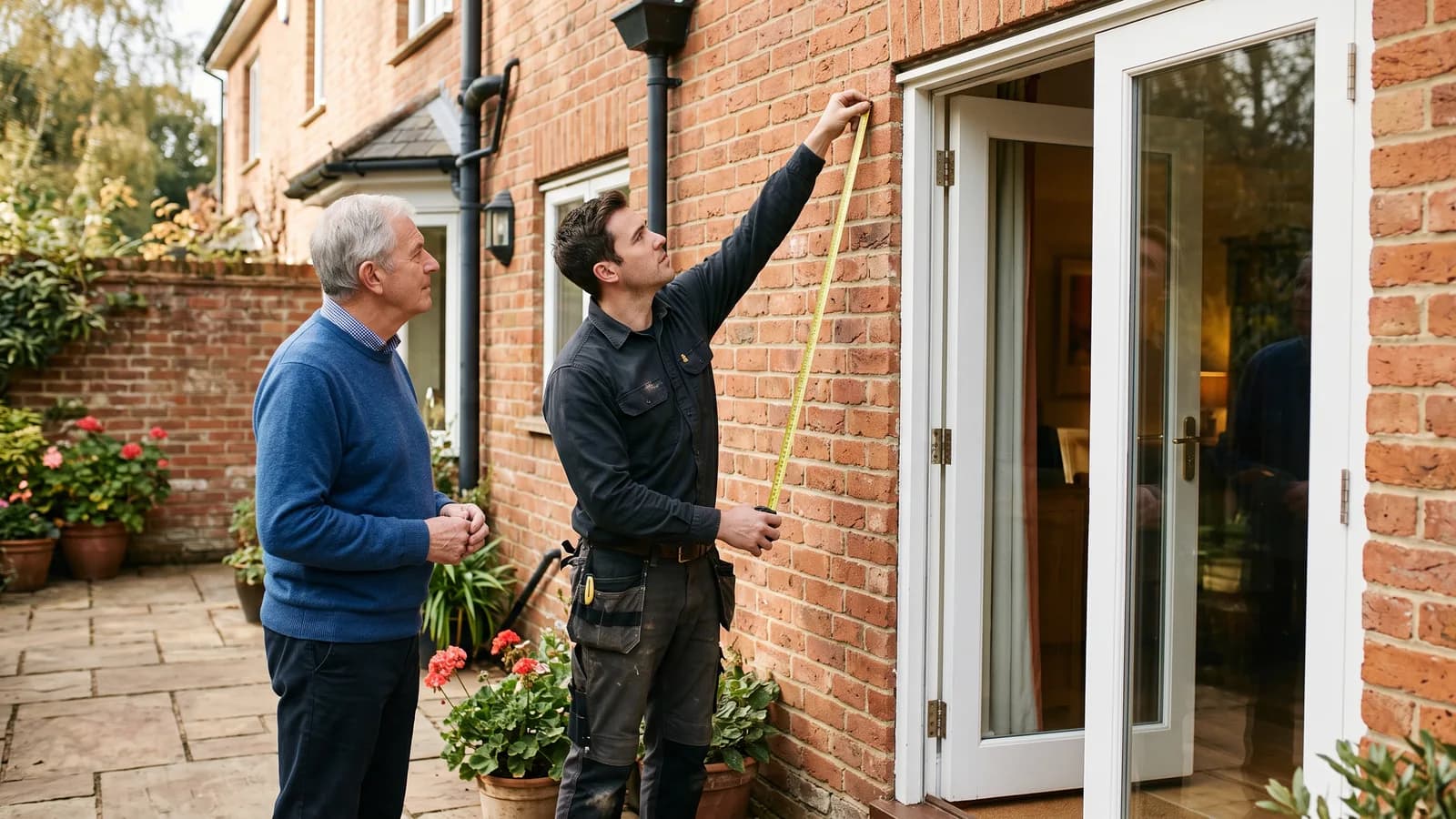
Separating the sales consultation from the measurement visit is common practice among awning dealers, and it quietly wastes one of the best remaining opportunities in the entire sales process. By the time a technician is standing at the exact wall or patio where the awning will attach, with the homeowner present and the decision nearly made, the visit has become far more than a logistics step. Treating it that way is what separates dealers who close cleanly from those who let small open questions drag on for weeks.
Why the measurement visit gets treated as pure logistics
It is easy to see why the measurement visit gets handed off to whoever is available with a tape measure. The sale already happened, the paperwork is signed, and the remaining task looks purely technical: confirm dimensions, note the mounting surface, schedule the crew. That framing misses that the homeowner is still present, still paying attention, and often still holding a few small unresolved questions that never quite got answered during the original consultation.
Staffing plays a role in reinforcing this pattern. A dealer who sends a junior technician trained only on how to take dimensions, without any coaching on the conversation that should happen alongside the tape measure, ends up with a visit that is mechanically correct but leaves the sales opportunity untouched. Training the same technician to notice and gently raise a few open questions costs little and changes what the visit accomplishes.
What makes this visit a high-trust sales moment
By the time the measurement visit happens, the homeowner has already decided to buy, which changes the entire dynamic of the conversation. There is no pressure left in the room, no pitch to resist, just two people standing at the actual wall the awning will occupy. That relaxed, already-decided atmosphere is exactly the condition under which small remaining doubts surface most honestly, and it is the ideal moment to resolve them before they turn into a change order or a cancellation call.
Compare that to a rushed phone call placed days after the consultation, where a homeowner is asked to recall a decision made in a different mindset entirely. The measurement visit has an advantage no follow-up call can match: physical proximity to the actual install location, at a moment when the homeowner has nothing else competing for their attention.
Confirming fabric, color, and sensor decisions on site
Standing at the actual mounting point gives a technician a chance to confirm choices that were made in the abstract during the consultation. A fabric color chosen from a swatch inside the house can look different against the real siding in daylight, and this is the last practical moment to catch a mismatch before the order is finalized. Having pricing structured clearly and consistently makes it easy to confirm any small adjustment on the spot rather than requiring a callback to the office. It is also a natural moment to walk through wind and sun sensor placement for a motorized unit, confirming the homeowner still understands what the sensors do and answering any question that surfaced after the original consultation but was never asked.
Catching permit or Homeowners Association issues before the crew arrives
The measurement visit is also the last practical checkpoint for compliance questions, and it deserves more attention than it typically gets in a technician's training. A structure that projects past a certain distance or attaches to a load-bearing wall can trigger permit or Homeowners Association review, and a technician standing at the exact mounting point with a tape measure is well positioned to flag anything close to a known local threshold before the crew is ever scheduled. Catching this now, rather than on install day, avoids the worst version of the problem: a crew that arrives, unloads its equipment, and only then discovers the job cannot legally proceed as planned.
Treat the visit as a checkpoint, not a formality
Handing off from measurement to installation without losing momentum
Once the measurement visit confirms everything, the handoff to the install crew should happen quickly, while the homeowner's confidence is still fresh. A long gap between measurement and installation gives second thoughts time to grow, and how long that gap runs depends on the season: during peak months a full crew calendar can push installation out by weeks, while an off-season measurement visit often has a much shorter wait, so setting the right expectation at the visit itself matters either way. It also gives a competing dealer, one still in the running from an earlier round of quote requests, an opening to make contact again with a lower price or a faster promised date. This is particularly true around any financing or payment structure discussed earlier in the process, so scheduling the crew promptly and confirming the date before the technician leaves the property keeps momentum on the dealer's side. A dealer's own how it works page can set this expectation ahead of time, so homeowners understand from the start that measurement is an active step in the process, not a delay between signing and installation.
Ready to talk numbers on your own pipeline?
On the strategy call, we'll lay out the plan we'd run for your business and talk through how it fits your market.
Final thought
Treating the measurement visit as pure logistics leaves value on the table at exactly the moment a dealer has the most trust and the least resistance to work with. A technician who confirms fabric and sensor decisions, catches a compliance flag early, and keeps the handoff to installation moving quickly is doing sales work, even if the visit is scheduled and staffed as a technical appointment. For a trade where the physical structure and the final decision converge in one visit, that shift in framing is worth building into the standard process, and it costs nothing beyond a short conversation with whoever holds the tape measure.
Tagged