
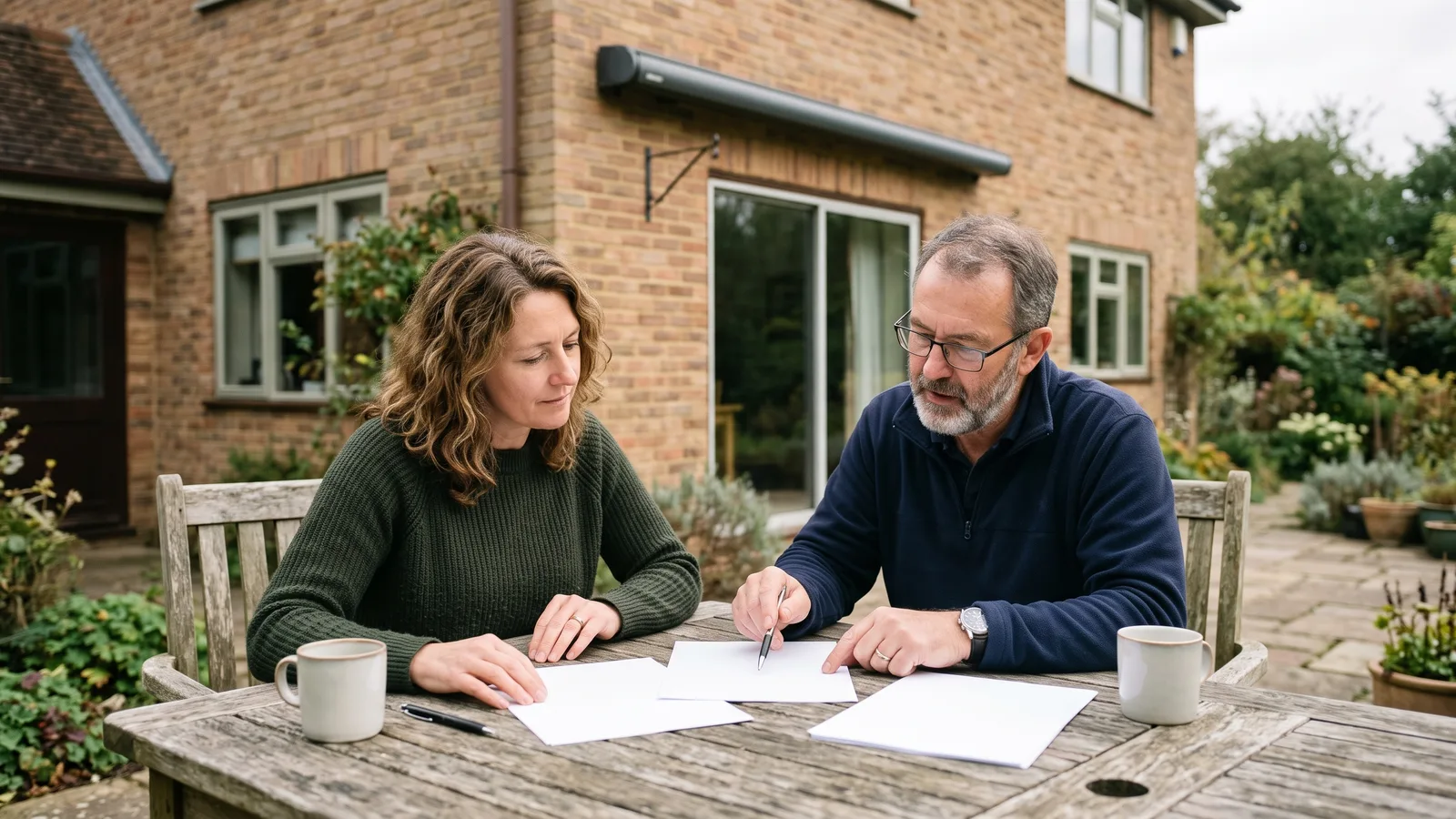
An awning occupies an unusually ambiguous space in most permit codes across the United States and Canada. Many jurisdictions treat a small fixed awning as an exempt home accessory, then reclassify it as a permitted structure once it passes a certain projection distance or attaches directly to a load-bearing wall. A dealer who raises this during the consultation, rather than after the deposit clears, protects the install timeline and the relationship with the homeowner.
Why awning permit rules sit in a gray zone
Building codes were not written with awnings specifically in mind so much as adapted to cover them, which means the line between exempt accessory and reviewable structure often comes down to a single measurement. A homeowner who assumes any awning is a simple add-on has no reason to expect a permit conversation, and a dealer who does not raise it early risks discovering the issue only once the crew is on site and the mounting point does not clear a setback or projection limit.
Projection distance and attachment method as the usual triggers
The two variables that most consistently trigger review are how far the awning projects from the wall and how it attaches. A shallow fixed awning over a window often clears local thresholds without any filing at all, while a deep retractable unit extending several feet over a patio, especially one anchored into structural framing rather than simple wall brackets, is far more likely to require a permit. The exact projection number differs by municipality, so a dealer working across several jurisdictions needs a working list rather than a single rule of thumb.
Homeowners Association architectural review, separate from municipal permitting
A Homeowners Association review committee operates entirely separately from municipal permitting, and clearing one does not clear the other. Many communities require architectural approval for any exterior addition visible from the street, covering fabric color, frame finish, and even mounting height, regardless of whether the local building department requires a permit for the same structure. Dealers who only ask about municipal permits and skip the Homeowners Association question routinely run into a stalled install after the crew has already been scheduled.
Where US and Canadian requirements diverge
Because building codes are set at the state and provincial level in both countries, with municipalities layering their own bylaws on top, a dealer serving both sides of the border cannot rely on a single national standard. What counts as exempt in one state or province can require a permit two hours away, and awning-specific provisions are inconsistent enough that assuming continuity across a service area is a common and avoidable mistake.
Provincial building code variation and municipal bylaw differences
Canadian provinces each maintain their own building code, and individual municipalities add bylaws covering setbacks, projection over property lines, and encroachment onto public right-of-way in ways that can be stricter than the provincial baseline. A dealer working a service area that spans more than one municipality needs a running reference for these local variations rather than a single assumption carried from the last job.
Ask before the deposit, not after
Building approval timelines into the sales conversation
The simplest fix is procedural: ask about Homeowners Association membership and note the projection distance during the initial consultation, then flag anything close to a known local threshold before the order is finalized. Setting expectations about a possible approval delay up front, even a rough one, costs nothing and prevents the harder conversation that happens when a crew shows up to a job that cannot legally proceed yet. The in-home measurement visit is a natural checkpoint for catching this before installation is scheduled, since the technician is standing at the exact mounting point with the tape measure already out.
This does not need to sound like a legal warning. A short, plain sentence works better than a disclaimer read off a form: something close to a dealer explaining that a structure of this size may need a quick check with the local building office or the Homeowners Association before installation, and that the dealer will handle that check as part of the process. Framed that way, the conversation reads as thoroughness rather than a reason to hesitate, and most homeowners appreciate knowing about it well before a crew is on the calendar.
What to document before the crew shows up
A short intake checklist covering Homeowners Association status, projection distance against the local threshold, and attachment method keeps this from depending on any one salesperson remembering to ask. Where a permit or architectural approval is required, get confirmation in writing before scheduling installation, not a verbal assurance from the homeowner that it will not be a problem. Building this step into intake also protects the dealer's own reputation, since the manufacturer relationship behind the product does nothing to shield a dealer from the fallout of an install that violates a local bylaw, and the dealer's own name is what homeowners remember when something goes wrong.
Ready to talk numbers on your own pipeline?
On the strategy call, we'll lay out the plan we'd run for your business and talk through how it fits your market.
Final thought
Awnings sit close enough to the line between accessory and structure that treating permit and Homeowners Association questions as an afterthought is a real operational risk, not a theoretical one. Building a short, repeatable checklist into the consultation and measurement visit, and being upfront with homeowners about possible delays before the deposit is collected, turns a source of surprise into a routine part of the sales process. Dealers who handle this well tend to see fewer stalled installs and fewer strained customer relationships during the busiest months of the year, and a reputation for handling the compliance side smoothly tends to travel through referrals just as much as the finished installation does.
Tagged