
“I just want a few lights along the front walk” is one of the most common ways a landscape lighting inquiry begins. It is also one of the most misread. Treated as a ceiling on the job, it shrinks a whole-property opportunity into three fixtures. Treated as a starting point, it opens the door to a design conversation the homeowner did not know they wanted until they saw it for themselves.
Why homeowners anchor low on their own request
Most people calling a lighting company have never stood in their own yard at dusk and watched a designed system come on. They have a specific, familiar problem in mind, a dark walk to the front door, a step they worry about at night, and they describe a fix in the smallest terms they understand. That is not a budget signal. It is a vocabulary limit. A homeowner cannot ask for facade wash lighting on a house they have never seen lit, or uplighting on a tree they have only ever looked at in daylight, because they have no frame of reference for what those things look like on their own property. The request they make on the phone is almost always a description of the problem they already understand, not a ceiling on the budget they would actually consider once they see the alternative.
Treating the request as a starting point, not a ceiling
The first mistake is arguing against the small request on the phone, before anyone has seen the property. Pushing a whole-property pitch onto someone who called asking for four path lights reads as an upsell before the relationship has earned any trust. The better move is to accept the stated scope at face value, book the visit, and let the property itself make the case for anything larger. “Happy to come out and look at the walk, and while I'm there I'll point out anything else worth mentioning, no pressure either way” sets the expectation without committing to anything, and it also keeps the phone call short, which matters when the person answering it is trying to book several consultations in one evening.
Letting the walk-through expand the scope naturally
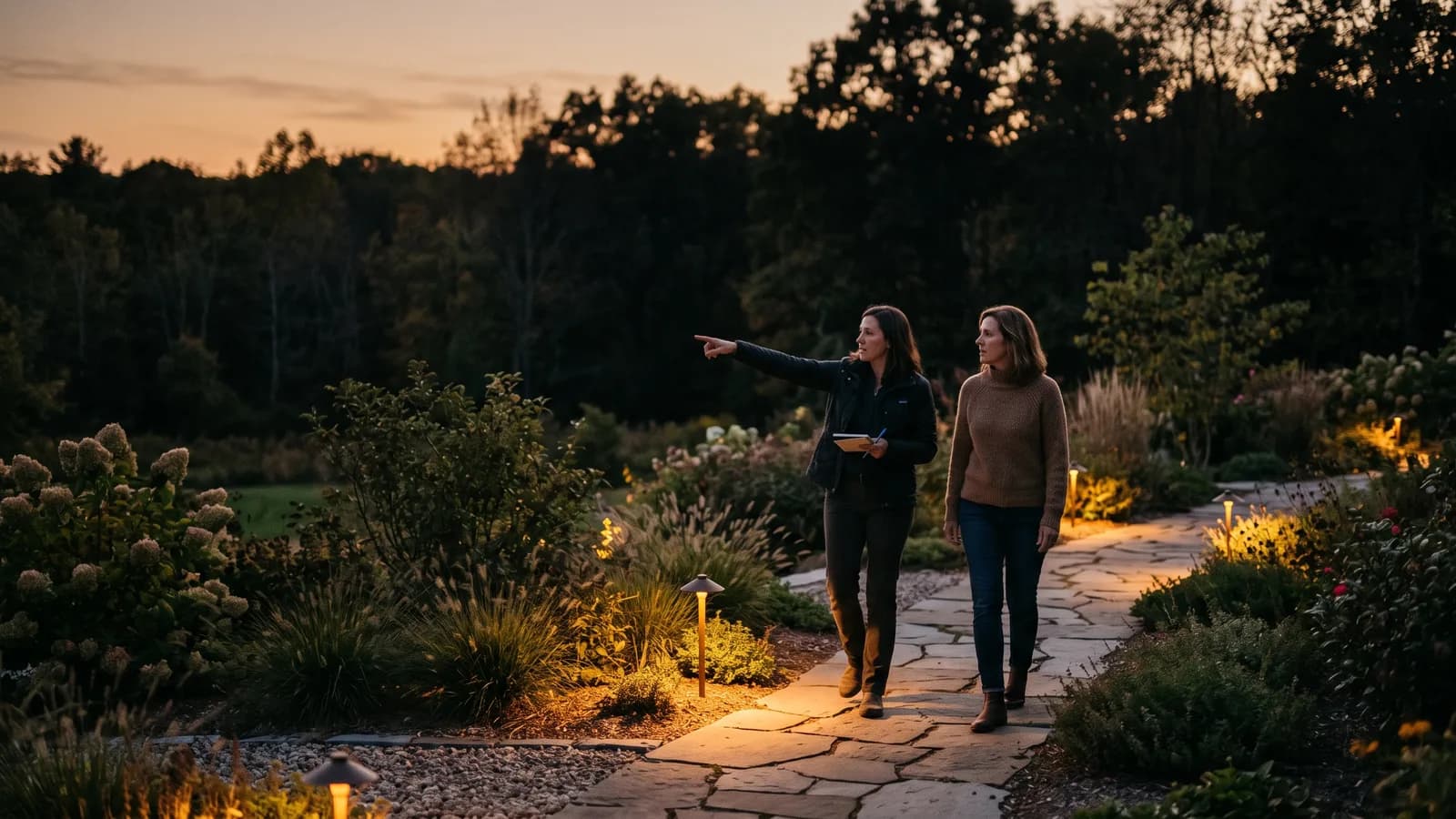
Once the designer is on site, the property does most of the persuading. A dusk walk-through that starts with the requested path lights and simply continues past them, toward the tree line, the porch columns, or the side of the garage that has sat in the dark for years, shows the homeowner a version of their property they had not pictured. The path lights get installed exactly as asked. Everything else gets mentioned as an observation, not a pitch, and the homeowner is left to decide whether the rest of the property is worth including rather than being told it should be.
Pointing out zones during the property walk without pushing
A simple, low-pressure phrase does most of the work: “A lot of homeowners end up adding a light or two on that maple once they see the walk lit, want me to price it out as an option?” That framing leaves the decision entirely with the homeowner and costs nothing to say. It also means the proposal, when it arrives, can include the original request as a base line and every additional zone priced as a clearly optional line, which keeps the homeowner in control of where the final number lands and gives the designer a natural way to show what a fuller system would cost without ever framing it as pressure.
Let the property talk
When a few path lights really is the right scope
A designer who has run this walk-through a hundred times can usually tell within the first few minutes which category a property falls into. A quarter-acre lot with a single young maple and a straight concrete walk rarely supports the same expanded proposal as a mature, heavily wooded half-acre with a stone facade and a long circular drive. Reading the property honestly, rather than defaulting to the same expanded pitch on every visit, is part of what keeps the walk-through credible the next time a homeowner mentions it to a neighbor.
Not every small request is an underestimate. A homeowner on a tight lot with no mature trees, a recent buyer who already finished a larger renovation this year, or a rental property owner budgeting strictly for resale value may genuinely need exactly what they asked for and nothing more. Pushing a bigger design onto a property or a budget that cannot support it wastes the visit and damages the trust a clear, honest proposal is supposed to build. The goal is never to sell more than the property or the homeowner is ready for. It is to make sure the smaller scope was a genuine choice, not a default set by a homeowner who simply did not know a bigger option existed, and reading that difference correctly is part of what separates a designer from someone just filling an order.
Ready to talk numbers on your own pipeline?
On the strategy call, we'll lay out the plan we'd run for your business and talk through how it fits your market.
Final thought
The four-path-light phone call is not a signal to argue with or to take at face value without a second look. It is an opening line from someone who has not yet seen what their own property looks like after dark. Book the visit the request describes, let the walk-through reveal what else is there, and write the proposal so the homeowner chooses the final scope rather than having it chosen for them on the phone. Handled this way, the objection stops being an obstacle and becomes the first step of the actual sales process, and the homeowner leaves the visit feeling like the bigger idea was theirs.
Tagged