
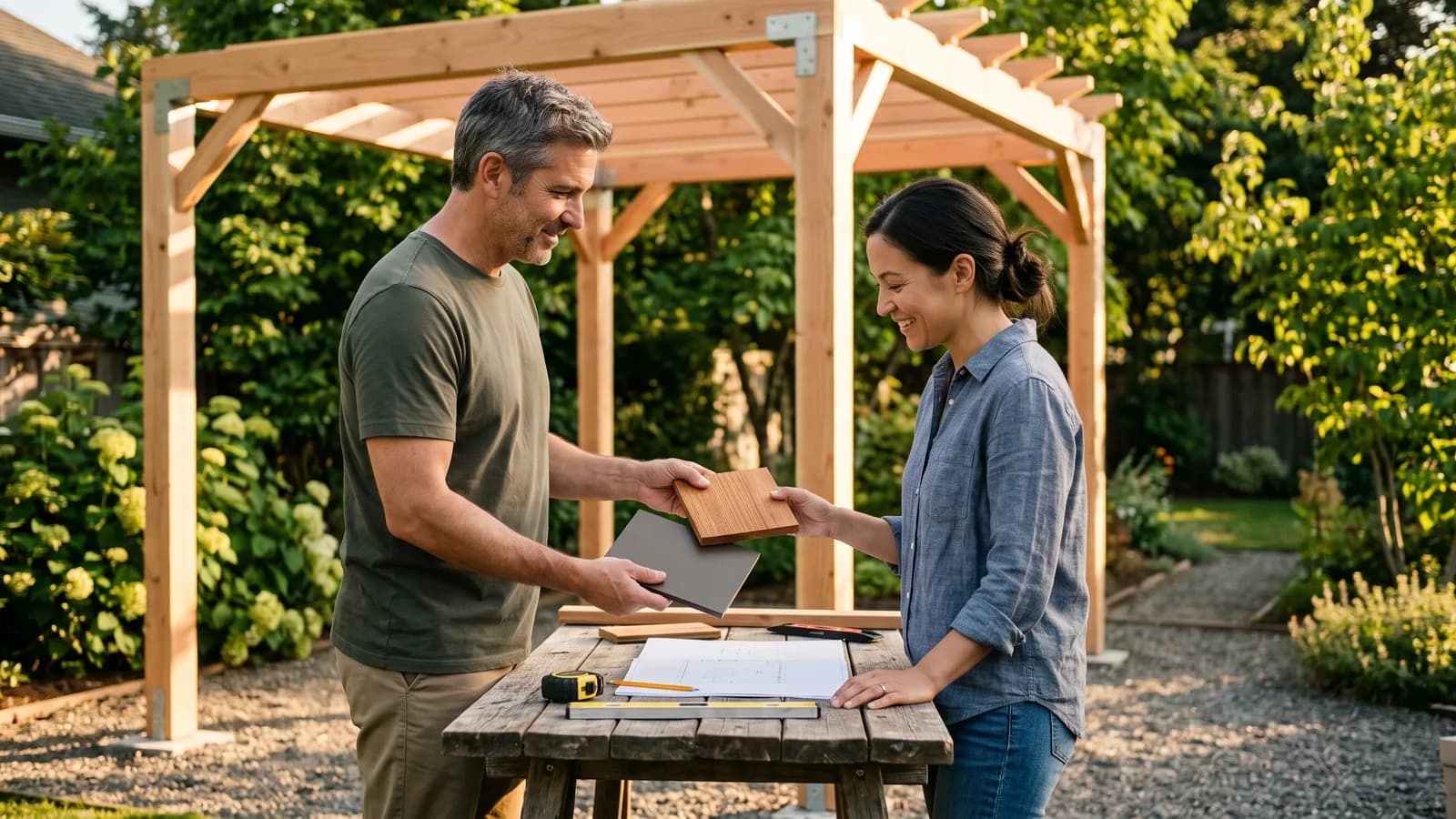
Pergola buyers rarely arrive material-neutral. Most have a look in mind from a saved photo weeks before a rep ever sees the yard, and that photo is often the wrong material for the site, the climate, or the buyer's actual maintenance tolerance. The materials conversation is where that preconception gets validated or gently redirected, and doing it early and honestly protects trust through everything that follows.
Why the materials conversation happens earlier than expected
Homeowners research pergolas the way they research most home projects now, by saving images that catch their eye before they understand the tradeoffs behind them. By the time a rep is in the driveway, the buyer often already has an opinion. Ignoring that opinion and launching straight into a scripted pitch reads as tone-deaf. Meeting it directly, and then widening the frame, builds credibility faster than any brochure.
The photo itself is rarely wrong so much as incomplete. A saved image usually shows a finished structure in ideal light, staged furniture, and a climate the buyer's own yard may not share. None of that is visible in a two-second scroll through a feed, which means the rep's job in the first few minutes is filling in the context the photo never provided, not correcting the buyer's taste.
Cedar and hardwood for the traditional buyer
Cedar and hardwood carry a warmth and grain that photographs well and matches what most buyers picture when they hear the word pergola. The honest tradeoff is maintenance: staining or sealing on a recurring schedule, and a visible weathering process if that schedule slips. Buyers who value the natural look and are willing to own the upkeep are the right fit, and saying that plainly, in those terms, does more for trust than letting the buyer discover it after the sale.
Within that traditional category, species matters almost as much as the choice between wood and metal. A cedar that resists rot naturally and ages to a silvery gray if left unsealed reads very differently than a denser hardwood species that holds stain longer but costs more up front and adds meaningful weight to the structure, which can shift footing requirements on a freestanding build.
Aluminum for the low-maintenance buyer
Aluminum trades some of that traditional warmth for a finish that holds its color and shape with essentially no upkeep, which matters to buyers who travel, who are older and do not want a ladder job every couple of years, or who simply want one less thing on the seasonal to-do list. Aluminum is also the material most louvered and motorized roof systems are built on, which is worth mentioning early if a motorized roof upgrade is even a possibility for the buyer's budget.
Powder-coated finishes now come in enough colors and textures that the low-maintenance choice does not have to look institutional, a detail worth mentioning to buyers who assume aluminum means a stark, modern look that would clash with an otherwise traditional home.
Framing tradeoffs without overselling one option
The material with the better margin is not automatically the right recommendation, and buyers can tell when a rep is steering rather than informing. A cleaner approach lays out three or four honest criteria, maintenance tolerance, budget, climate, and desired look, and lets the buyer weight them. The rep's job is translating those weights into a recommendation, not deciding the answer before the questions are asked.
A simple test
Climate and moisture considerations across regions
Climate changes the calculus more than most buyers expect. In humid regions of the southeastern United States, or coastal areas with salt air, wood species and sealants matter more and the maintenance interval shrinks. In drier climates, wood holds up longer with less intervention. Canadian buyers in regions with heavy freeze-thaw cycles need footing and fastener choices that account for seasonal movement regardless of which material sits on top. None of this needs to be delivered as a lecture, a single sentence tying the recommendation to the buyer's actual climate is usually enough to make the advice land as expertise rather than a sales script. A dealer working across a metro area that spans a humid river valley and a drier upland neighborhood might reasonably recommend different sealant schedules to two buyers only twenty minutes apart, a level of specificity no national buying guide could offer.
Connecting material choice to the upsell path
Material choice is not the end of the conversation, it shapes everything that comes after it. Attached versus freestanding pricing shifts depending on the material's weight and span requirements, and the finished look changes what a good product photo can capture. A cedar build photographs beautifully in warm late-day light, an aluminum louvered system photographs well showing the mechanism in action, and knowing which shot to plan for on install day connects straight back to building a repeatable photo checklist for every finished job. Getting the materials conversation right early makes every later conversation, pricing, upsells, and marketing, easier to have honestly.
Buyers weighing the numbers benefit from seeing the tradeoff in real terms, say a cedar build that costs less upfront but carries a modest annual sealant cost against an aluminum build that costs more initially but needs little beyond an occasional rinse. Neither answer is universally right, but naming the tradeoff in rough dollars helps a buyer choose with their eyes open rather than guessing from a photo alone.
Ready to talk numbers on your own pipeline?
On the strategy call, we'll lay out the plan we'd run for your business and talk through how it fits your market.
Final thought
Buyers do not need to be talked out of the photo they saved, they need the tradeoffs behind it explained clearly enough to confirm or adjust their own instinct. A rep who treats cedar, hardwood, and aluminum as three legitimate answers to different questions, rather than a ladder with one correct rung, earns the kind of trust that survives the inevitable moment when the site or the climate disagrees with the original photo.
Tagged