
Buyers frequently assume an attached pergola should cost less than a freestanding one, on the logic that a structure tied to the house needs less of its own frame. Site conditions usually push the number the other way. Framing that gap early, as a structural conversation rather than a price defense, keeps the sale moving toward the right product instead of an argument over a number the buyer half-understood from a competitor's ad.
Why attached and freestanding pergolas price differently
Neither design is objectively better, they solve different problems. An attached pergola extends an existing patio and reads as part of the house from day one, while a freestanding pergola can sit anywhere in the yard the homeowner wants shade, away from the house entirely if that better suits how the space gets used. The pricing conversation goes smoother once both sides understand that the buyer is choosing between two different structural approaches, not a discount version and a premium version of the same thing.
An attached pergola ties into the house through a ledger board, which sounds like it should reduce material and labor. In practice, that attachment point introduces its own set of requirements, flashing to prevent water intrusion behind the ledger, structural verification that the house wall can carry the load, and often a more involved permit review because the addition is now considered part of the existing structure rather than a standalone accessory.
Say a homeowner is comparing two quotes, a $7,500 attached pergola and an $8,200 freestanding one covering roughly the same square footage. The gap looks small on paper, but it hides a different set of line items entirely, ledger flashing and a structural inspection on the attached quote, extra footings and possible grading on the freestanding one. Neither number is padded, they are just built from different work.
Structural and site-prep factors that shift cost
A freestanding pergola avoids the ledger entirely but needs its own full set of footings on all four sides, often deeper and more numerous than the footings an attached design requires on its unattached edges. Site grading matters too, a freestanding structure set away from the house may sit on ground that needs leveling or drainage work the attached option, tucked closer to an already-graded patio, does not.
Soil conditions add another layer that rarely shows up in an online estimate. A yard with heavy clay or a high water table can require deeper or wider footings than a standard sandy or loam soil would, and that difference applies to both attached and freestanding designs, though it tends to affect the freestanding option more simply because it needs more footings in total.
How buyers misread the price gap before the visit
Most of this is invisible from a photo. A buyer comparing two online images sees a smaller structure attached to a house and a larger one standing alone, and reasonably assumes the smaller one costs less. The structural reality, ledger flashing, load verification, and permit complexity on the attached side versus footing count and grading on the freestanding side, only becomes visible once a rep explains it, which is why the explanation needs to happen before the number does. Competitor advertising often makes this worse by quoting a single starting price for “a pergola” without specifying which configuration it applies to, which trains buyers to expect one number and then feel misled when their specific site produces a different one.
Framing the conversation without leading with a number
Leading with price invites the buyer to react to the number before understanding what produced it. A stronger sequence starts with the site, what the yard and the house wall actually require, then lets the price follow as a natural consequence of that explanation. The same discipline applies to the materials conversation, where the honest tradeoffs need to land before the buyer starts anchoring on a number from a saved photo. A rep who can name the two or three site factors that will matter most before the buyer even asks, the wall material for a ledger attachment, the slope of the yard for a freestanding footprint, signals competence in a way that a polished brochure cannot.
Sequence, not spin
Using the site visit to anchor the real cost drivers
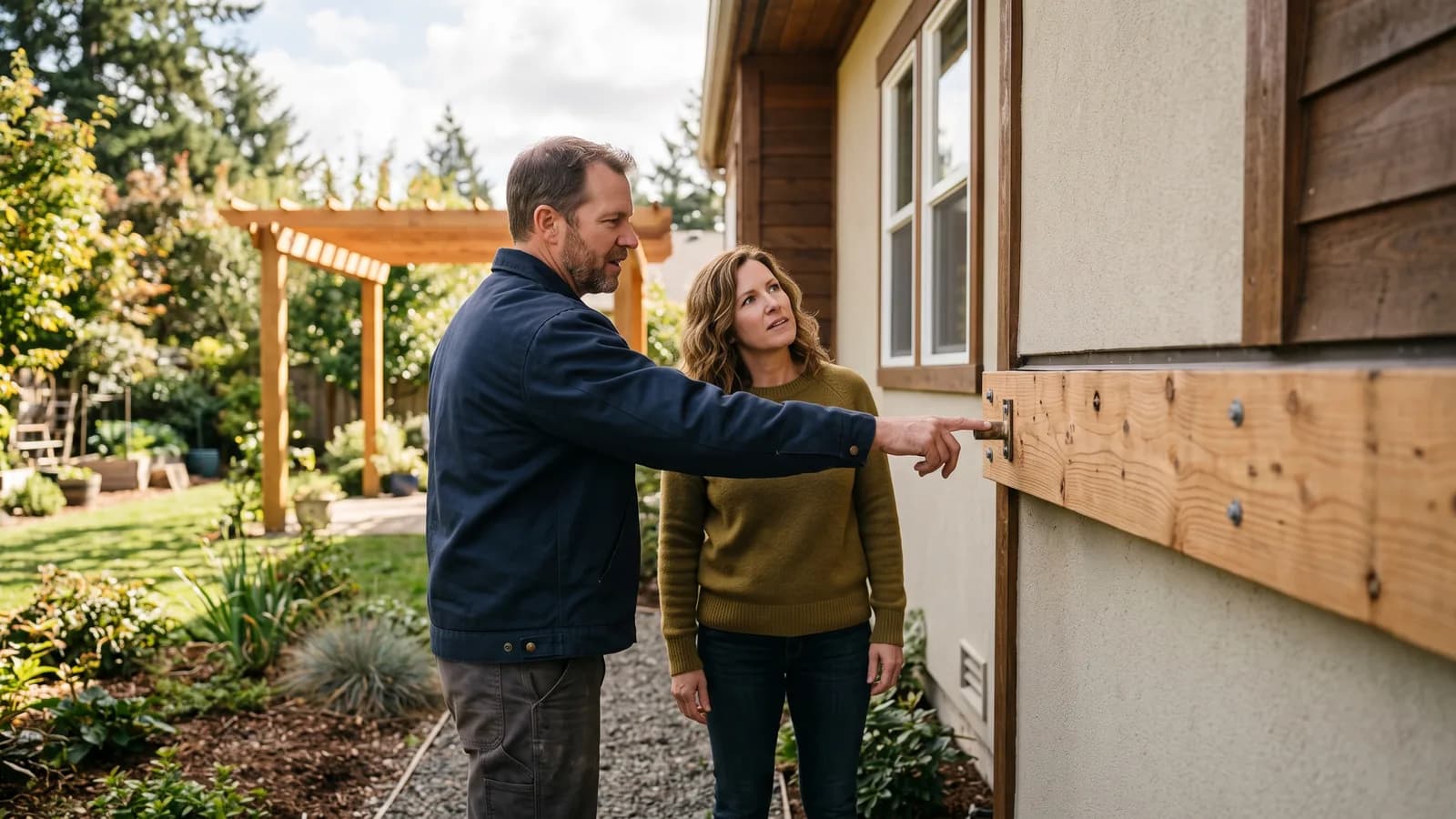
The site visit is where this framing does its real work. Standing at the actual wall, pointing to where the ledger would attach, and walking the yard where freestanding footings would go turns an abstract pricing conversation into something the buyer can see and touch. That same site-first habit carries through the rest of the sale, including how and when financing gets introduced and how a rep responds when a buyer mentions they are collecting three quotes. In both cases, grounding the conversation in the specific site does more than any generic pitch.
Photos taken during the site visit itself, the wall where a ledger would attach, the corner of the yard where a footing would go, do double duty. They give the buyer something concrete to review after the rep leaves, and they give the eventual proposal document a visual anchor that a generic template pricing page never has. Buyers who can see exactly what they are paying for tend to raise fewer objections once the number arrives in writing.
Ready to talk numbers on your own pipeline?
On the strategy call, we'll lay out the plan we'd run for your business and talk through how it fits your market.
Final thought
Attached and freestanding pergolas are not a cheaper option and a more expensive one, they are two different structural problems that happen to produce similar-looking backyard shade. A rep who explains the site-driven reasons behind the price gap, before the buyer has a chance to anchor on the wrong assumption, turns a potential objection into a moment that actually builds confidence in the quote.
Tagged