
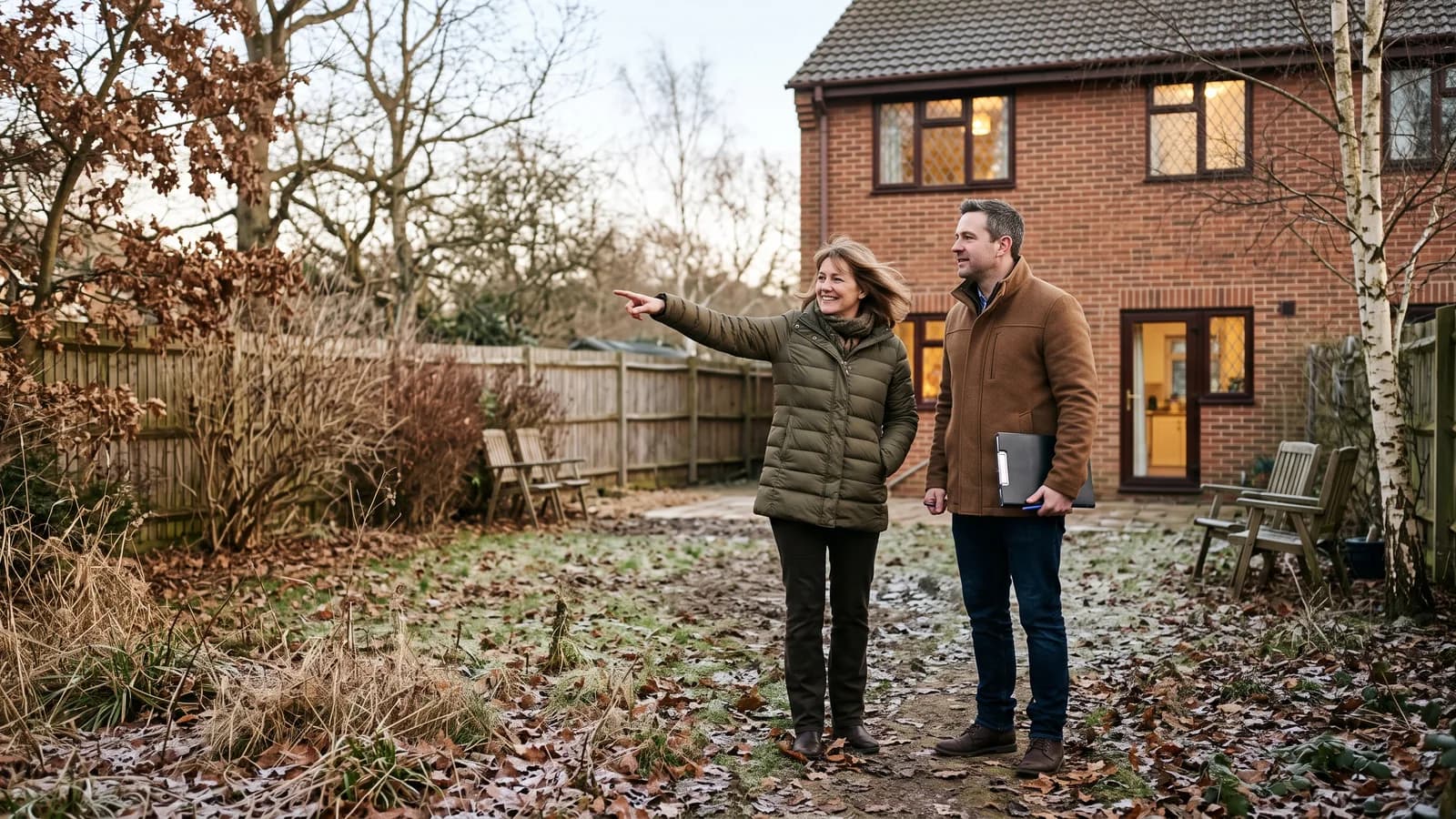
During the off-season, a design-build consultation frequently ends with a version of the same line: let's wait until spring to decide. It sounds reasonable on its surface, why commit to backyard work in the middle of winter, but it ignores how much real time design finalization, permitting, and crew scheduling actually consume before a shovel ever touches the ground. The honest response is not a pressure tactic, it is math.
Why wait until spring sounds reasonable but ignores lead time
From a homeowner's point of view, the logic makes sense, the work happens in warm weather, so the decision should happen close to warm weather too. What that logic misses is everything that has to happen before construction can start, finalizing a design, selecting materials, submitting for permits where required, and securing a spot on a crew's production calendar. None of that can be compressed into the first warm week of spring, and firms that let the objection go unanswered are letting a false timeline stand uncorrected.
This is not a manufactured urgency tactic borrowed from high-pressure sales training. It is a structural reality specific to this trade, one a homeowner comparing quotes for indoor remodeling would never encounter, since indoor projects are not constrained by frost, permitting seasons, or a crew calendar that fills months in advance.
Sales reps who have not internalized this distinction tend to respond to the objection the same way a repair-trade rep would, with generic urgency language about limited-time pricing or a discount that expires soon. That approach does not match the homeowner's actual reasoning and tends to make the objection harder to move past, since it reads as pressure applied for its own sake rather than a response grounded in the calendar itself.
Reframing the off-season consultation as the planning phase
The most effective response does not argue against waiting, it reframes what the current consultation actually is. The homeowner is not being asked to commit to construction today, they are being offered the chance to use the off-season for the planning work that has to happen anyway before construction can begin. Framed this way, moving forward now does not conflict with waiting for good weather, it is what makes a spring start possible in the first place.
Explaining permitting and design lead time honestly
Specifics matter more than a general appeal to urgency. Explaining that design finalization and material selection typically take a defined number of weeks, and that permitting, where a jurisdiction requires it, adds its own separate timeline on top, gives the homeowner something concrete to plan around rather than a vague sense of pressure. In many municipalities across both the United States and Canada, permit review queues actually slow down further heading into peak building season as every trade files at once, which makes an early application, not a spring one, the faster path to an early start date.
- State the design timeline as a number.“Design finalization typically takes several weeks, so starting that process now is what puts you in line for an early spring build.”
- Name the permitting queue explicitly where it applies.A homeowner who understands permit review gets slower, not faster, as spring approaches has a real reason to start the paperwork now.
- Connect today's decision to a specific spring outcome.“Signing this month puts you near the front of the spring production schedule” is a concrete, honest incentive, not a pressure tactic.
What to offer instead of a hard close
Not every off-season consultation should end with a signature that day, and pushing for one when the homeowner is not ready usually backfires. A better offer is to begin the design and planning phase now, with the construction commitment and payment structured around an actual spring start date. For a homeowner who is close but not quite ready to sign, offering a second, lower-pressure conversation to walk through the finalized design, booked directly through a simple book a call link, keeps the planning phase moving without forcing a decision on the spot. This mirrors how price should be presented on a high-ticket project, anchored to what the homeowner is actually getting at each stage, not to an artificial deadline. It also keeps the relationship active through a follow-up cadence paced to a long decision cycle rather than forcing a decision the homeowner is not ready to make.
Lead time is the honest argument
When the objection is really about something else
Sometimes wait until spring is not about timing at all, it is a polite way of expressing budget hesitation, a need to consult a spouse who was not present, or simple uncertainty about the design. A consultant who hears the objection and immediately launches into the lead-time argument without first checking whether that is the real concern risks answering a question the homeowner did not actually ask. A brief, direct check, “is the timing the main hesitation, or is there something else you're still weighing?”, surfaces the real objection before responding to the wrong one.
This same objection is also the reason winter marketing should be built around planning, not immediate construction, since a homeowner who first encounters the firm through a design-planning campaign arrives at the consultation already primed to think of the off-season as prep time rather than a reason to wait.
Ready to talk numbers on your own pipeline?
On the strategy call, we'll lay out the plan we'd run for your business and talk through how it fits your market.
Final thought
The wait until spring objection deserves a direct, honest answer grounded in real design and permitting lead time, not a sales script built around artificial urgency. Reframe the off-season consultation as the planning phase that makes a spring start possible, give the homeowner specific numbers instead of vague pressure, and check whether timing is even the real concern before responding. Handled this way, the objection stops being a wall and becomes the exact reason to move forward now.
Tagged