
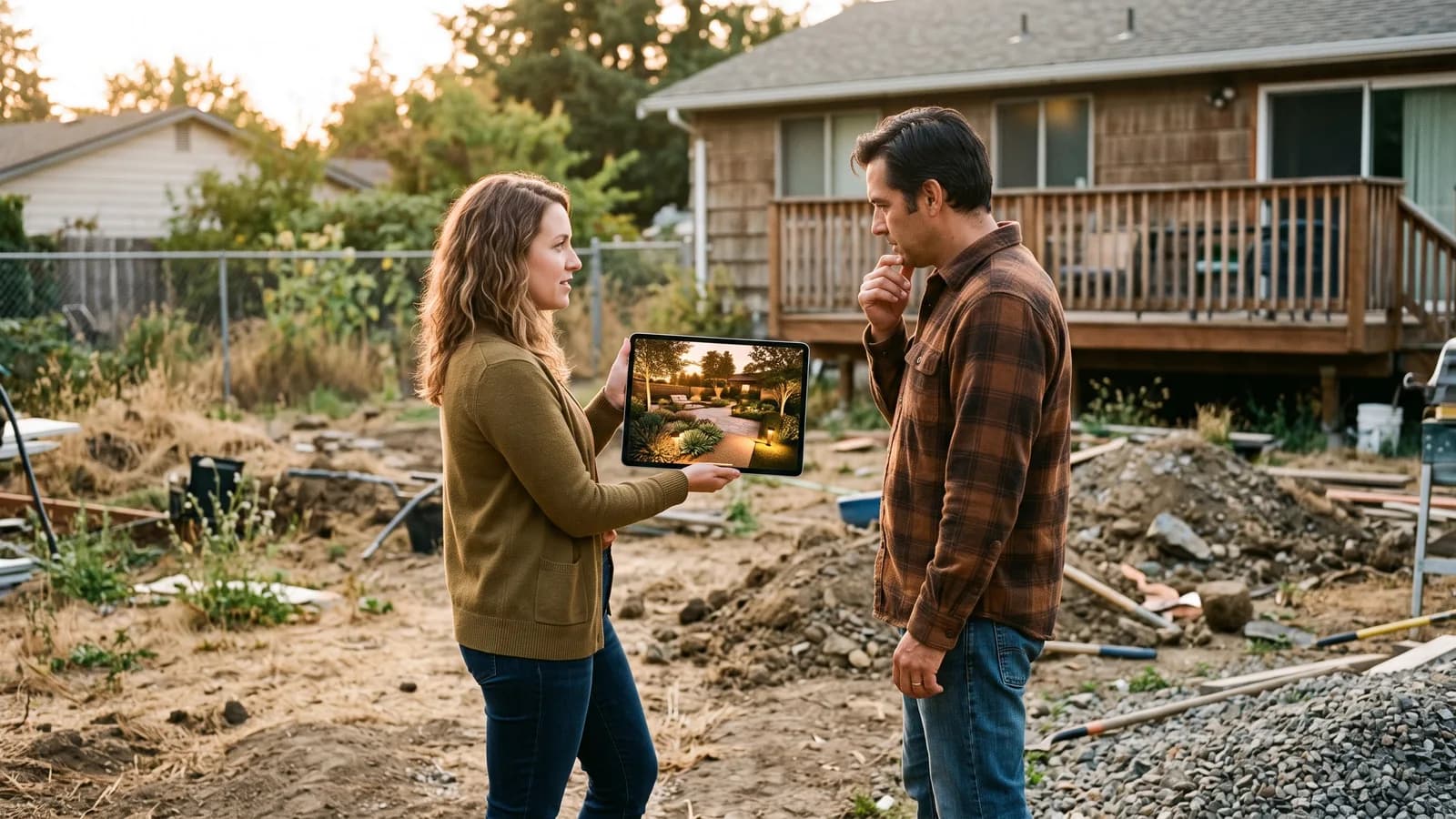
Few residential trades sell a visual future-state the way design-build outdoor living does. A rendering that shows a homeowner their own backyard transformed carries more persuasive weight than any spec sheet or price list, yet many firms treat it as a follow-up email attachment rather than the moment the entire consultation has been building toward. That single choice, live reveal versus emailed afterthought, changes how the whole sale feels.
Why the rendering is the emotional center of the consultation
A homeowner walks into a design-build consultation with an abstract idea of what their backyard could become. Until they see it rendered, that idea stays theoretical, competing in their head against every other place their money could go. The rendering converts the abstract into something specific and personal, their own fence line, their own house facade, their own trees, with a finished outdoor room placed inside it. That specificity is what moves a homeowner from considering a project to wanting it.
Price, materials, and timeline all matter, but they matter after the homeowner has already decided the outcome is worth pursuing. The rendering is what creates that decision. A consultation that rushes past it, or delivers it later by email without any live walkthrough, skips the step that does the most emotional work in the entire sales process.
Structuring the visit to build toward the reveal
The strongest consultations are sequenced deliberately, with every earlier step feeding into the reveal rather than competing with it. That means resisting the urge to talk price or show a portfolio too early, before the homeowner has a personal stake in seeing their own yard transformed. A rep who opens with a portfolio of past projects, however impressive, is unintentionally training the homeowner to compare their own yet-unrendered yard against someone else's finished one, which does the opposite of building anticipation for their own reveal.
Measurements and questions come first
Before any design concept comes up, the visit should focus on gathering what actually shapes the rendering, site measurements, sun exposure, how the family plans to use the space, and any constraints like property lines or existing structures. Asking detailed questions here does double duty, it produces a better design, and it also signals to the homeowner that what comes next is being built specifically for them rather than pulled from a generic template.
- Ask how the space gets used, not just what it should look like.A family that wants a fire feature for regular weeknight use needs a different layout than one planning occasional large gatherings, and asking this early shapes a rendering that feels personally accurate.
- Confirm constraints before design work starts.Property lines, existing drainage, and utility locations all affect what is realistically buildable, and surfacing them early avoids a rendering that has to be walked back later.
- Note what excites the homeowner as they talk.A detail mentioned almost in passing, a specific material, a favorite feature seen at a neighbor's house, is often the detail that makes the eventual rendering feel personal rather than generic.
Presenting the rendering as a live moment, not an attachment
When the rendering is ready, whether generated on-site during the same visit or delivered at a scheduled follow-up meeting, it should be presented in person and held up against the real space it depicts. Standing in the actual backyard with a tablet or printed rendering in hand, comparing the current empty space directly against the transformed version, creates a moment an emailed PDF simply cannot replicate. The homeowner sees both realities at once, and the gap between them becomes the argument for moving forward.
The comparison is the pitch
What to do immediately after the rendering lands
The minutes right after the reveal are when momentum is highest, and they should not be spent immediately pivoting to a price sheet. Let the homeowner react, ask what they notice first, and answer questions about the design before shifting toward numbers. Once the conversation naturally moves to cost, that is the moment to bring in a structured approach to presenting price on a high-ticket project, so the number lands in the context of the vision the homeowner just saw, not as a cold figure on its own.
Turnaround speed matters here too. A firm that can produce a compelling rendering quickly, without sacrificing quality, keeps the emotional momentum from the site visit intact rather than letting it cool over days of waiting, which is the core argument behind why quoting speed wins design-build projects. If the rendering cannot be delivered same-visit, the follow-up needs to be scheduled specifically, not left as a vague “we'll send it over,” and it should feed directly into a follow-up cadence paced to how long a real backyard decision takes.
None of this works if the first consultation is hard to get on the calendar in the first place. A simple, direct path to book a call keeps that first step frictionless, so the strategy above has an appointment to work with.
Ready to talk numbers on your own pipeline?
On the strategy call, we'll lay out the plan we'd run for your business and talk through how it fits your market.
Final thought
The rendering is the single most persuasive asset a design-build outdoor living firm has, and it deserves to be treated that way during the consultation, built toward deliberately, presented live against the real space, and given room to land before the conversation moves to price. Firms that structure their consultation around this reveal consistently outsell firms that gather the same information but deliver the same design as a flat email attachment days later. The design work might be identical. The moment it is presented is not, and that moment is worth protecting.
Tagged