
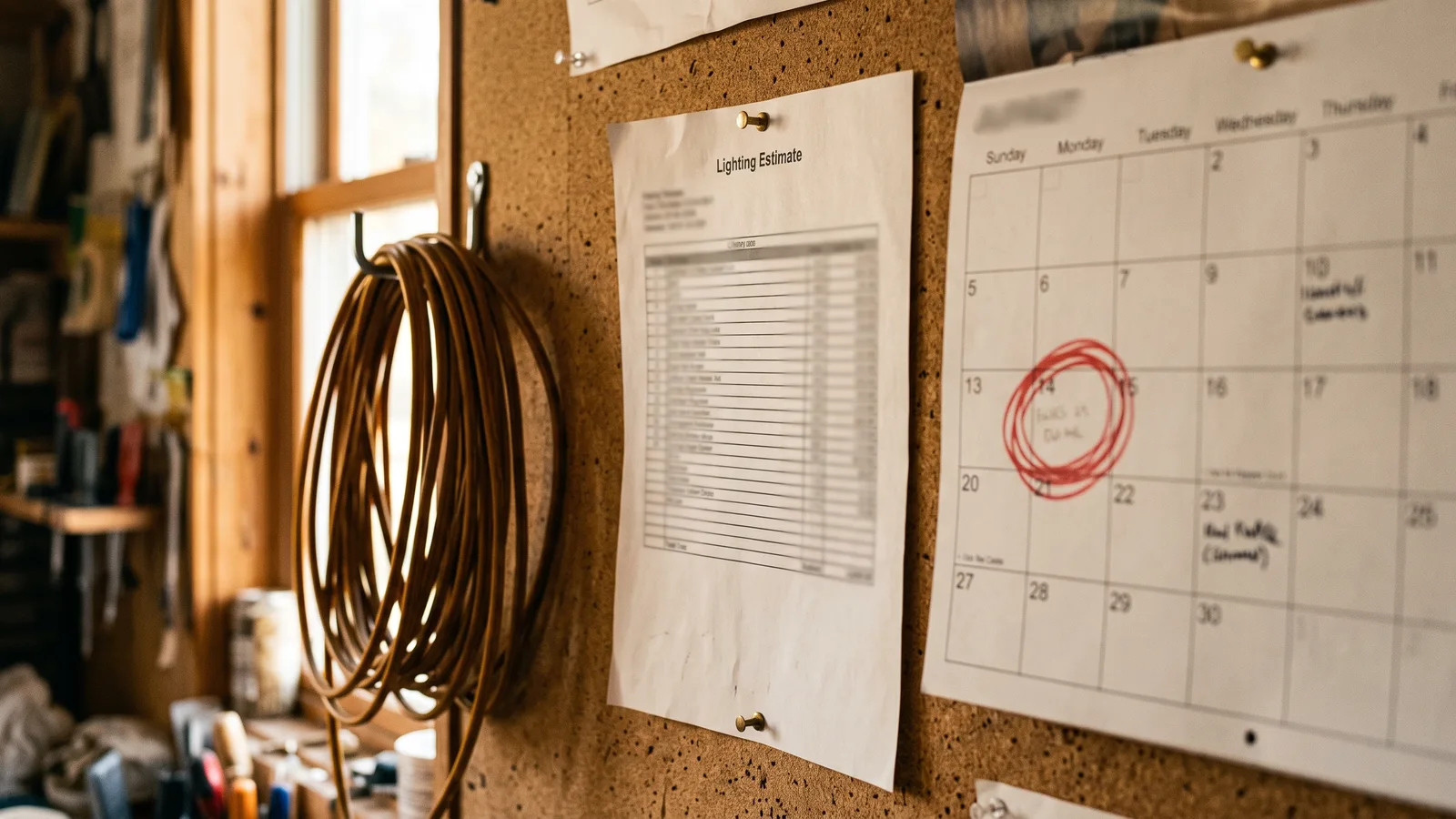
A homeowner who goes quiet after receiving a landscape lighting proposal has usually not decided against the project. They have gotten busy, set the estimate aside, and moved on to whatever came up that week. A single follow-up email sent once and forgotten leaves that estimate exactly where it landed. A structured cadence spread across several weeks recovers a real share of it without ever feeling like pressure.
Why a quiet homeowner is usually a timing problem, not a no
Landscape lighting is almost always a discretionary purchase rather than an urgent repair. Nothing forces a decision the way a leaking roof does, which means the proposal competes against every other item on a homeowner's to-do list, most of which feel more pressing in the moment even when none of them matter more in the long run. Silence after a proposal is far more often a scheduling gap than a rejection, and treating it as a closed file the moment a week passes throws away work that already happened, the site visit, the design, the dusk demonstration, for no good reason at all.
Building a cadence spaced across weeks, not a single reminder
Say a company generates forty signed proposals in a typical month and roughly a quarter of them go quiet after the first week. Without a structured cadence, most of those ten proposals simply never get revisited, and the site visit, the design time, and the dusk demonstration that went into each one are written off entirely. A cadence that recovers even a third of that group turns three or four estimates a month from a sunk cost back into signed revenue, without adding a single new lead to the pipeline.
A single “just checking in” email sent three days after the proposal catches almost nobody, since three days is rarely long enough for a busy homeowner to have circled back to anything. A cadence spread across several touches, a short note at one week, a slightly more specific check-in at three weeks, and a final message tied to a real deadline around six to eight weeks out, matches how long these decisions actually take to settle. Each touch should be short and should not repeat the full pitch; the proposal already made the case once, and repeating it in full just makes the homeowner feel chased.
Tying follow-ups to seasonal deadlines and install windows
A vague reminder is easy to ignore. A reminder tied to a real deadline is not. “If you'd like the system installed before the holidays, we'd need to schedule by [date] to make that work” gives a homeowner a specific reason to act now rather than eventually. The same logic applies in reverse each spring, when a reminder tied to the reopening of the install season after winter gives a quiet estimate a natural, non-pushy reason to resurface, particularly for properties in colder regions where the ground itself sets the real deadline rather than the calendar.
A deadline is not pressure
What to say that does not read as pressure
Channel matters as much as wording. A short text message often gets read within minutes, while an email can sit unopened in a crowded inbox for days, and a phone call risks landing at an inconvenient moment and reading as more pressure than intended. Matching the channel to how the homeowner communicated during the original consultation, rather than defaulting to whichever channel is easiest for the office to send, respects the relationship that was already built during the site visit.
The tone of a good follow-up sounds like a scheduling note, not a sales push. Referencing the specific zones discussed during the original visit, rather than restating the whole proposal, signals that the message is personal and not a template. This pairs naturally with how quickly the original proposal arrived, since a homeowner who received a fast, specific quote is more likely to read a later follow-up as continued attentiveness rather than as a sign the company is short on work and chasing anyone who will answer.
When to actually close the file
A closed file is also worth revisiting once, the following year, rather than being deleted outright. A homeowner who was not ready during one season is sometimes exactly ready during the next one, especially once a neighbor's finished system has had a full year to become part of the everyday view from their own porch.
Not every quiet estimate should stay open indefinitely. After a deadline-tied final message goes unanswered, closing the file with a short, friendly note, “no problem at all, we'll leave this open and you can reach out whenever you're ready”, keeps the door open without continuing to chase someone who has genuinely moved on. This same discipline matters upstream, since a consultation that was properly confirmed before it happened is far less likely to go quiet afterward in the first place. Setting clear lead quality standards earlier in the funnel reduces how often this recovery cadence is even needed to begin with.
Ready to talk numbers on your own pipeline?
On the strategy call, we'll lay out the plan we'd run for your business and talk through how it fits your market.
Final thought
A stalled estimate is not dead until it has actually been given a fair chance to resurface. Spacing follow-ups across several weeks, tying the final message to a real seasonal deadline, and keeping the tone closer to a scheduling note than a pitch recovers a meaningful share of proposals that a single reminder email would have quietly lost. The site visit and the design work already happened; a structured cadence just makes sure that work gets a real answer instead of fading into silence.
Tagged