
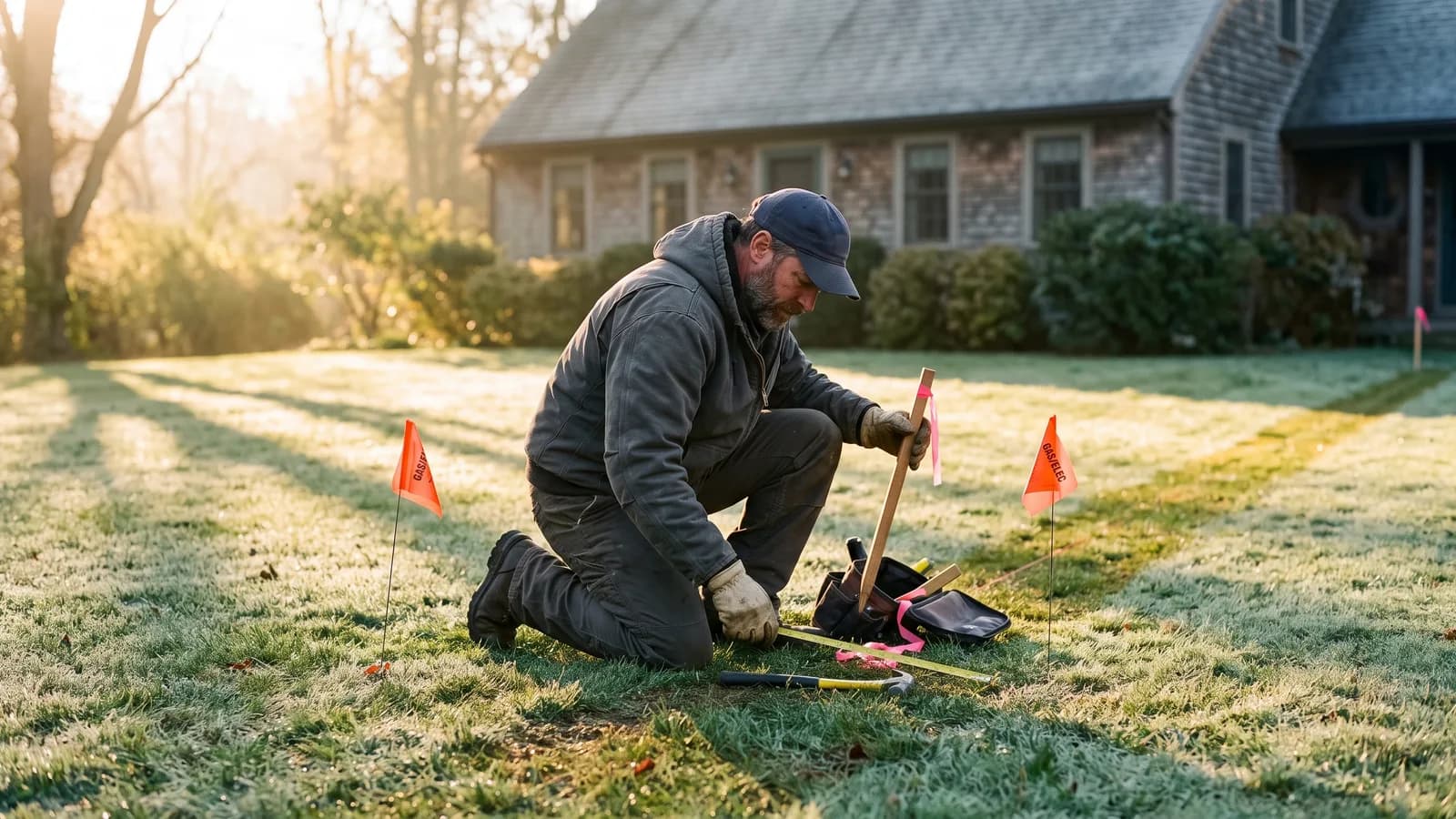
A fence installed a foot over the true property line turns a routine job into a dispute with a neighbor, and a post hole dug without a locate request can strike a buried gas or electrical line and turn an afternoon of digging into an emergency call. Both risks are close to unique to fence installation among exterior trades, because a fence has to sit exactly on a boundary and every post is its own dig. Building a survey check and a locate request into the standard quoting process, rather than treating either as optional, is what keeps both risks from turning into real incidents.
The two risks unique to putting posts in the ground
Most exterior trades work within the footprint of a house that already exists. Fence work is different on two counts. First, the fence line itself is the boundary claim, install it in the wrong spot and the result is not a cosmetic issue, it is a dispute over land with a neighbor who may not have agreed to anything. Second, every post hole is a small excavation, and a buried gas line, electrical conduit, or water line struck by a post auger is a genuine safety incident, not just a repair bill. Neither risk shows up on a typical estimate walk-through unless the process is built to catch it.
When a professional survey is worth requesting
Not every job needs a fresh survey. A property with clear, recent survey pins still in the ground, or a straightforward rectangular lot with an existing fence being replaced on the same line, usually does not justify the added cost and time. A survey earns its cost when the existing boundary markers are missing or disputed, when the new fence line does not follow an existing fence, or when a neighbor has ever raised a question about where the line actually sits. In those cases, the cost of a survey is small next to the cost of tearing out a misplaced fence and rebuilding it a few feet over.
Reading an existing survey versus ordering a new one
Many homeowners already have a survey from when they purchased the property, even if they have never looked at it closely. Part of the intake process can simply be asking whether one exists and requesting a copy, since reading an existing document is faster and cheaper than ordering a new one. The caveat is that an older survey is only as good as the markers it references still being in the ground, so a quick field check against any visible pins is worth doing before treating an old document as current fact.
Building locate request lead time into the installation schedule
A locate request submitted through the regional call-before-you-dig utility service takes a set number of business days to process before digging can legally begin, and that lead time needs to be baked into the installation schedule rather than discovered the week of the job. Submitting the request as soon as a contract is signed, not the day before the crew is scheduled to show up, keeps the wait from becoming the reason an install date slips. A dispatcher who tracks locate status alongside crew scheduling catches a delay early enough to adjust the calendar instead of showing up to a job that legally cannot start yet.
Skipping a locate is not a shortcut
Explaining the process to a homeowner without sounding alarmist
Framing matters here. Telling a homeowner “we have to check for buried lines before we can dig” as a routine, standard step reads very differently than raising it as a warning about something that might go wrong. The same is true for a survey, framed as “we confirm the exact line so there are no surprises with the neighbor later” rather than implying a boundary dispute is likely. Most homeowners appreciate the diligence once it is framed as normal process rather than a problem being flagged, and a short line in the written quote saying both steps are included as standard practice reinforces that same message before anyone has to say it out loud.
What happens when a locate or survey turns up a problem
Occasionally a locate reveals a utility line running closer to the proposed fence line than expected, or a survey shows the fence would encroach on a neighbor's property. In either case, the fix usually involves adjusting the design, shifting the line slightly, routing around a utility easement, rather than abandoning the project. This is also the point where the local setback rules and any governing association requirements need to be rechecked together, since a shifted line can move a design out of compliance with either one even after it already passed the first review.
Handled well, a survey or locate finding is simply part of turning a real fence inquiry into an accurate project, not a reason to lose the sale. Homeowners generally respond better to a contractor who catches a problem early than one who installs first and discovers it later.
Ready to talk numbers on your own pipeline?
On the strategy call, we'll lay out the plan we'd run for your business and talk through how it fits your market.
Final thought
A property survey and a locate request are not paperwork that slows a fence job down, they are what prevents the two incidents that are hardest to recover from once they happen, a boundary dispute with a neighbor and a struck utility line. Building both into the standard quote and schedule, rather than treating them as extra steps for complicated jobs only, protects the business on every job, not just the ones where a problem happens to surface.
Tagged