
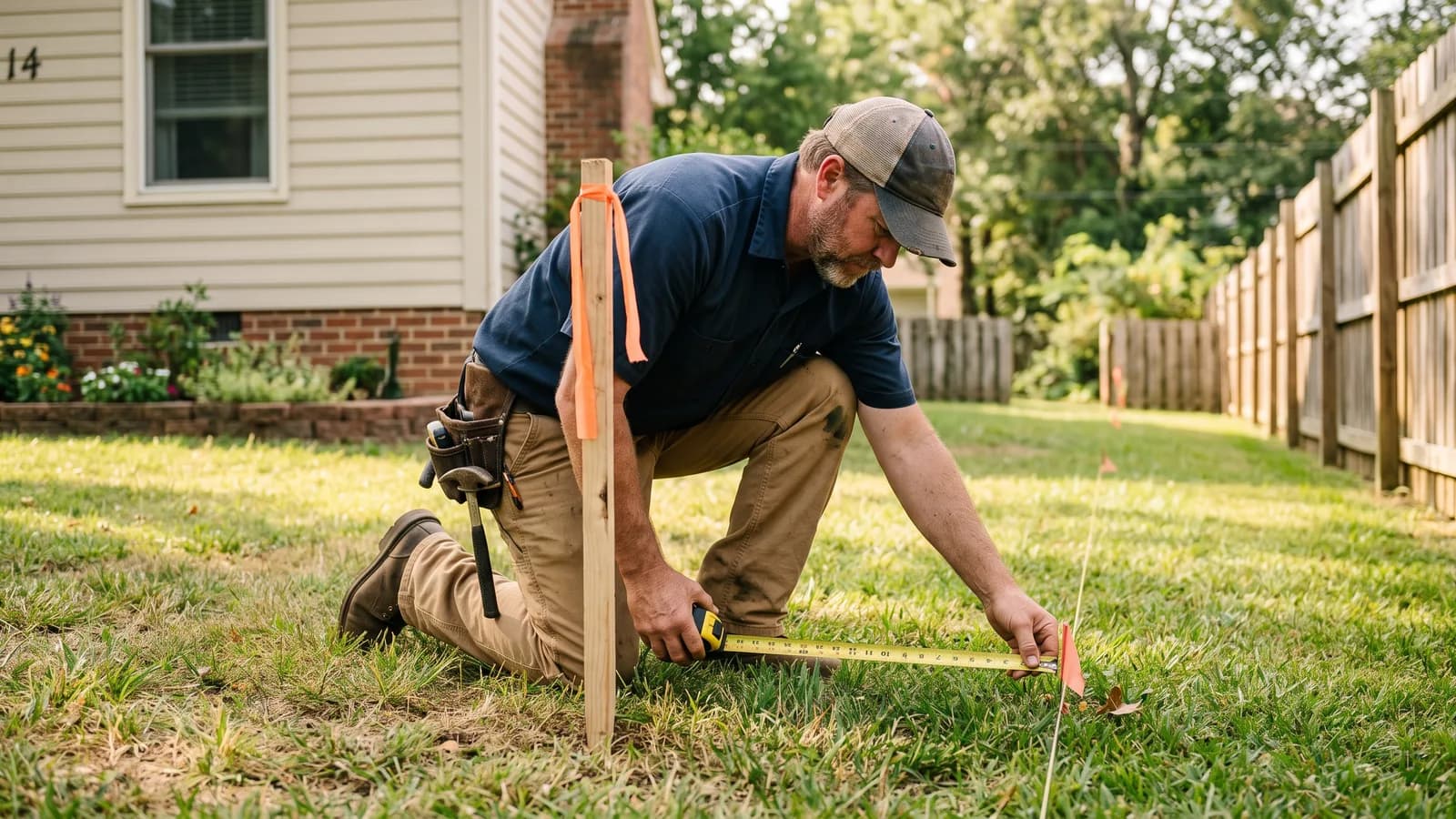
A six-foot privacy fence that sails through approval in one municipality can require a formal variance two towns over, and the permit threshold that applies rarely lines up the same way from one city to the next, let alone across the border between the United States and Canada. For a fence contractor working even a modest service radius, that patchwork is not a footnote, it is a daily operational fact. A jurisdiction checklist, built once and kept current, is what keeps a sales team from quoting a design that a local bylaw will not allow.
Why fence regulations are more granular than most exterior trades
A roofer or a siding contractor mostly deals with one set of building code requirements per job. A fence contractor deals with height limits that change between the front yard and the rear yard on the same lot, corner lot sightline triangles that restrict height near an intersection, separate rules for pool enclosures, and setback distances measured from a property line that may or may not match what a homeowner believes it to be. That granularity is specific to fences because a fence runs along boundaries and sightlines in a way that a roof or a window simply does not.
Building a jurisdiction checklist for a multi-city service area
The practical fix is a living document, not tribal knowledge held in one estimator's head. For every municipality in the service area, the checklist should capture maximum height by yard type, whether a permit is required and at what height it kicks in, minimum setback from the property line, and any pool-specific fencing requirements. Reviewing and updating it on a fixed schedule matters too, since bylaws do change, and a checklist that was accurate two years ago can quietly become wrong. Assigning one person to own the checklist, rather than leaving updates to whoever happens to notice a bylaw change, keeps it from drifting out of date the way most shared documents eventually do.
Height limits, setbacks, and corner lot sightlines
Rear yard height limits are usually the most generous, often six feet or close to it, while front yard limits are commonly capped much lower for visibility reasons. Corner lots add another layer, a sightline triangle near the intersection that restricts height regardless of whether the fence sits in a front or side yard. Setback rules then govern how far the fence itself has to sit from the property line or a sidewalk, which is a separate question from how tall it is allowed to be.
When a permit is likely required, and who pulls it
Most jurisdictions set a height threshold below which a fence does not need a permit at all, and above which one is mandatory, though the exact number varies enough that it cannot be assumed. Pool enclosure fencing is a common exception to any general threshold, frequently requiring a permit regardless of height because of the safety code involved. Whether the contractor or the homeowner is responsible for pulling the permit should be settled and written into the contract before work starts, since an unpulled permit discovered mid-project can stop work entirely. Even when a homeowner technically pulls the permit themselves, a contractor who walks them through the application, or reviews it before submission, catches the kind of small errors, a wrong lot dimension, a missing site sketch, that otherwise send the application back for correction and add another week or two to the timeline.
A quick jurisdiction gut check
Handling the differences between United States and Canadian municipalities
Contractors who serve communities on both sides of the border, or who expand a service area across it, run into more than just a currency difference on the quote. Permit processes, terminology, and even the language used for a design review committee differ between a typical United States municipality and its Canadian counterpart, and the agencies involved are not interchangeable. A checklist entry that simply notes “building department” on one side and “municipal planning office” on the other, along with the correct local term for a variance request, keeps a sales team from applying assumptions from one country's process to the other's paperwork.
Keeping the sales team from quoting a design local rules will not allow
The checklist only works if it reaches the people writing quotes, not just the person who researched it. Building a short jurisdiction lookup into the quoting workflow, so a salesperson checks height and setback before presenting a design rather than after, prevents the awkward follow-up call where a signed contract has to be revised. This pairs naturally with confirming the actual property line before finalizing a design, since a setback rule is only useful if the boundary it is measured from is correct, and it connects directly to the separate question of Homeowners Association approval, which can restrict a design further than any municipal bylaw does.
Where a permit or a variance request is likely, that timeline needs to show up in the same conversation as honest scheduling expectations, so a homeowner hears about both sources of delay at once instead of learning about a second one after the first has already stretched the calendar.
Ready to talk numbers on your own pipeline?
On the strategy call, we'll lay out the plan we'd run for your business and talk through how it fits your market.
Final thought
Fence regulation is granular by nature, and a service area that spans several municipalities, or crosses the border between the United States and Canada, multiplies that granularity fast. A jurisdiction checklist kept current and built into the quoting process turns what could be a constant source of rework into a routine lookup. The contractors who treat this as infrastructure, rather than something each estimator figures out on their own, are the ones whose quotes hold up once a permit office actually looks at them.
Tagged