
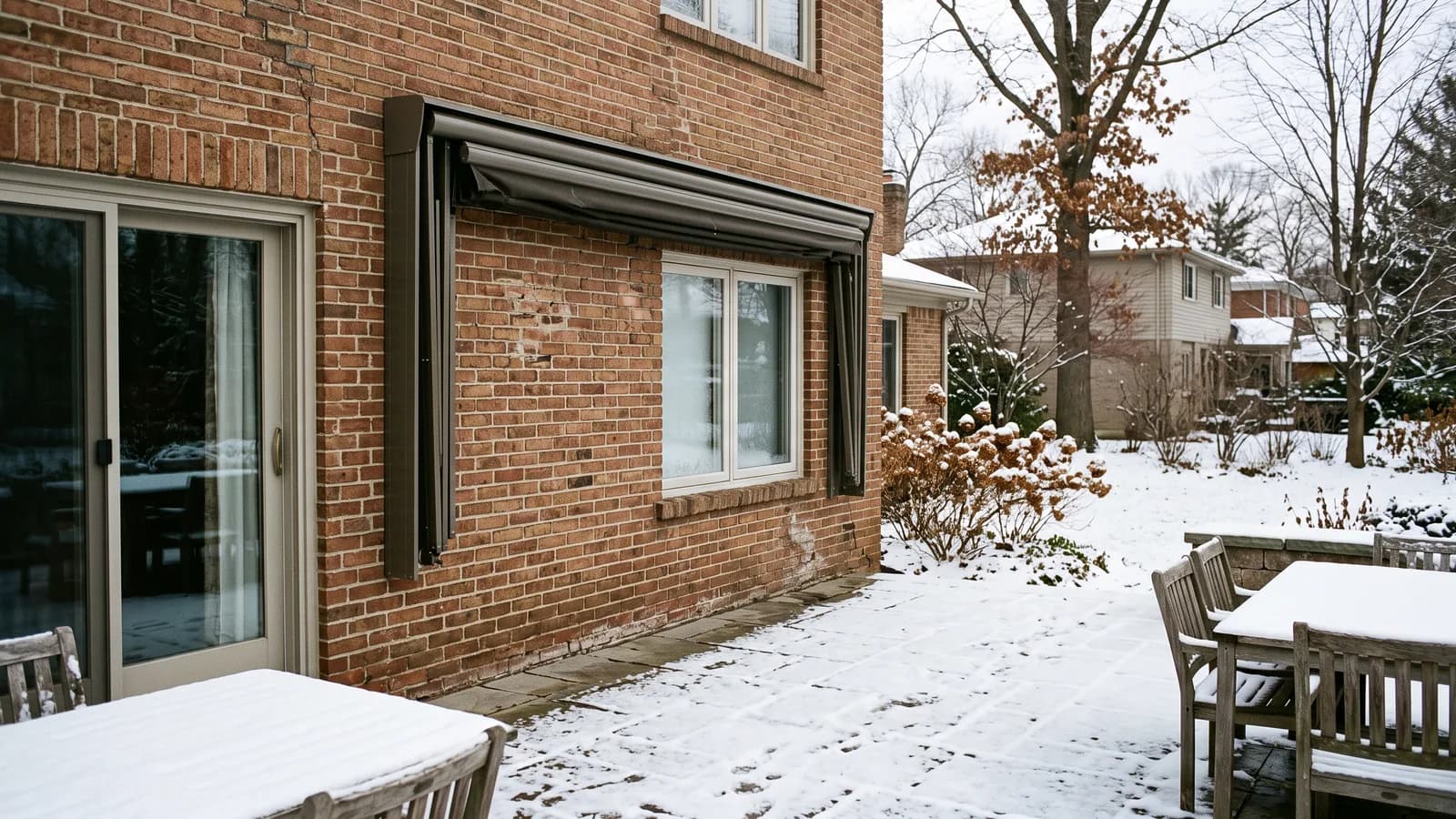
Once the first hard frost sets in, the phone stops ringing for retractable and fixed awning quotes across most of the United States and Canada, and it is tempting to treat the quiet months as a budget holiday. Pulling every dollar of spend until March is the wrong instinct. The off-season has a different job than the spring push, and dealers who skip it entirely start the surge further behind than the ones who kept a small, steady presence running through winter.
Why off-season inquiry volume drops so sharply
An awning is tied directly to how a patio, deck, or entry gets used, and once the outdoor season ends in most climates, the discomfort that drives a search, too much sun on a summer afternoon, glare through a west-facing window, disappears along with the weather that caused it. Homeowners are not thinking about shade while shoveling a driveway. Permit offices in many municipalities also slow their review cycles over the holidays, and crews that install through winter are usually limited to indoor-adjacent work rather than full exterior mounts, so even a motivated shopper has less urgency to act today.
That drop in urgency is real, but it is not the same as a drop in interest. Homeowners who found their patio unbearable in July are still the same homeowners in January, they have simply stopped acting on the problem until the weather makes it relevant again. The off-season is when that memory is still fresh enough to plan around, which is a very different marketing job than converting an active shopper.
The exact shape of the off-season varies by region, which matters for a dealer serving both sides of the border. A dealer in a Canadian market with a genuinely short outdoor season is planning around four or five quiet months, while a dealer in a warmer stretch of the United States might see the gap shrink to eight or ten weeks. The principle holds either way, the off-season is a planning window, not dead air, but the length of that window should shape how much content and how many past-customer touches are worth scheduling into it.
What the off-season is actually good for
The months between first frost and early spring are when a lot of homeowners plan next year's outdoor projects, often while looking at a bare, sun-baked patio through the kitchen window and deciding this is the year they finally fix it. A dealer showing up in that planning window with useful, low-pressure content earns a different kind of attention than the same dealer competing for clicks in May against every other awning company running ads into the same seasonal spike. Off-season creative should look and read differently from peak-season creative, not just cost less to run.
Planning content and design ideas for next season
Useful off-season content answers the questions a homeowner is actually turning over during the planning phase: which fabric colors hold up best against a specific siding tone, how a retractable unit changes the feel of a patio compared to a fixed structure, and what a typical permit and install timeline looks like once demand ramps back up. A short list of formats that consistently work:
- Before-and-after galleries. Real installs from the past season, organized by home style, give a planning-stage homeowner something concrete to picture on their own house.
- Fabric and frame pairing guides. Content built around color and material combinations answers a question homeowners are already asking themselves in the off-season.
- Timeline explainers. A plain walk-through of how long measurement, ordering, and install typically take once spring demand hits sets realistic expectations before anyone requests a quote.
Staying visible through past-customer service touches
The off-season is also the right time to check in with the customers already on the books, not to sell them anything new, but to remind them the dealer is still around and still paying attention. A short note about winter care for a retracted awning frame, or a reminder that heavy snow load should be brushed off a fixed structure, reads as a genuine service touch rather than a marketing message, and it keeps the dealer's name attached to a positive memory instead of going silent for four months.
These touches double as a natural bridge into the service and re-cover work that becomes a second revenue stream for a lot of dealers. A customer who hears from the dealer in January is more likely to book a spring re-cover or a fabric refresh than one who has not heard anything since the install crew packed up in August.
Early-booking incentives that warm up spring demand
A modest incentive for booking a consultation or locking an install slot before the season officially opens gives planning-stage homeowners a reason to act now instead of waiting until everyone else is calling at the same time. Framed correctly, an early-booking offer is not a discount race, it is a scheduling tool: the homeowner gets a preferred install window before crew capacity fills up, and the dealer gets a spring calendar that is already partly booked before the surge even starts.
That matters because the spring rush compresses demand into a narrow window that crew capacity struggles to match. A dealer who fills part of that calendar in February, using off-season creative to drive it, walks into peak season with less scramble and a warmer audience already primed to book rather than just starting to compare dealers.
The contrast becomes clearer once real heat arrives. Creative built around an actual heat wave has to move fast and speak to urgency that already exists in the homeowner's mind, while off-season content has the opposite job, building interest before any urgency is there at all. Keeping that distinction clear stops a dealer from writing the same ad twice with a different season pasted over it, and it is the reason off-season creative needs its own plan rather than a scaled-down copy of what ran in July.
Different job, not a smaller budget
Ready to talk numbers on your own pipeline?
On the strategy call, we'll lay out the plan we'd run for your business and talk through how it fits your market.
Final thought
Treating the off-season as dead time costs a dealer the exact visibility it needs when demand snaps back. Planning content, past- customer service touches, and early-booking incentives are not a lower-budget version of peak-season creative, they are a different job built for a different stage of the homeowner's decision. A dealer who keeps that steady, quieter presence running through winter walks into spring with a warmer audience and a calendar that is already partly filled, instead of starting the surge from a cold stop.
Tagged