
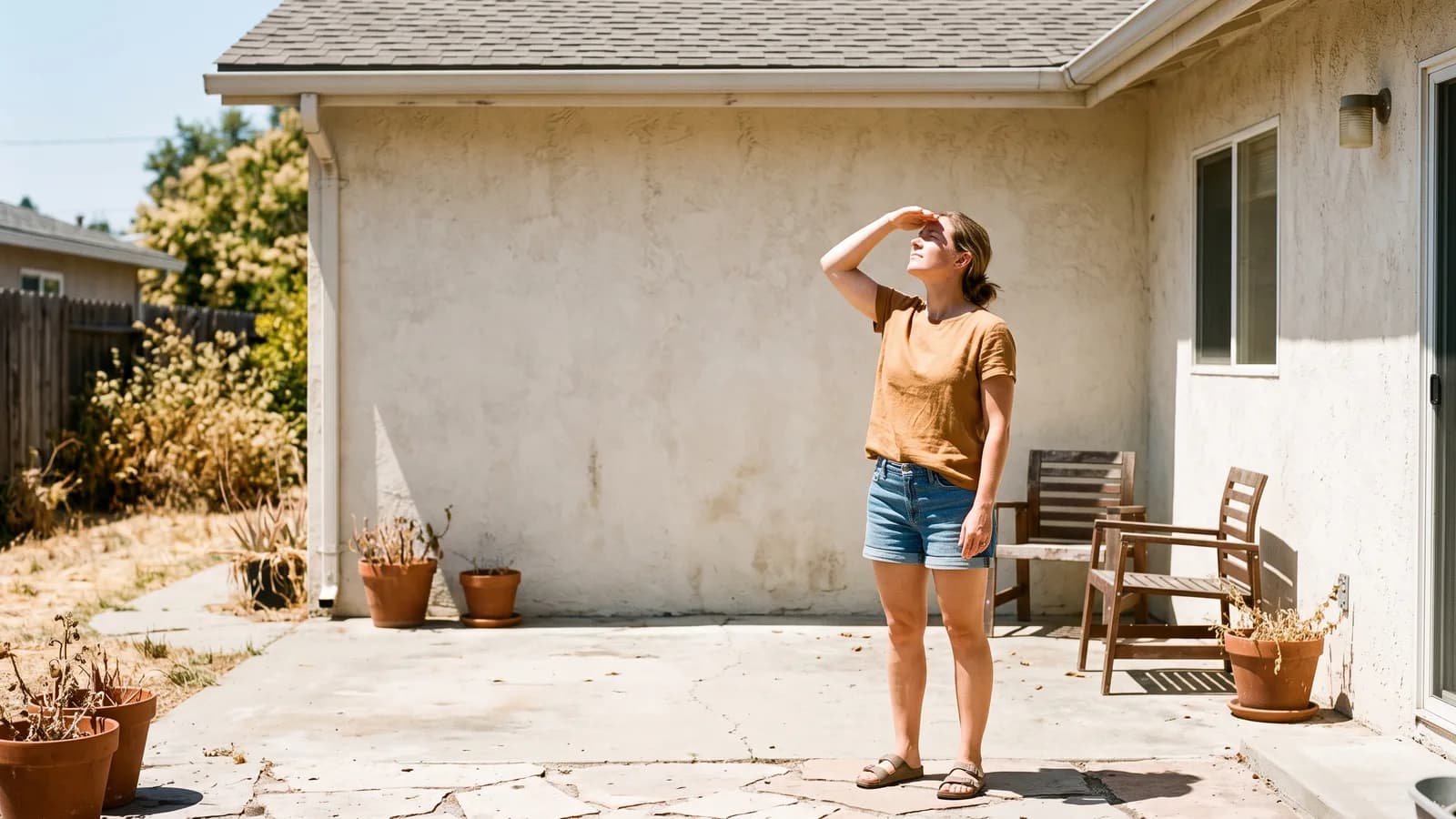
A stretch of unusually hot days is one of the few genuinely predictable demand triggers in the awning category. Search interest and social engagement both rise within days of a heat wave hitting a region, and dealers with creative ready to run when it happens capture attention that a static, always-on campaign simply misses. The risk is that the tone of a heat-wave ad often implies faster relief than any installer can actually deliver.
Why heat waves create a real, predictable demand spike
Unlike many seasonal patterns that build gradually, a heat wave creates a sudden, sharp shift in how a homeowner thinks about their outdoor space. Three days of unusually high temperatures is enough to turn a vague someday-project into an active search for shade options, and that shift shows up almost immediately in both search behavior and social engagement. A dealer who recognizes the pattern and has creative ready in advance is positioned to catch that attention while it is at its peak, rather than scrambling to build an ad after the moment has already passed.
This pattern holds across most of the United States and Canada wherever summers get genuinely hot, though the timing of the first heat wave shifts by region and by year. A dealer working several markets benefits from watching the forecast for each one separately rather than assuming a single regional trigger applies everywhere at once.
What weather-triggered creative should actually promise
The temptation during a heat wave is to lean into urgency, and some urgency is honest: interest genuinely is higher right now, and acting sooner does mean getting on the schedule sooner. The line gets crossed when creative implies the awning itself will be up within days, when a homeowner reacting to three hot days does not have shade installed by the weekend even if the consultation and deposit happen immediately.
Setting honest expectations about installation timing
Weather-triggered creative works best when it promises the thing a dealer can actually deliver quickly, a fast response and a clear answer on scheduling, rather than a finished installation. A message like “get on the schedule this week” is honest and still urgent. A message that implies relief by the weekend, when the real install window is several weeks out, sets an expectation the installer cannot meet and creates a frustrated customer before the job has even started.
A useful test before publishing any heat-wave creative: read the copy back and ask what a reasonable person would expect to happen this week based on what it says. If the honest answer is “a phone call and a scheduled visit,” the copy is safe to run. If the honest answer sounds like “shade by the weekend,” it needs to be rewritten before it goes anywhere near a live campaign.
Overpromised timing costs more than it wins
Preparing creative in advance so it can launch quickly
Because a heat wave cannot be scheduled, the creative that responds to it has to be built ahead of time and ready to launch on short notice. A short library of weather-triggered ad variations, built during a slower month and held ready, lets a dealer respond within hours of a forecast turning hot rather than losing the first few days of the spike to production time. This is the same discipline behind building off-season creative deliberately rather than treating slower months as a pause on marketing production entirely.
A short internal checklist helps the creative go out fast without skipping the honesty check: confirm the current backlog before writing any timing claim, route every heat-wave variation through one person for a quick approval, and have the landing page and lead form ready to receive traffic before the ad goes live. None of that needs to happen in the moment a heat wave starts, it needs to be ready before it does.
Where this spike shows up first, search versus social
Paid search and paid social both deserve a place in the plan, but they are answering slightly different questions. A search ad meets someone who has already decided to look for a solution, while a social ad introduces the idea to someone who was simply scrolling during a hot week and had not yet connected the discomfort to a specific fix.
Search interest tends to reflect people actively looking for a solution, someone typing a specific question about shade options into a search bar during the third day of a heat wave. Social engagement often reflects a wider audience simply reacting to the weather itself, which makes it a good channel for brand visibility even among people not ready to buy yet. Shifting ad budget to follow the demand curve means recognizing that a heat wave is a short-lived spike in both channels, not a permanent shift, and adjusting spend back down once the weather normalizes. For the leads that come in during the spike but do not convert immediately, a retargeting sequence built for shoppers who went quiet keeps the door open once the initial urgency of the hot week has passed.
Ready to talk numbers on your own pipeline?
On the strategy call, we'll lay out the plan we'd run for your business and talk through how it fits your market.
Final thought
A heat wave is a genuine, predictable opportunity to capture demand that a dealer would otherwise miss, but only if the creative stays honest about what happens next. Promise a fast response and a clear answer on scheduling, prepare that creative before the heat arrives, and let the real installation timeline speak for itself once the consultation happens. Urgency that is grounded in what a dealer can actually deliver builds trust; urgency that overpromises spends that trust before the job even starts.
Tagged