
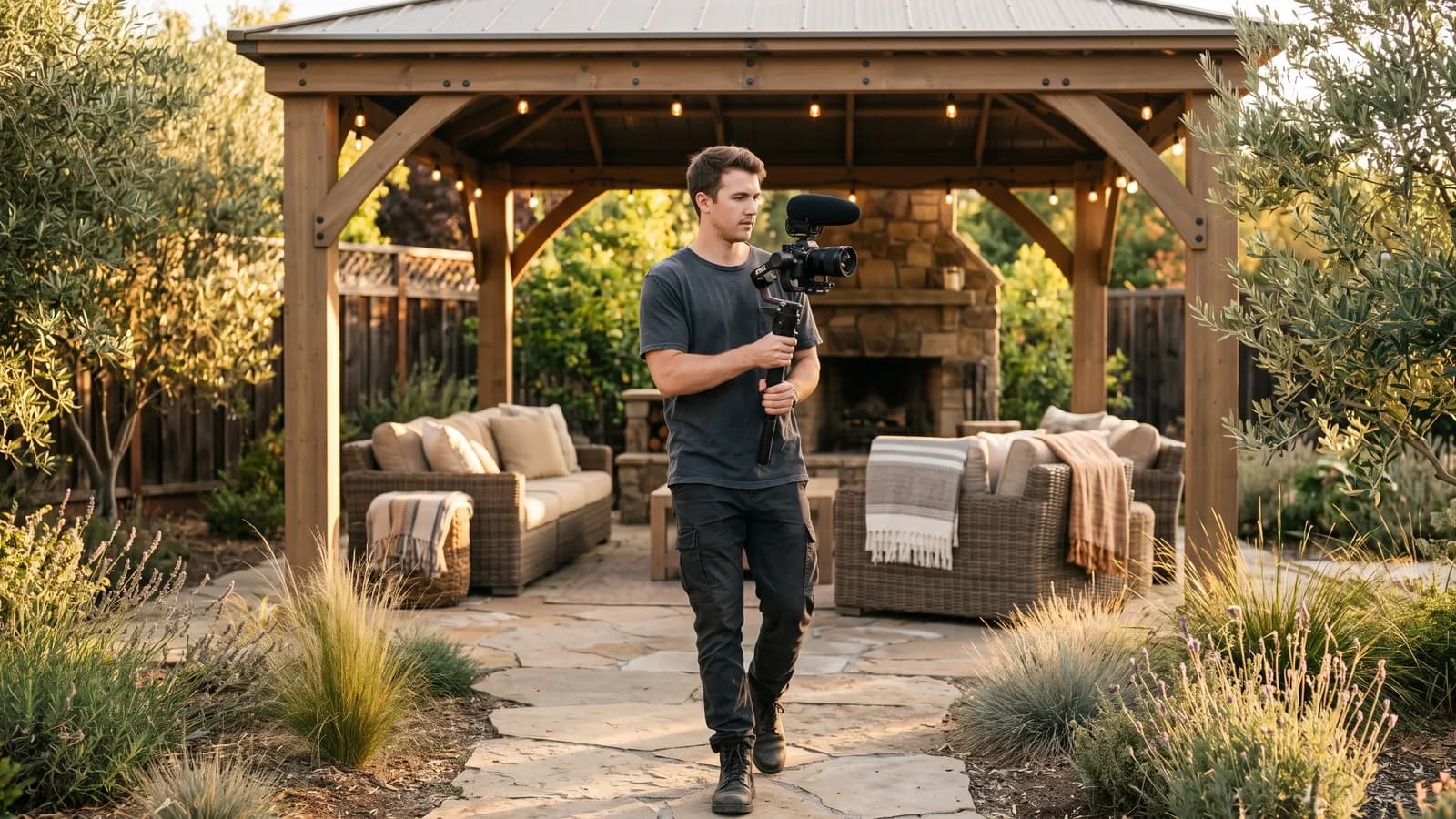
A single photo of a finished patio, however well lit, shows a homeowner a corner of a project, not the transformation of a space they live in every day. A full backyard build changes how a family uses their entire yard, and creative built around one static comparison image consistently undersells that change. Design-build firms have assets a repair trade simply does not have, renderings, phased build footage, full walkthroughs, and creative that leans into those assets outperforms a single before-and-after slide almost every time.
Why a single before-and-after photo undersells this project type
Before-and-after creative works well for a repair trade because the change being sold is narrow and visual: a broken roof becomes a new roof, a dated window becomes a new one. A backyard transformation is a different kind of change. It is not one object replaced, it is an entire outdoor living space reorganized, an unused patch of lawn becomes a covered outdoor room with a fire feature and lighting, and a family's relationship to their own backyard shifts along with it. A single static image asks the viewer to imagine that shift from two flat photos. Creative that shows movement through the space, or the space in actual use, does the imagining for them.
Creative angles that fit a design-led purchase
Three creative approaches consistently outperform the single static comparison for this category, because each one plays to an asset the trade naturally generates during a normal project cycle.
Rendering-to-reality reveals
Every design-build project starts with a rendering, and that rendering is a genuinely compelling piece of creative on its own before construction even begins. Pairing the original rendering with a matching shot of the finished space, cut together as a reveal rather than a side-by-side, gives a homeowner watching the ad direct proof that the firm delivers what it designs. This format also does double duty as social proof, since it demonstrates design accuracy in a way a finished-project photo alone cannot.
Walkthrough and movement-through-space footage
A slow walkthrough shot, moving from the back door across the patio, under the covered structure, past the fire feature, and out to the yard's edge, communicates scale and flow in a way a static photo cannot. This kind of footage also naturally surfaces multiple finish and structural details in a single clip, roofline, decking, hardscape, without needing several separate images stitched together. It reads as a real space a viewer could imagine standing in, which is closer to how a homeowner actually experiences the decision to build one.
Lifestyle framing over feature framing
Creative that centers a family actually using the finished space, dinner around a fire feature, kids in the yard visible from a covered patio, tends to outperform creative that centers the structure itself as the hero. The structure is the means, not the end, and lifestyle framing sells the end. This does not mean abandoning clear shots of the materials and design work, strong portfolio photography still matters for the website and later funnel stages, but top-of-funnel Meta creative earns more attention when it leads with how a family lives in the space rather than what it is built from.
Match creative to the actual purchase
Seasonality also shapes which creative angle performs best at a given moment. Early in the outdoor building season, walkthrough and lifestyle footage tends to perform well because it helps a homeowner picture a full season of use ahead of them. Later in the season, when many homeowners are weighing whether a project can still start this year, rendering-to-reality creative that emphasizes how quickly a design becomes a finished space tends to carry more weight, since it speaks directly to the timing concern on a homeowner's mind.
Matching creative to each stage of the funnel
Not every creative angle belongs at every funnel stage. Broad, top-of-funnel audiences respond well to lifestyle framing and walkthrough footage, since these formats work even for someone who has not yet started actively researching a project. Warmer audiences, people who have visited the website or engaged with prior content, respond better to more specific creative, a rendering-to-reality reveal for a specific project type, or detail-focused footage of a fire feature or lighting package. This staged approach mirrors how search intent shifts from broad inspiration to specific project research across the same decision journey, and coordinating creative with that same progression keeps the message relevant at every stage rather than showing the same broad ad to someone who is already deep into a decision. Creative decisions should also stay consistent with the design language a firm actually uses in how it talks about backyard design trends, so the ad, the landing page, and the consultation all tell the same story.
A firm's broader outdoor living services presence should reflect this same creative approach, since a Meta ad that leads with movement and lifestyle only performs if the landing page and portfolio it sends traffic to deliver the same experience.
Sound design deserves more attention than it usually gets in this category. A walkthrough clip with genuine ambient audio, footsteps on pavers, a fire feature igniting, quiet conversation, reads as more authentic than the same footage layered with generic background music, and authenticity is a real differentiator when a homeowner is scrolling past dozens of polished, interchangeable renovation ads in the same session.
Ready to talk numbers on your own pipeline?
On the strategy call, we'll lay out the plan we'd run for your business and talk through how it fits your market.
Final thought
A single before-and-after photo is not wrong, it is simply incomplete for a project this large and this design-led. Rendering-to-reality reveals, walkthrough footage, and lifestyle framing all give a homeowner a fuller sense of the transformation being sold, and matching those angles to the right funnel stage keeps the creative doing its job at every point in a long decision cycle. Firms that lean into the assets this trade naturally produces, renderings, phased footage, finished walkthroughs, consistently get more out of their Meta spend than those still relying on a single comparison image.
Tagged