
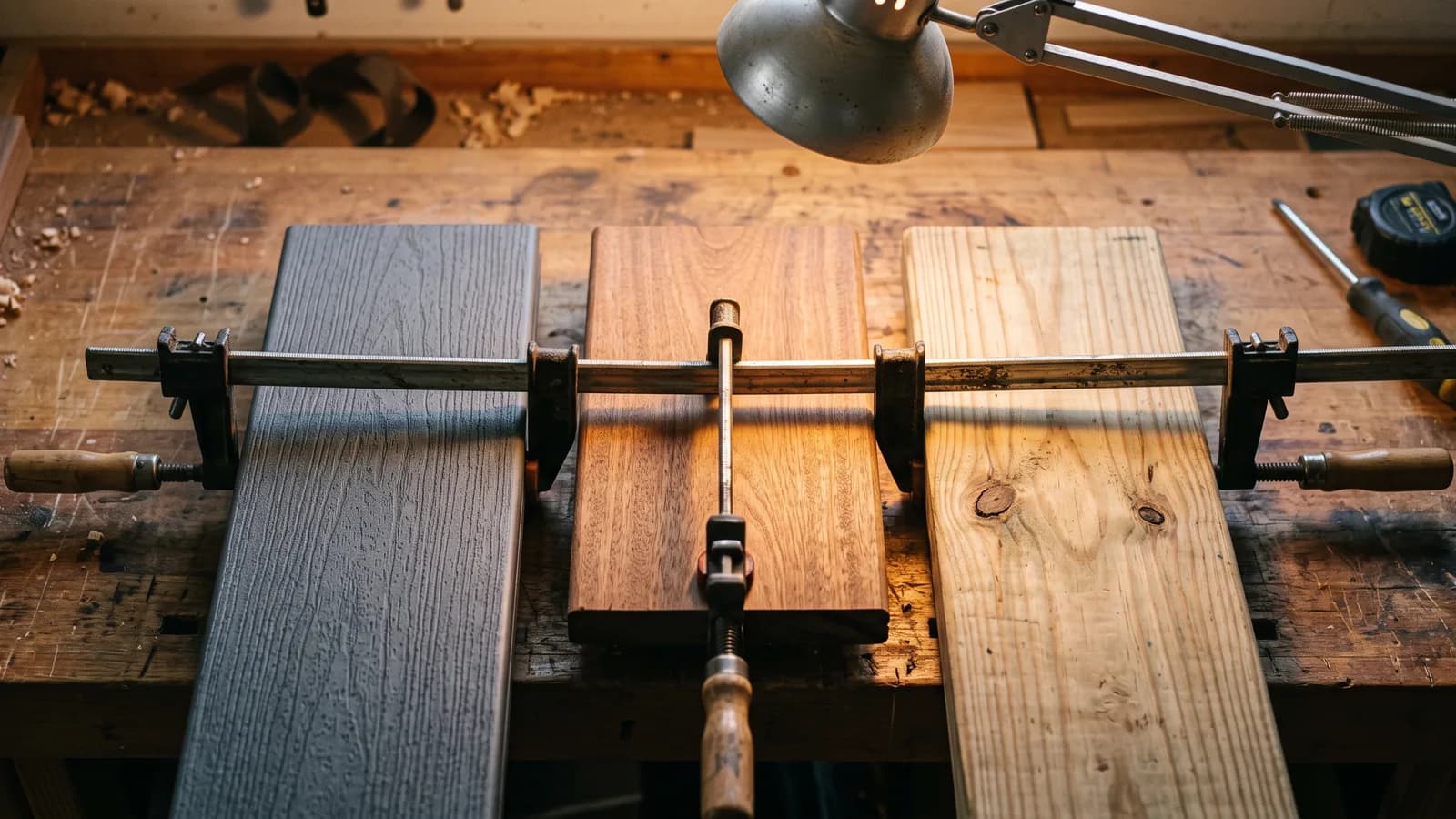
A homeowner scrolling through decking product photos online is working from a real handicap. Screens flatten grain texture, shift color temperature, and compress the difference between a warm gray composite and a cooler one into a few pixels that look nearly identical. A material display exists to close that gap, and for deck builders specifically, it is one of the few sales tools that resolves genuine uncertainty rather than just adding polish.
Why decking material is hard to evaluate from photos alone
Decking products vary in ways that a flat photo struggles to convey honestly. Composite boards carry subtle color variegation that looks different in direct sun than in shade, and a product photo shot under studio lighting rarely matches how that same board will read on a north-facing yard in October. Hardwood grain pattern and pressure-treated wood's knot density vary board to board in ways no single photo can represent. Texture is the bigger issue still, a homeowner cannot feel through a screen whether a composite surface is grippy underfoot near a pool or whether a hardwood option feels as smooth as the marketing photos suggest. Uncertainty that cannot be resolved online does not disappear, it just gets carried home and turns into weeks of research, competing quotes, and a homeowner who delays signing because they still are not sure what the deck will actually look and feel like.
What belongs in a useful material display
A useful display is not a marketing prop, it is a decision tool, and the difference shows in what it includes.
Board samples, color range, and texture
At minimum, a display needs real board sections, not swatches, of composite, pressure-treated wood, and at least one hardwood option, each large enough that a homeowner can run a hand across the surface and see the grain under natural light rather than a showroom bulb. Where a composite line offers multiple color options, showing the full range side by side matters more than it might seem, since two grays that looked interchangeable on a website often read as clearly different once placed next to each other in person. A board section left outside for a season, showing real weathering rather than a factory-fresh finish, builds more trust than a pristine sample ever will, because it answers the question homeowners are actually asking, which is what this will look like in three years, not on day one.
Railing and hardware options
Railings and hardware belong in the same display, not a separate conversation later. A cable railing section, a traditional baluster sample, and the visible fastener style used for hidden versus face-screwed decking all shape how the finished deck reads, and homeowners are generally choosing these alongside the decking material itself, not after it. Including hardware finish options, black, bronze, or brushed silver, lets a homeowner picture the whole assembled look in one sitting instead of approving the boards now and being surprised by the hardware later.
Show the whole assembly, not just the boards
Mobile display versus a fixed showroom location
Most residential deck builders do not have retail foot traffic that justifies a fixed showroom, which makes a mobile display, a case or board rack carried to the in-home consultation, the more practical version for this trade. A mobile kit built around a compact, durable case of board sections and hardware samples lets the same conversation happen at the kitchen table where the estimate is being written, rather than asking a homeowner to make a separate showroom trip before they can commit. Contractors doing high enough volume in one metro area to justify a small fixed display space, at the office or a shared trade showroom, get an added benefit, they can send undecided homeowners there to spend unhurried time comparing options without a salesperson standing over them, which some buyers genuinely prefer for a decision this visible and permanent.
How the display shortens the decision timeline
The real payoff of a material display is speed, not polish. Resolving material uncertainty during the first consultation, rather than leaving a homeowner to research it alone afterward, removes one of the most common reasons a strong first visit still ends without a signature. A homeowner who has physically compared composite, wood, and hardwood options side by side leaves with a real preference instead of a vague one, which shortens the gap between liking the estimate and being ready to sign it. It also reduces a specific kind of lost deal, the homeowner who liked the contractor and the price but quietly chose a competitor because that company's display made the material choice feel resolved and this one did not.
A display is only as good as what is on it, though, which is why it depends on a supplier relationship reliable enough to keep current samples in stock as colors and product lines change. A display carrying a discontinued color or an outdated hardware finish creates the opposite problem it was built to solve. Pairing the display with the same site visit where before photos are captured also means the homeowner is comparing materials against their own actual yard, not a generic showroom backdrop, which sharpens the decision further.
Ready to talk numbers on your own pipeline?
On the strategy call, we'll lay out the plan we'd run for your business and talk through how it fits your market.
Final thought
Decking is a material a homeowner will look at and stand on for fifteen years or more, and a photo on a screen was never going to be enough to settle that choice with confidence. A material display built with real board sections, honest weathering, and the railing and hardware options that complete the picture turns an abstract online comparison into a five-minute, hands-on decision. For a trade built on a single large, visible purchase, that shortened decision timeline is worth far more than the cost of keeping a few boards and hardware samples current.
Tagged