
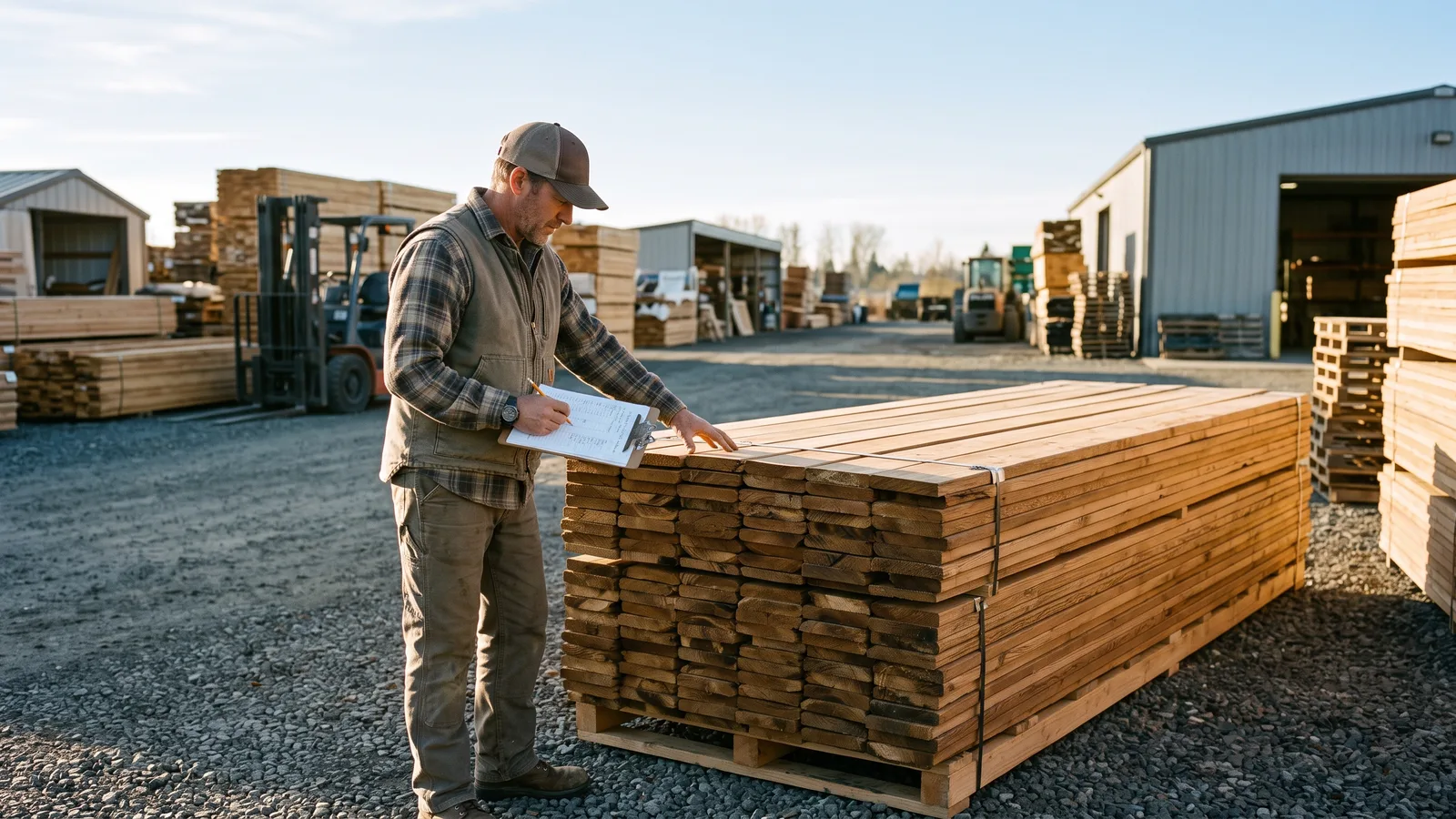
The lowest price per board rarely matters if the boards are not there when the crew shows up to install them. A decking supplier who quotes well but runs short on a popular color the moment every contractor in the region starts placing spring orders can stall a season's schedule as effectively as a run of bad weather, and the homeowner waiting on a promised start date will not care whose fault it was.
Why material shortages hit decks harder during peak season
Decking demand is sharply seasonal in most of the United States and Canada, concentrated into a spring and early summer window when nearly every contractor in a market is buying from the same small set of regional distributors at once. Popular composite colors and board profiles are produced in batches well ahead of that season, and once a color sells through, the next production run can be weeks out, sometimes longer if a manufacturer is managing shortages across an entire distribution network rather than one supplier. A trade with a more even, year-round demand curve does not face this same compression. Decks do, because the building season itself is compressed by weather in most regions, which means the ordering season is compressed right alongside it. A contractor working through a shorter northern building season feels this even more acutely than one in a milder climate, since there are fewer weeks available to absorb a late delivery before the whole calendar backs up.
What to evaluate in a supplier beyond price
Unit price is the easiest number to compare and the least useful one on its own. A supplier evaluation that stops at price per board is missing the variable that actually determines whether a contractor can hit the start dates promised to homeowners months in advance. Two suppliers quoting nearly identical pricing can still leave a contractor in very different positions once the season gets busy, and the difference rarely shows up until an order is already placed.
Lead time reliability and order minimums
Two questions matter more than the invoice total. First, what is this supplier's actual lead time during peak season, not their quoted lead time in a slow month, and how consistently have they hit it over the past couple of years. A supplier willing to share real fulfillment history, including the seasons they fell short, is generally more trustworthy than one who promises the same fast turnaround in July as in February. Second, what order minimums or standing-order arrangements does the supplier support. A contractor who can commit to a minimum seasonal volume in exchange for reserved stock or priority allocation is buying schedule protection, not just a discount, and that protection is often worth more than the percentage saved.
- Ask for peak-season fulfillment history. A supplier's answer to how they handled last spring's shortages says more than any current-season promise.
- Understand allocation priority. When a color runs short, does this supplier allocate by order size, order date, or standing relationship, and where does that leave a contractor who is not their largest account.
- Confirm substitution policy. If a specific board profile is unavailable, does the supplier proactively offer a comparable substitute or leave the contractor to discover the gap when the delivery is short.
A cheaper board that arrives late is not cheaper
Placing seasonal orders ahead of the spring rush
Contractors who consistently protect their spring schedule tend to place seasonal orders well before the rush actually hits, often locking in volume for the season's most requested colors while the prior year's demand data is still fresh and before the broader market has started competing for the same production run. This requires forecasting bookings ahead of actual signed contracts, which feels uncomfortable for a contractor used to ordering against confirmed jobs only, but the alternative, waiting until estimates are signed before ordering material, means ordering at exactly the moment supply is tightest and lead times are longest. Pairing early ordering with the marketing timeline that builds spring pipeline keeps material commitments and lead generation moving on the same calendar instead of on two calendars that only meet by accident. Even a rough seasonal forecast built from last year's booking pace and the current backlog gives a supplier something concrete to plan against, and most suppliers respond better to a contractor who orders with some lead time than one who calls in a panic once the season is already underway.
Having a backup material path for popular products
Even a well-managed supplier relationship will occasionally come up short on a specific color or profile during peak weeks, which is why a genuine backup path matters more than hoping the primary order comes through. That backup can take a few forms, a second supplier relationship maintained specifically for overflow, an alternate color or product line from the same manufacturer kept stocked as a fallback, or an honest conversation with the homeowner, well before the scheduled start, about a substitute option if the first choice is unavailable. What does not work is discovering the shortage the week material was supposed to arrive and improvising a solution live, with a homeowner who has already cleared their calendar for the original date. A material display that already includes the fallback options, not just the primary line, makes this conversation far easier to have, since a homeowner who has already handled the backup color in person is not being asked to accept something entirely unfamiliar under pressure.
A supplier's warranty backing is worth folding into this same evaluation, since the warranty questions homeowners ask before hiring eventually trace back to how well the material supplier stands behind its own product, not just how the contractor installed it.
Ready to talk numbers on your own pipeline?
On the strategy call, we'll lay out the plan we'd run for your business and talk through how it fits your market.
Final thought
A decking supplier is a schedule partner before it is a price list, and treating the relationship that way changes which questions get asked during vendor selection. Lead time reliability, honest allocation practices, and a real backup material path protect the promised start dates that homeowners are planning their own schedules around. The contractor who wins on price but loses the season to a shortage has not actually won anything.
Tagged