
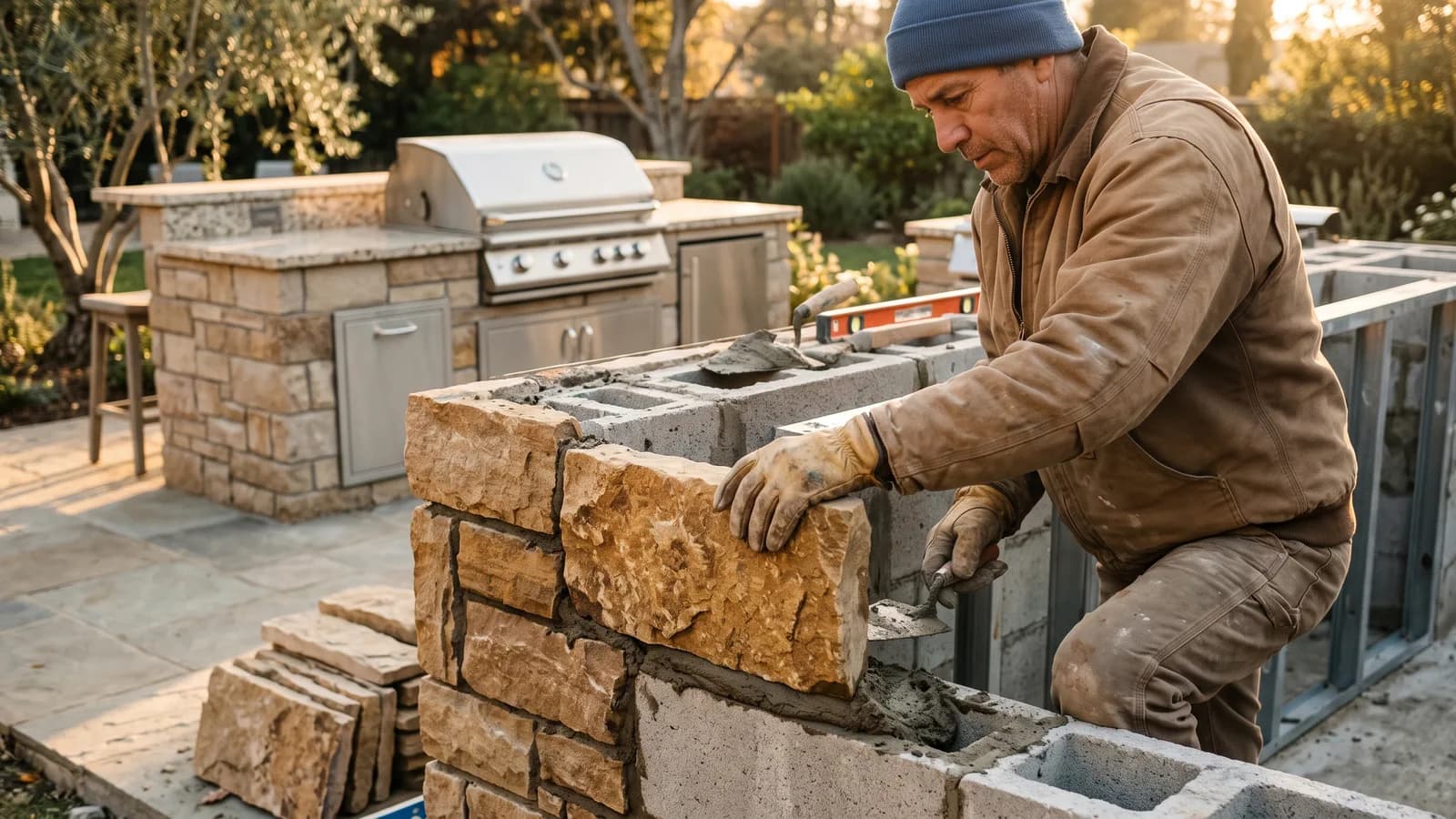
Most homeowners researching an outdoor kitchen do not know that masonry and modular construction are effectively two different products, with different price points, timelines, and structural implications. Marketing that assumes buyers already understand the distinction loses them at the first consultation, when the actual choice finally gets explained out loud for the first time.
Why buyers do not know masonry and modular are different products
A homeowner searching for an outdoor kitchen typically finds photography, finished islands that look similar in a browser thumbnail regardless of how they were actually built. The visual similarity hides a real construction difference underneath. Unless a builder's own content explains that difference early, the buyer arrives at a consultation assuming there is one product called an outdoor kitchen island, and the first time they hear about masonry versus modular construction is when a designer brings it up mid- conversation, often after the buyer has already anchored on a photo from a different project that used the other method. Explaining the distinction before the consultation, not during it, lets the buyer walk in with a rough preference already formed, which shortens the design conversation considerably.
What masonry construction actually involves
Masonry construction means a permanent structure, typically a concrete block or poured foundation with stone or brick veneer applied over it, built in place on the property. It is the more traditional approach, it can be shaped to an irregular footprint or an unusual layout, and it reads as a permanent architectural feature rather than an installed appliance. The trade-off is time and sequencing. Masonry work depends on a mason's schedule, on weather that allows mortar to cure properly, and on the gas and electrical rough-in being coordinated with the framing before the veneer goes on. A masonry island is also effectively immovable once built, which matters for a buyer who might reconfigure their yard later for a pool or a different landscaping plan.
What modular and prefabricated islands actually involve
Modular construction means the island frame, often a weather-rated, powder-coated steel or polymer shell, is built off-site and delivered largely finished, then set on a prepared pad and connected to gas and electrical service on-site. It installs faster than masonry, it holds a more predictable price because the frame cost is fixed rather than dependent on days of skilled labor, and it can, in some cases, be relocated later if the yard layout changes. The trade-off is footprint flexibility, a modular island generally comes in a set range of shapes and dimensions, and some buyers perceive it as less permanent-looking than a masonry structure, even when the build quality and appliance capability are equivalent.
The choice also ripples into how the project pairs with the rest of the yard. A masonry island built to match a stone patio or a pergola's posts reads as one continuous piece of architecture, which is part of why buyers working with a landscape designer or a pool builder on a broader outdoor living plan often lean toward masonry, it lets every surface in the yard share a material language. A modular island can still be dressed to match, but the coordination happens through finish selection rather than through the structure itself. Builders who partner regularly with pool builders and landscape designers should be explicit with those referral partners about which construction method fits which kind of project, so the referral itself arrives already pointed at the right conversation.
Framing the choice without steering the sale
The honest way to present this choice is as two legitimate paths that solve different priorities, not as an upsell ladder where masonry is framed as the “real” option and modular is framed as the budget compromise. A builder who defaults every conversation toward whichever method is more profitable that month, rather than toward what actually fits the buyer's site, timeline, and layout, will eventually get caught by a buyer who compares notes with a neighbor or a second builder. Content that lays out the trade-offs plainly, timeline, footprint flexibility, long-term permanence, price range, does more to build trust than content that pushes one method, because it signals the builder is comfortable enough with the comparison to publish it.
The comparison shopping is coming either way
Where each option fits the buyer's timeline and budget
Buyers on a tighter timeline, wanting the kitchen ready for a specific summer date, generally fit modular construction better, since the build sequence is shorter and less weather-dependent. Buyers with an irregular yard footprint, a strong preference for a built-in architectural look that matches an existing patio or outdoor living space, or a longer planning horizon often lean toward masonry. Weather-rated cabinetry and storage components apply to both methods equally, and countertop material choice is a separate decision layered on top of either structure, which is worth clarifying so buyers do not assume the island type dictates the countertop. Once the structural choice is made, bundling the built-in grill and appliance package into the same design conversation keeps the project moving as one decision instead of several disconnected ones. Financing conversations follow the same split, a shorter modular build often means a shorter financing term at a lower total cost, while a larger masonry project may call for a financing structure the buyer has not considered until the timeline is laid out plainly. A visit to the services overview can walk a prospective buyer through both paths before they ever book a consultation.
Ready to talk numbers on your own pipeline?
On the strategy call, we'll lay out the plan we'd run for your business and talk through how it fits your market.
Final thought
Masonry and modular construction are not a premium tier and a budget tier, they are two different products built for different priorities. Marketing that explains the real trade-offs, rather than steering every buyer toward one method, produces a shorter and more trusting consultation, because the buyer already understands what they are choosing between before they sit down at the table.
Tagged