
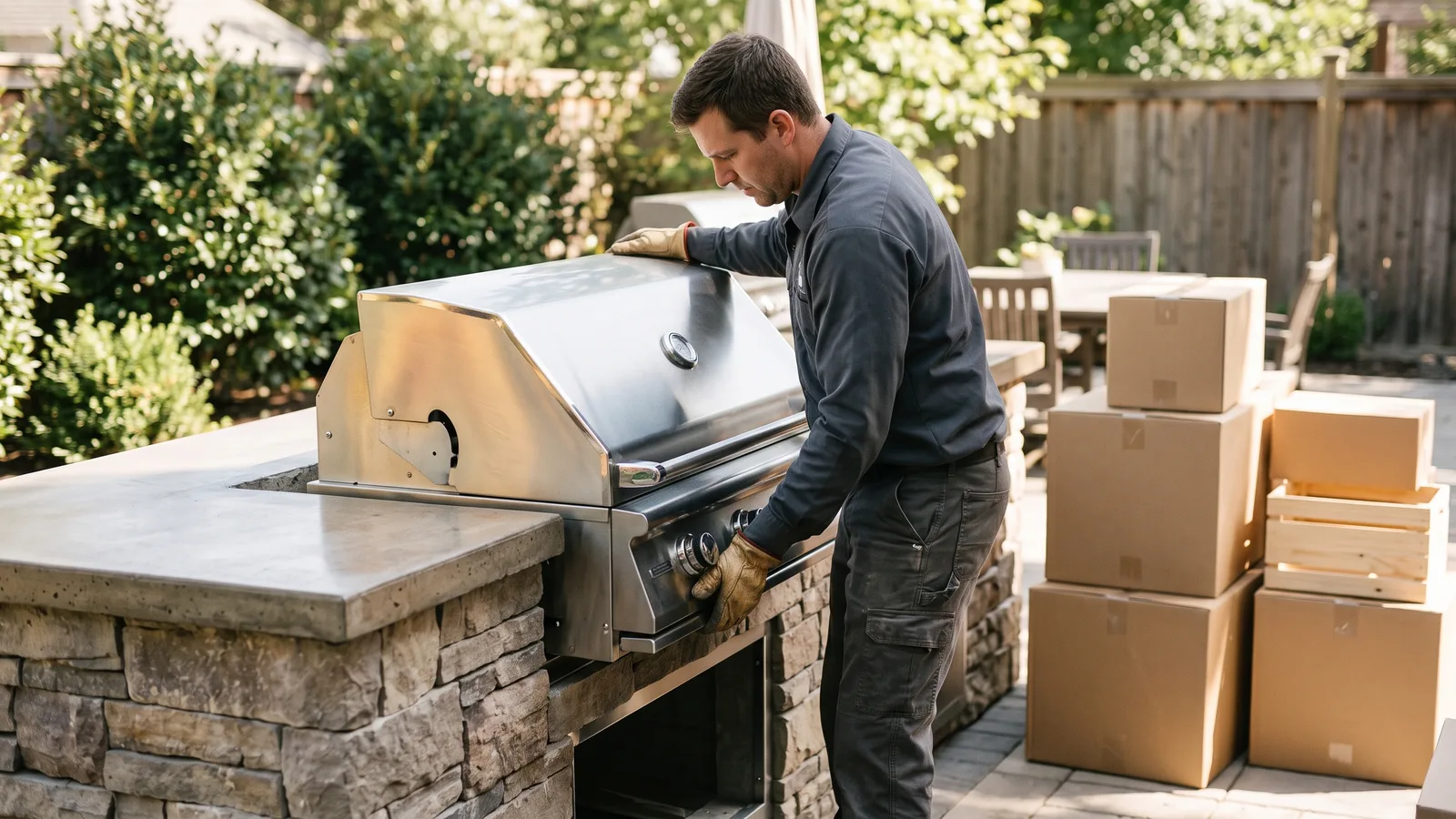
A base outdoor kitchen frame and a fully appointed cooking station with built-in grills and appliances are two different projects, and most builders blur that line by treating appliances as an upsell pitched late instead of a design decision made early. Structuring bundles as part of the initial conversation raises average project value without the late-stage pressure that damages trust.
Why appliance decisions belong earlier in the sales process
The built-in grill, side burner, refrigeration, and any additional cooking appliances are not accessories bolted onto a finished structure, they determine the structure's dimensions, the gas and electrical rough-in a licensed sub-trade has to plan for, and the ventilation clearance around a covered layout. A builder who quotes a bare island first and raises appliances afterward is not just leaving money on the table, they are risking a design that has to be reworked once the appliance list is finalized. Bringing the appliance conversation into the same meeting as the layout and material discussion means the frame gets designed correctly the first time, and the buyer experiences one coherent decision instead of a base quote followed by a series of add-on asks.
Structuring bundles instead of an itemized appliance list
An itemized appliance list, grill here, side burner there, refrigeration as a separate line, invites a buyer to start cutting items to bring the total down, which is exactly the wrong dynamic for a purchase where the appliance layout should be decided as a whole. A small number of pre-configured bundles, built around common use cases, entertaining-focused, everyday family cooking, full outdoor culinary setup, gives the buyer a simpler decision and keeps the appliance package coherent instead of a patchwork of individually negotiated line items. Bundles also make the sales conversation faster, since the designer is walking the buyer through two or three complete options rather than pricing out every possible combination on the spot.
What belongs in a base package versus an add-on tier
- Base package. A primary built-in grill sized to the island, basic counter workspace, and the storage cabinetry needed to make the space functional day to day.
- Mid-tier add-on. A side burner, a built-in refrigeration unit, and additional counter and storage space for buyers who entertain regularly.
- Full culinary tier. Additional specialty cooking appliances, such as a secondary side burner, a pizza oven, or a dedicated wok station, expanded prep space, and any features tied to a covered structure that supports year-round outdoor cooking in milder climates.
Financing should follow the same tiered structure rather than being quoted separately after the fact. A buyer looking at the full culinary tier needs to see the monthly payment difference between tiers at the same moment they are comparing the appliances themselves, since a design decision this size is usually also a budgeting decision, and separating the two conversations just pushes the real objection to a later meeting instead of resolving it in the room.
Pricing the bundle so margin holds
A bundle only protects margin if the pricing reflects real supplier cost and installation labor, not a round number chosen because it sounds appealing. Builders should price each tier from the ground up, appliance cost, gas and electrical labor, and design time, rather than discounting a bundle so heavily that it erodes the margin an itemized quote would have protected. Supplier lead times factor directly into this pricing, since a bundle built around appliances with unpredictable delivery timelines needs pricing that accounts for potential substitutions, not just the cost of the preferred unit. Warranty terms should be built into the tier pricing as well, rather than quoted as an afterthought, since a full culinary tier with more specialty appliances also carries more components that could need service later, and a buyer who understands that upfront is less likely to feel surprised by a service call down the road.
Bundling is a design decision, not a discount
Presenting bundle value without inflating the first number
The base package should be presented first and priced honestly, so the buyer's initial impression of project cost is grounded in reality rather than an inflated number designed to make the mid-tier bundle look like a bargain by comparison. From there, the conversation about upgrading to a mid-tier or full culinary package should be framed around what the buyer's actual cooking and entertaining habits call for, tied back to the structural choice between masonry and modular construction already made earlier in the same conversation, rather than presented as a generic upsell disconnected from the design.
Say a buyer walks in expecting to talk about one grill and leaves having chosen the mid-tier bundle because it matched how often they actually entertain, that is the upgrade conversation working as intended, decided on fit rather than pressure. Presenting the tiers together, with the full culinary option visible even to a buyer who ultimately chooses the base package, also sets up the kind of ongoing appliance service and referral relationship that contributes to lifetime value beyond the initial build, since a buyer who understands the full range of what is possible is more likely to return for an upgrade or refer a friend planning a more elaborate project.
Ready to talk numbers on your own pipeline?
On the strategy call, we'll lay out the plan we'd run for your business and talk through how it fits your market.
Final thought
Appliances are not an afterthought bolted onto a finished island, they are a core design decision that belongs in the first conversation, not the last one. Structured bundles, priced honestly and presented as part of the design rather than a late-stage upsell, raise average project value while keeping the sales process something buyers trust rather than resist, and they leave every crew building to a design that was right the first time.
Tagged