
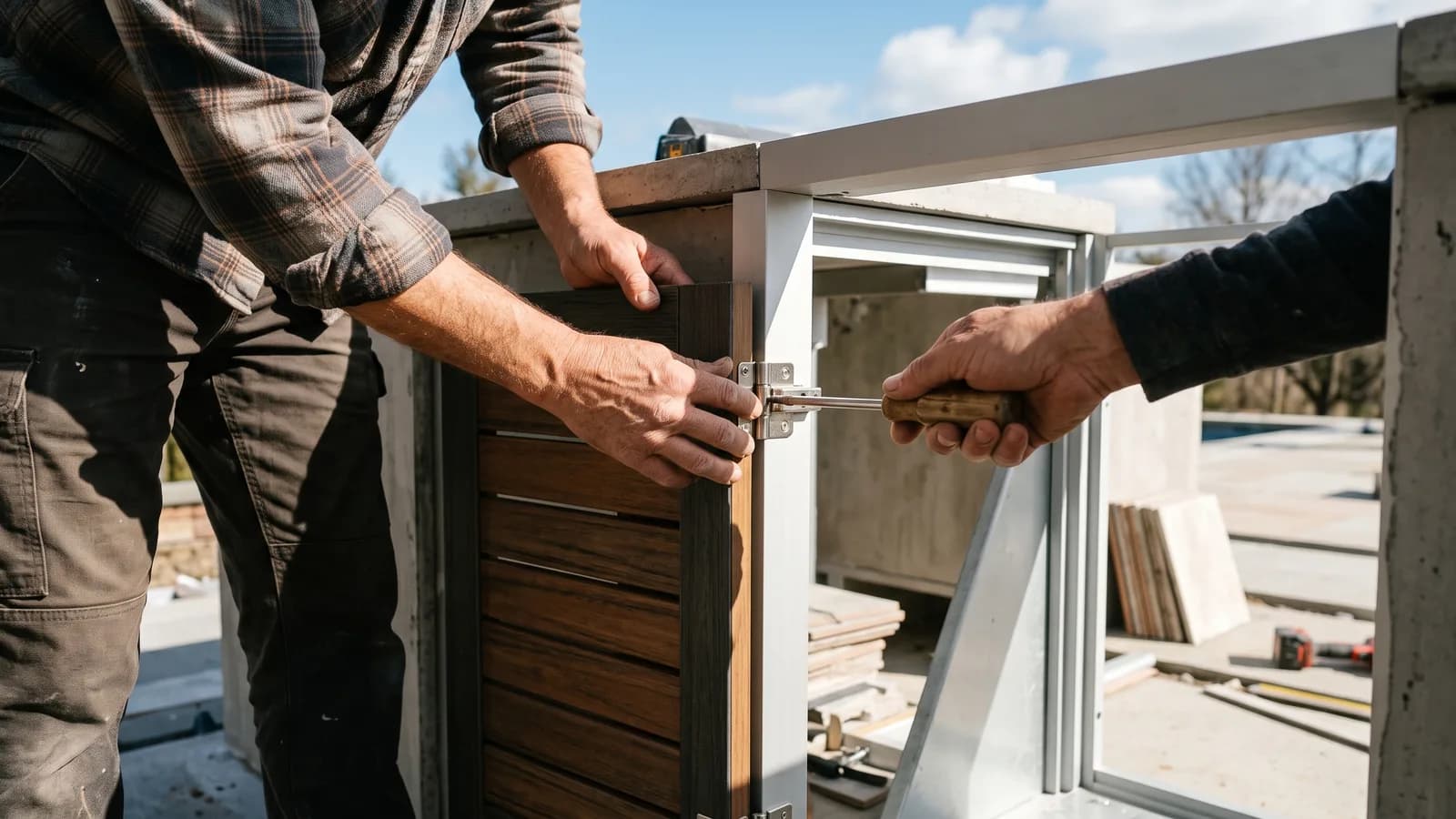
An indoor kitchen buyer already understands cabinetry, wood boxes, laminate or veneer fronts, standard hinges. An outdoor kitchen buyer usually does not know that those same materials will fail outside within a season, which makes weather-rated cabinetry a category that has to be taught, not just sold.
Why buyers default to indoor-kitchen expectations
Cabinetry is one of the few components in an outdoor kitchen build that a homeowner has direct, lifelong personal experience with, because everyone has an indoor kitchen. That familiarity works against a builder during the sales conversation, because the buyer unconsciously imports their indoor kitchen's price expectations and material assumptions onto an outdoor structure that has to survive conditions an indoor cabinet never faces. When a quote for weather-rated cabinetry comes in higher than what they remember paying for a kitchen remodel, the instinct is to assume the builder is overcharging, not that the product itself is fundamentally different. Getting ahead of that assumption with plain material education, before the quote lands, prevents the sticker shock from turning into a stalled or lost sale.
What weather-rated cabinetry has to withstand
Outdoor cabinetry sits through direct sun exposure that fades and warps standard wood and laminate finishes, temperature swings that cause materials to expand and contract in ways an indoor cabinet never experiences, and, depending on the region, sustained moisture from rain, humidity, or irrigation overspray. Marine-grade polymer, powder-coated stainless steel, and specially treated outdoor-rated woods are built to resist all three, along with the insect and rot exposure that untreated wood faces outdoors. Hardware matters just as much as the cabinet box, standard hinges and drawer slides corrode quickly outside, so weather-rated cabinetry uses stainless or coated hardware rated for exterior use. None of this is visible in a photograph, which is exactly why it has to be explained in words, not just shown in a rendering.
Layout changes the demands too. Cabinetry tucked under a covered structure, a roofed outdoor kitchen or one built under an existing pergola, sees less direct rain and sun than cabinetry in a fully open layout, which can make a slightly lower-grade material feel adequate in the showroom and then underperform once it is installed in the open air instead. A builder who explains this distinction during the covered-versus-open conversation, rather than treating cabinetry grade as a fixed line item regardless of layout, helps the buyer avoid paying for protection they do not need or skimping on protection the layout actually requires.
Climate differences across the United States and Canada
The specific durability requirements shift by region. In humid southern states, moisture resistance and ultraviolet (UV) stability matter most, since cabinetry faces near-constant sun and dampness for much of the year. In the upper Midwest and across most of Canada, freeze- thaw cycling is the bigger threat, materials that trap moisture will crack or delaminate as water expands and contracts through repeated freezing. Coastal regions on either side of the border add salt air corrosion to the list, which pushes hardware selection toward marine-grade stainless rather than standard coated steel. Builders operating in a single region can speak specifically to that climate's demands, which reads as more credible than generic durability claims that could apply anywhere.
Turning material education into content that ranks and converts
Straightforward, specific content, what weather-rated cabinetry is made of, what it has to withstand in the builder's specific climate, how it differs from an indoor kitchen box, performs well in search because it answers a real question a buyer is typing before they know the right terminology to search for. It also pairs naturally with content explaining the masonry versus modular structural choice, since cabinetry applies to both construction methods and buyers often research the two topics back to back. The goal of this content is not just search visibility, it is arming the buyer with enough understanding that the quote makes sense before they see the number, which shortens the objection-handling portion of the consultation considerably. A short video showing the same cabinet door in direct sun, under running water, and being opened and closed repeatedly does more to make the durability case than a paragraph of specification language ever will, and it fits naturally into the entertaining-lifestyle content a builder is likely already producing for the finished spaces themselves.
Protect the margin, not just the sale
Where this content belongs in the buyer journey
Material education content works best earlier in the journey than most builders place it, ideally before the first consultation rather than as a follow-up sent after. A buyer who reads a clear explanation of weather-rated cabinetry while still comparing builders arrives at the consultation already oriented, which frees up consultation time for layout and design instead of a basic materials primer. Countertop material messaging works the same way, and the two topics can share a page or a short guide covering both decisions together. The education does not stop at the sale either, content explaining how warranty coverage applies to cabinetry and appliances after installation closes the loop and reduces confused service calls months later when a client notices normal wear and assumes something failed.
Ready to talk numbers on your own pipeline?
On the strategy call, we'll lay out the plan we'd run for your business and talk through how it fits your market.
Final thought
Weather-rated cabinetry is not a premium add-on, it is the component that determines whether an outdoor kitchen still looks good in three years or needs early replacement. Teaching buyers what it has to withstand, in plain language and specific to the climate they live in, protects both their expectations and the builder's margin against pressure to cut costs on the one component that quietly determines how the whole project ages.
Tagged