
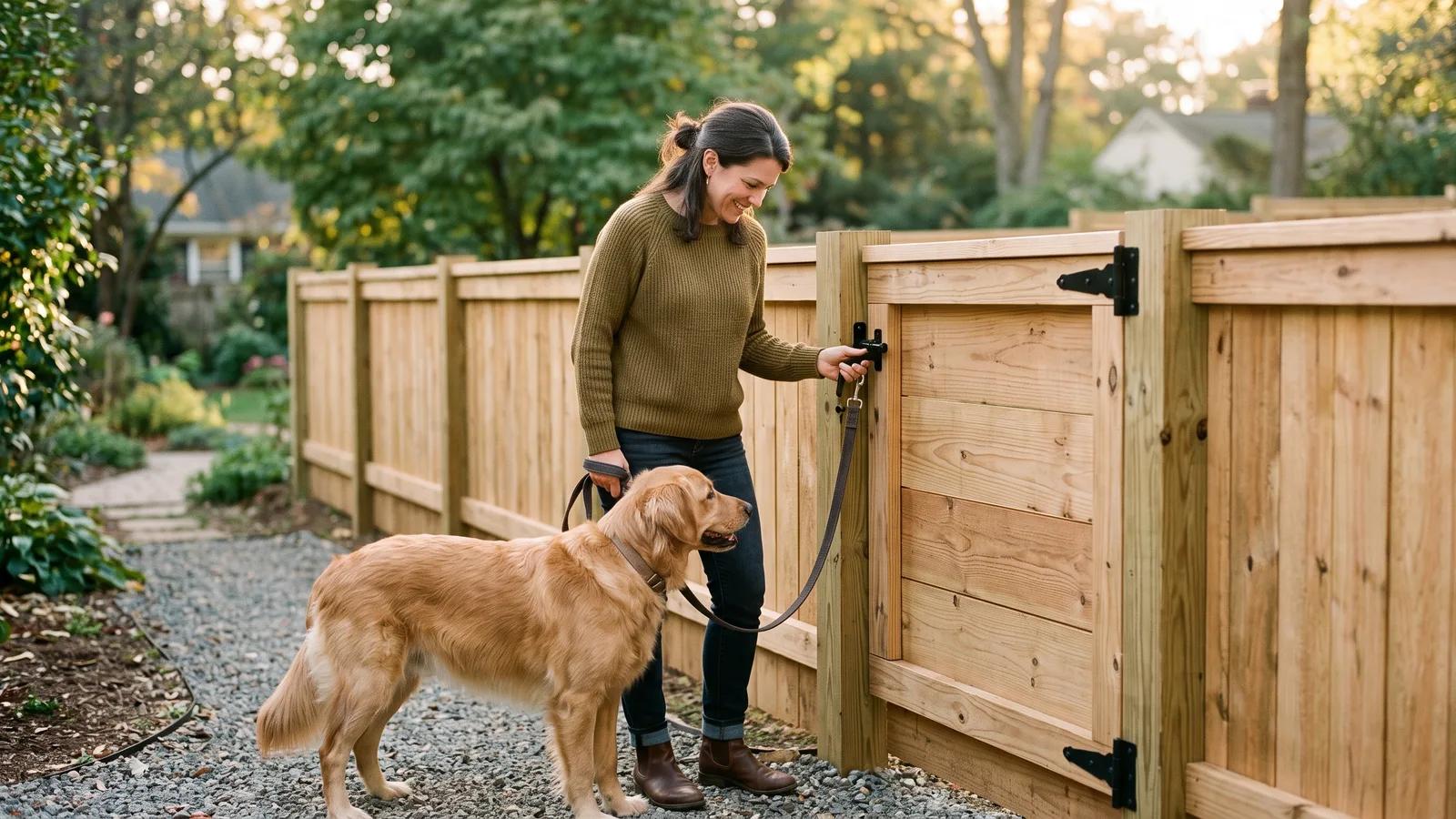
Pet containment and safety is one of the most emotionally direct reasons a homeowner finally picks up the phone about a fence, ahead of pure aesthetics for a meaningful share of buyers. Yet most creative built around it is interchangeable with any other home service ad that happens to feature a dog. The fix is not a better stock photo, it is building messaging around the actual product details a pet owner cares about, details that are concrete, photographable, and specific to fencing in a way generic pet marketing never touches.
Why pet safety is a distinct buying trigger from general privacy
A homeowner buying privacy fencing for its own sake is usually thinking about sightlines and curb appeal on a flexible timeline. A homeowner buying a fence because a dog keeps finding the gap under the old chain link, or because a new puppy needs a secure yard before it can be left outside unsupervised, is operating on urgency and a very specific set of worries. That difference matters for targeting, a pet-driven inquiry responds to messaging about security and containment first, with privacy and style as a secondary benefit, rather than the reverse. The two triggers are not mutually exclusive either, a homeowner who wants privacy from the street often also wants a nervous or reactive dog shielded from seeing passersby, which is one more reason a solid privacy fence, not just an open-style enclosure, is frequently the right recommendation for a pet owner even when containment alone would technically be satisfied by something simpler.
The product details pet owners actually ask about
Pet owners tend to ask sharper, more specific questions than a typical privacy fence shopper. Can a determined dog dig under the bottom rail, will a small dog fit through the picket spacing, does the gate latch actually stay closed if a dog leans against it repeatedly. These are answerable, concrete questions, which makes them far better material for creative than a vague appeal to pet safety in general.
Gate latches, picket spacing, and dig-proof bottom rails
Each of these has a real product answer worth showing rather than just stating. A self-latching, pet-resistant gate hardware upgrade solves the leaning-dog problem directly. Picket spacing narrow enough to stop a small breed from squeezing through is a simple spec worth listing plainly. A buried bottom rail or a grade-hugging install technique addresses digging in a way a generic six-foot privacy fence claim does not. Naming these specifics, rather than leaving them implied, is what separates useful creative from filler.
Height matters too, and not always in the direction a contractor might assume. A larger, athletic breed can clear a standard four-foot fence without much effort, so a pet-focused consultation should ask about the specific animal rather than defaulting to a standard height recommendation built for a typical suburban yard. A short, direct question during the estimate, what breed, how tall, has it ever gotten loose before, surfaces the actual requirement instead of guessing at it.
Building creative around real details instead of a stock dog photo
A photo of an actual gate latch, an actual buried bottom rail being installed, or a real picket spacing measurement does more work than a generic image of a dog sitting near any fence. This connects directly to the gate hardware and post cap photography crews often skip on a normal job. A crew that already documents hardware detail shots for other reasons has, without extra effort, built a library of exactly the material a pet-focused campaign needs.
Specificity beats sentiment
Matching the message to the moment a new pet arrives
A new puppy or a rescue dog joining the household is a genuine, time-bound trigger, and messaging that acknowledges the specific moment, “bringing a new dog home this season, here is what a secure yard actually needs”, reads as relevant rather than opportunistic. This is closer in spirit to a concrete, moment-based buying trigger like a new pool than to a broad seasonal privacy campaign, and it benefits from the same discipline, identify the moment, message directly to it, rather than running one generic ad year-round.
Say a shop tracks the reason each fence inquiry gives for calling and finds that roughly a third mention a dog or another pet somewhere in the conversation, even when the lead source was a generic privacy or storm-response ad. That illustrates why pet messaging deserves a dedicated variant rather than a one-line mention buried at the bottom of a broader ad, the trigger is already showing up in the pipeline whether or not the creative is speaking to it directly.
Where this trigger fits alongside pool code and privacy triggers
Pet safety rarely needs its own separate campaign structure. It fits naturally as a message variant inside an existing privacy or containment fence campaign, tested against straightforward privacy messaging to see which resonates in a given market. It also holds up well during weeks when storm-driven demand temporarily shifts spend toward search, since a pet owner searching directly for a fence contractor responds just as well to a specific, product-detail landing page as one reached through a feed ad.
Ready to talk numbers on your own pipeline?
On the strategy call, we'll lay out the plan we'd run for your business and talk through how it fits your market.
Final thought
Pet containment is one of the clearest, most concrete buying triggers in residential fencing, and treating it with a generic dog photo wastes the advantage. The details pet owners actually ask about, gate latch security, picket spacing, dig-proof bottom rails, are specific, photographable, and already something most crews document for other reasons. Building creative around those details, rather than a stock image and a soft slogan, is what makes a pet-focused campaign feel like it was built for the person looking at it.
Tagged