
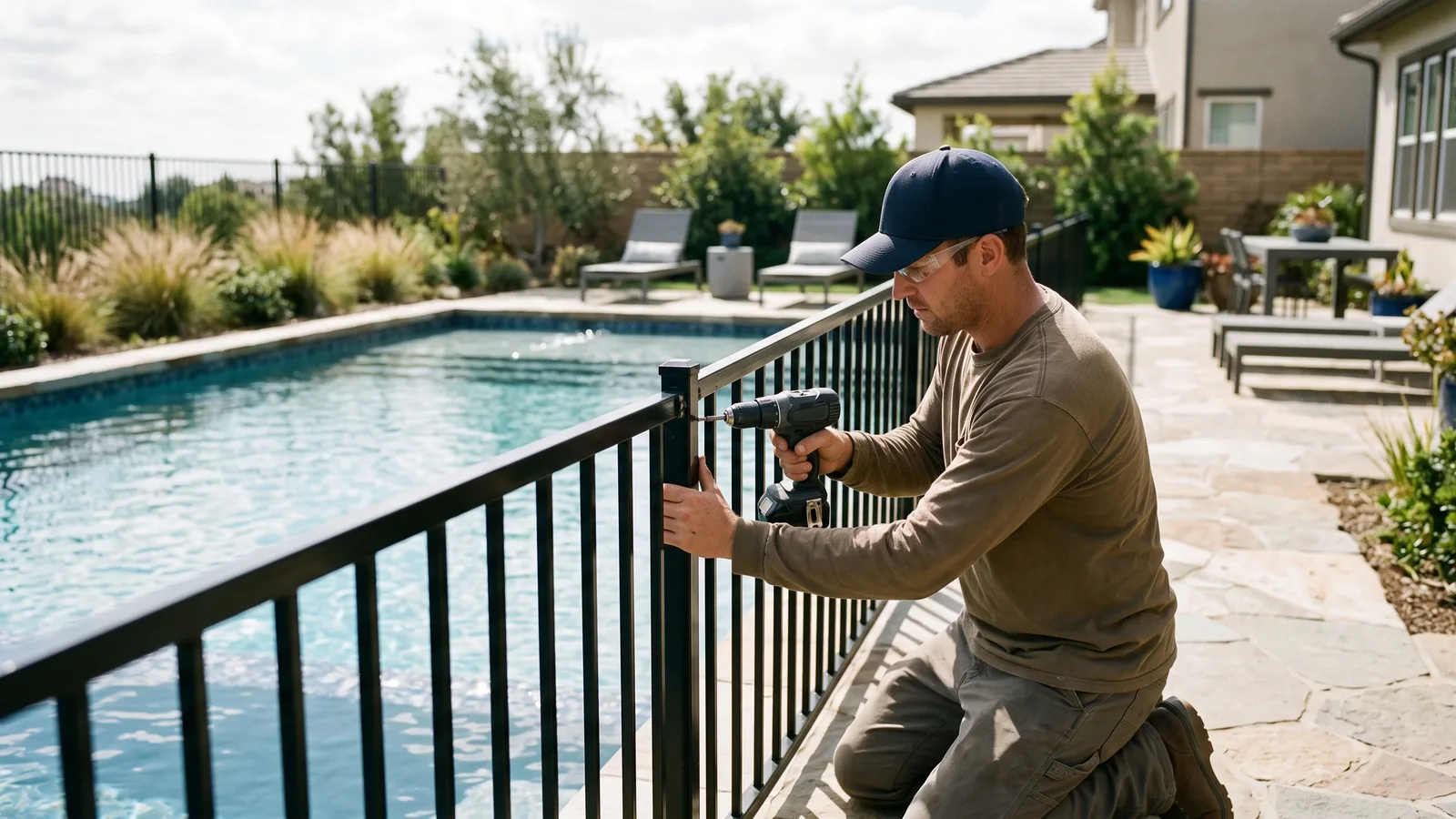
Most fence purchases are discretionary, a homeowner decides to upgrade privacy or replace something worn out on their own timeline. Pool enclosure fencing is different, in most jurisdictions it is mandated by local safety code, which turns a real portion of the fence market into a near-certain, time-bound need instead of a maybe. A homeowner mid-pool installation is not weighing whether to fence the yard, only which style and which contractor, and that distinction changes how targeting and messaging should work for this trigger.
Why pool fencing behaves differently from a typical fence purchase
A discretionary fence purchase can sit on a homeowner's someday list for years. A pool cannot legally hold water for long without an approved enclosure in most places, which means the fence decision gets pulled forward and compressed into a matter of weeks rather than stretched out. That urgency, combined with the fact that the homeowner already has real money committed to the pool project, makes this one of the more predictable and higher-intent triggers available to a fence contractor, provided the outreach reaches the homeowner at the right moment.
Identifying the window between pool permit and pool completion
The useful moment to reach a homeowner is not after the pool is finished and the inspector is asking about the fence, it is earlier, once a pool permit has been filed or construction has visibly started. Publicly available permit data, where a municipality makes it accessible, is one way to spot this window. Local pool builders are another, since they see the project timeline directly and know roughly when fencing will become the client's next decision. Reaching a homeowner during that window, rather than after the pool is filled and the requirement is suddenly urgent, gives more room for a proper consultation instead of a rushed one.
Messaging code compliance without sounding like a warning label
Code language can easily come across as alarmist if it leans too hard on liability and danger. The more effective framing treats the requirement as a known, normal part of finishing a pool project, “most municipalities require an approved enclosure before a pool can be used, here is what that looks like and how quickly it can be installed,” rather than language built around fear of an accident. Homeowners already understand pool safety matters, what they need from the ad or the landing page is a clear, calm answer about timeline and options.
What a qualified pool-trigger lead actually looks like
A strong lead here has a confirmed pool project underway, a rough sense of the pool completion date, and enough yard information to estimate linear footage. A weaker lead is someone still deciding whether to build a pool at all, since the fencing decision is not yet real for them. Qualification questions on the form or the intake call should surface which category a lead falls into early, so the sales team can prioritize the homeowner whose pool is actually going in the ground this season. Building that distinction into a documented lead quality standard keeps the whole team scoring pool-trigger leads the same way instead of leaving it to individual judgment.
A narrow, high-intent window
Reaching homeowners directly versus through the pool builder
Both channels work, and they are not mutually exclusive. Direct outreach, geo-targeted advertising around active pool construction, gives volume and control over the message. A pool builder relationship gives a warmer introduction, often with the builder actively recommending a specific fence contractor to their client, which tends to convert at a higher rate than a cold ad ever will. The strongest setups run both at once, direct advertising for reach and a small number of pool builder partnerships for the referrals those relationships naturally generate. Landscapers who work alongside pool projects are worth the same outreach, since they are often on site during the same weeks and hear the fencing question asked out loud before the homeowner has searched for a contractor on their own.
Turning one pool season into a recurring lead source
None of this replaces a normal follow-up cadence either. A homeowner reached during the permit window who is not ready to commit yet still benefits from a short check-in as the pool nears completion, since the fencing decision genuinely was not urgent the first time the contractor reached out.
A single pool builder relationship, maintained over multiple seasons rather than treated as a one-time introduction, becomes a dependable, recurring channel rather than a one-off win. The same discipline applies to direct outreach, building a repeatable process around permit monitoring or seasonal targeting rather than reacting to pool season each year as if it were new. Pool-trigger leads also pair naturally with other concrete buying triggers like pet containment, since a homeowner adding a pool often has other yard changes in mind at the same time.
On weeks when storm activity temporarily shifts attention and budget elsewhere, it is worth remembering that reallocating spend during a storm surge should not mean abandoning the pool channel entirely, since a pool project already underway does not pause just because a storm happened somewhere else in the service area. Treating this trigger with the same rigor as any other real project trigger keeps it from being deprioritized in a busy week.
Ready to talk numbers on your own pipeline?
On the strategy call, we'll lay out the plan we'd run for your business and talk through how it fits your market.
Final thought
Pool code fencing is one of the rare fence triggers where the homeowner is not deciding whether to buy, only when and from whom. Catching that window between permit and completion, with messaging that reads as helpful rather than alarming, and a pool builder relationship maintained season over season, turns a mandatory requirement into one of the more reliable lead sources a fence contractor can build.
Tagged