
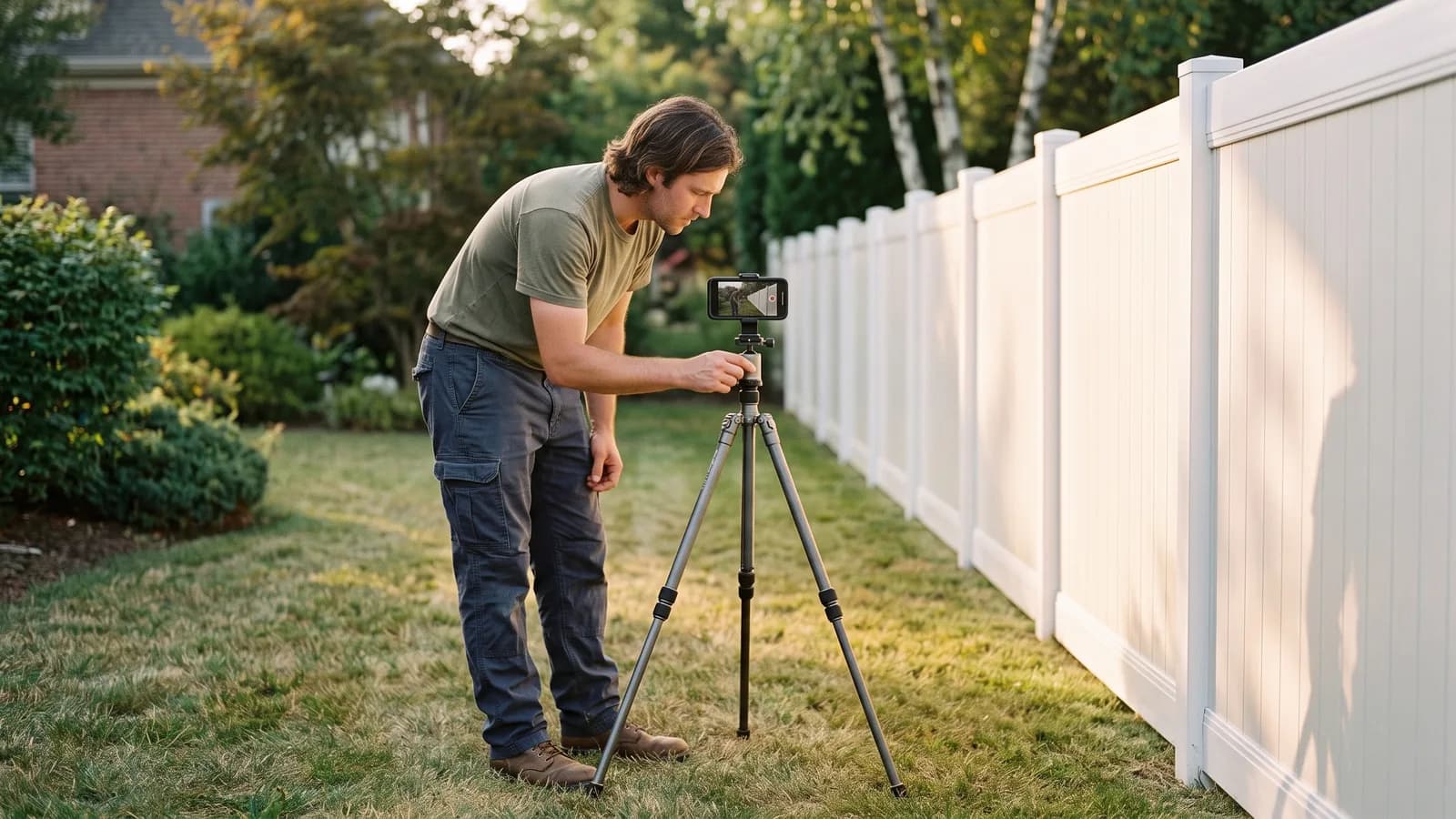
A fence is one of the visually simplest products a home improvement company sells, which means photography does most of the persuading before a homeowner ever books a consultation. A flat, shadowed phone snapshot can make excellent workmanship look average, while a well-lit, consistent shot of the same fence line signals a level of care the homeowner has no other way to judge from a website alone.
Why photography quality does persuasion work before the consultation
A homeowner comparing fence companies online cannot inspect post spacing or gate hardware in person before choosing who to call, and unlike a kitchen or a roof, a fence sits in full view of the street every single day, which raises the stakes on how it photographs. The photos on a website and social profile become the entire basis for that first judgment. A crooked, poorly lit photo of technically excellent work reads as sloppy, and a crisp, well-composed photo of merely average work can read as premium. That gap is entirely within a contractor's control, unlike price or material cost, which makes photography one of the cheapest brand investments a fence business can make.
A shooting checklist every crew can follow on every job
The goal is not artistic photography, it is a repeatable standard anyone on the crew can execute in a few minutes at the end of a job:
- Shoot straight-on, not at an angle. A fence line photographed square to the run shows true, consistent spacing; an angled shot distorts it and can make even a precise install look uneven.
- Clear the yard of tools and debris first. A coiled hose, a stack of offcuts, or a ladder in frame pulls attention away from the fence itself and reads as unfinished.
- Shoot at the same time of day for before and after. Harsh midday shadows on one shot and soft evening light on the other make a before-and-after pair look mismatched even when the work is not.
- Take one wide shot and two close details on every job. The wide shot sells the overall line; the close details sell the craftsmanship.
Matching light and angle between before and after shots
A before-and-after pair only works as a persuasion tool if both photos were taken from roughly the same spot, at a similar time of day, so the comparison reads as honest rather than staged. Standing in the same footprint for the “before” shot at the start of the job and the “after” shot at the end, even if that means a crew member marking the spot with a quick phone note, keeps the pair consistent enough to use side by side without looking like two different projects.
Capturing the details that signal craftsmanship: hardware and post caps
The wide shot proves the fence stands straight; the close details prove someone cared about the parts a homeowner touches every day. A tight shot of a gate latch, hinge, and post cap, clean lines, no visible gaps, hardware that is properly seated, communicates quality faster than a paragraph of copy ever could. These are exactly the details crews tend to skip because they feel like an afterthought once the bigger install is done, but they are frequently the first thing a homeowner's hand touches when they walk through their own new gate. A homeowner deciding between two similar quotes will often remember which company's photos showed a tidy latch and a flush post cap, even if they could not explain why that detail stuck with them.
Two minutes, every job
Building a portfolio structure organized by material and style
A pile of unsorted fence photos, wood next to vinyl next to chain link with no order to any of it, does not help a homeowner who is specifically trying to picture a vinyl privacy fence or an aluminum pool enclosure on their own property. Organizing the portfolio by material and style, wood privacy, vinyl, chain link, ornamental aluminum, composite, lets a prospect find the exact category they are picturing rather than scrolling past photos that do not match what they are shopping for. That same organization pays off directly on a landing page that only has seconds to earn a phone call, where the right photo next to the right headline does more work than another paragraph of copy. It also supports more specific messaging, a well-organized vinyl privacy gallery is exactly what backs up marketing built around pet owners looking for a secure yard, since the photos can show the actual product being described instead of a generic stock image.
A consistent portfolio also makes the ask that comes later easier. Timing a review request to the first weekend on the new gate works even better when the crew has already captured a clean hardware shot that day, the review and the photo can move together into the same portfolio entry without a second trip back to the property.
Ready to talk numbers on your own pipeline?
On the strategy call, we'll lay out the plan we'd run for your business and talk through how it fits your market.
Final thought
A fence sells itself visually more than almost any other trade, which means the quality of a crew's photos is not a marketing afterthought, it is a direct input to close rate. A short, repeatable checklist, straight-on shots, matched lighting, and close details on hardware and post caps, turns every finished job into portfolio material without adding meaningful time to the crew's day, and gives the sales and marketing side a steady supply of proof that the workmanship is as good as the quote promised.
Tagged