
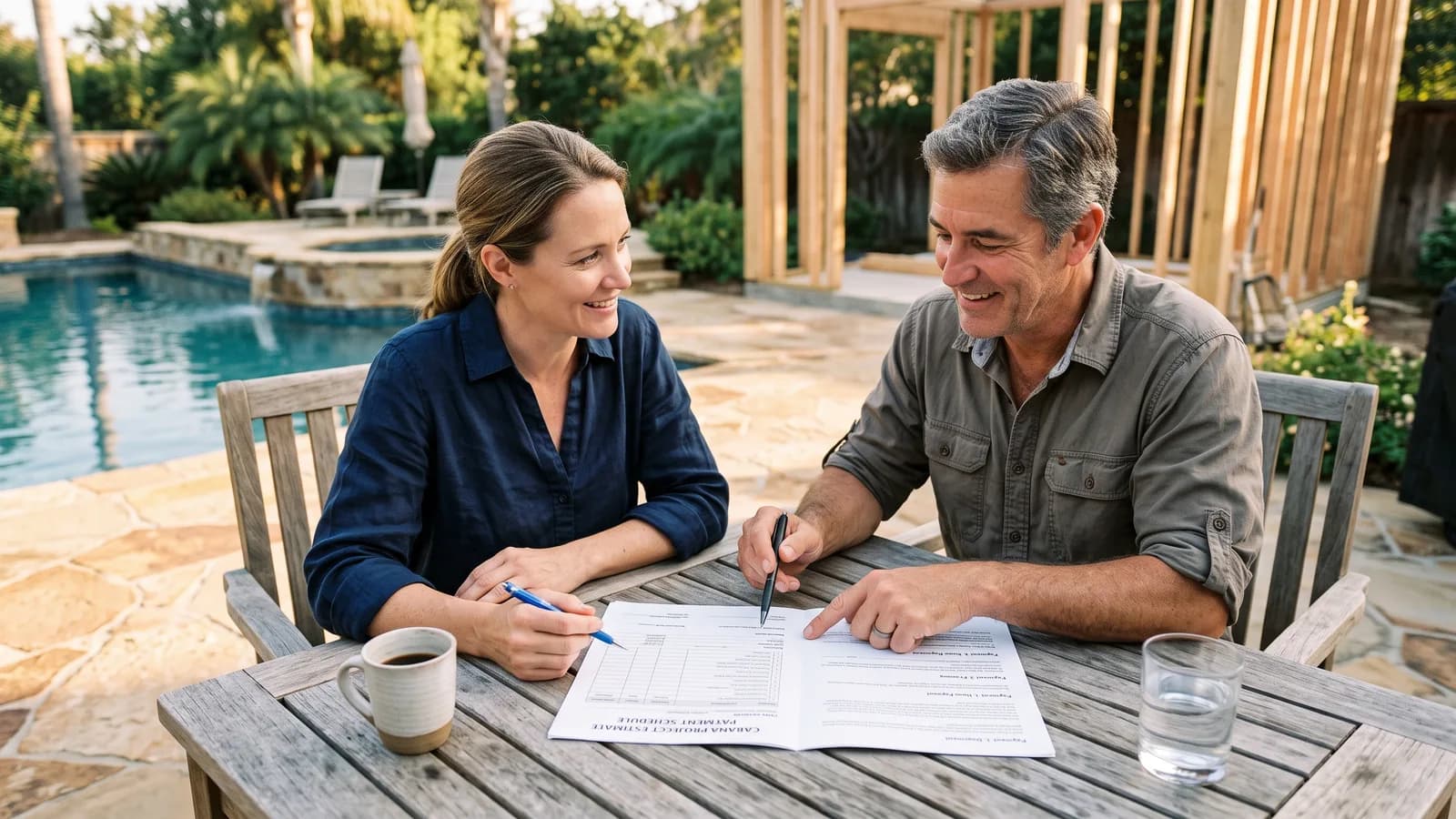
A finished cabana or pool house can land closer to the price of a vehicle than a typical home repair, and most homeowners have never budgeted for a backyard structure at that scale before. Waiting until the estimate lands to mention financing turns a manageable conversation into a rescue attempt after the homeowner has already reacted to a single lump-sum number.
Why Cabana Pricing Triggers Sticker Shock
A pool house is not a like-for-like replacement of something the homeowner already owns, the way a new roof or a set of replacement windows is. It is a brand-new structure with its own foundation, framing, roofing, electrical and sometimes plumbing, often paired with a pool that is already carrying its own significant cost. Say a homeowner budgeted a round number in their head based on a photo they saw online, without accounting for site work, permitting or the electrical service upgrade a bar cabana might need. The gap between that mental number and the real estimate is exactly what produces sticker shock, and it is a gap most other residential trades do not create at the same scale.
Homeowners also arrive with almost no reference point for what a cabana should cost, unlike a roof or a set of windows where neighbors and online research provide a rough benchmark. Without that reference point, the first number a homeowner hears often becomes the anchor they judge everything against, which makes the way that first number is framed, and what payment options sit next to it, disproportionately important to how the whole conversation lands.
When to Introduce Financing in the Conversation
Sequencing matters here more than almost any other part of the sale. Raising financing as a rescue after the homeowner has already flinched at the number reads as damage control. Raising it earlier, as a normal part of how the project gets planned, reads as a service.
Before the Estimate
Mentioning payment options during the design consultation, before any number is presented, sets an expectation that the project does not have to be paid in one lump sum. This does not mean leading with financing instead of value, it means a single sentence, early, letting the homeowner know that structured payment options exist for a project like this. That sentence removes a layer of anxiety the homeowner might otherwise be carrying silently through the entire consultation.
As Part of the Estimate Presentation
When the estimate is finally presented, showing it alongside a monthly payment figure, not only the total project cost, changes how the homeowner processes the number. A large total can feel abstract and overwhelming on its own. A monthly figure next to it gives the homeowner something concrete to compare against their existing budget, which is often what actually moves a decision forward.
Present options, not a single number
What Homeowners Actually Ask About Payment Options
- How the deposit and remaining balance are split. Homeowners want to understand what is due at signing versus what follows as the multi-week build progresses through foundation, framing and finishing.
- Whether add-ons can be financed the same way. A bar counter or outdoor kitchen tie-in added during the original build is often easier to fold into the same payment structure than to pay for separately.
- What happens if the timeline shifts. Weather delays or a permit hold can push a completion date, and homeowners want clarity on how that affects any payment milestones tied to project stages.
- Whether the pool and the cabana can share one plan. When both projects are happening together, homeowners often ask whether a single financing arrangement can cover both, rather than juggling two separate payment schedules from two different contractors.
Framing Financing Without Undermining the Value of the Build
There is a risk in raising financing too early or too often, it can start to feel like the builder expects the price to be a problem before the homeowner has even reacted to it. The fix is framing financing as flexibility rather than as a discount or an apology for the cost. A cabana is a value-driven purchase tied to how the family will use the space for years, and presenting the price around that value rather than a bare per-square-foot number keeps the conversation anchored on what the homeowner is actually getting, with financing offered as one more way to make a good decision easier, not as a signal the price needs defending.
Financing conversations also intersect with how homeowners think about long-term value. When resale value comes up as an objection, tying it back to manageable monthly payments rather than one intimidating total often reframes the entire decision in the homeowner's favor.
Handling the Financing Conversation Differently in Canada
Financing products, interest rate environments and consumer lending regulations differ between the United States and Canada, and a script built entirely around one country's options will feel off in the other. In Canada, home equity lines of credit are a common financing path homeowners already understand, while in many parts of the United States, specialized home improvement financing products are more commonly advertised directly by contractors. A builder working near the border, or simply serving both markets, should keep two separate, accurate explanations ready rather than translating one country's terms into the other and confusing the homeowner in the process.
Ready to talk numbers on your own pipeline?
On the strategy call, we'll lay out the plan we'd run for your business and talk through how it fits your market.
Final thought
A cabana or pool house asks a homeowner to commit to a number they likely have not budgeted for before, and pretending that reaction will not happen does not make it go away. A homeowner who arrives at the consultation already thinking seriously about the investment still deserves a financing conversation raised early and framed as flexibility, not rescued late as damage control. Builders who get this sequencing right keep price from ever becoming the reason a genuinely interested homeowner walks away.
Tagged