
A homeowner who has spent an afternoon browsing prefabricated storage buildings online will eventually do the math out loud, a shed that size costs a fraction of what the cabana quote says, so why is the cabana so much more per square foot. The comparison feels reasonable to the person making it and is almost entirely wrong, because a finished cabana and a bare shed occupy the same footprint while containing almost nothing else in common. Presenting pricing in a way that heads this comparison off, rather than hoping it never comes up, protects a legitimate quote from being measured against the wrong yardstick.
Why Homeowners Default to a Square-Foot Comparison
Cost per square foot is the easiest number most people know how to compare, because it is the metric used everywhere else in construction and real estate, home prices, additions, even garages. It feels objective. The problem is that the metric only works when the thing being compared on both sides is actually similar in scope, and a bare storage structure and a finished pool house with electrical service and a design relationship to the pool are not similar in scope, even when they happen to share a footprint. Homeowners are not being unreasonable when they reach for this comparison, they simply have not been shown yet what the number is actually paying for.
What a Shed-to-Cabana Comparison Leaves Out
A prefabricated shed is a box, four walls and a roof, dropped on a gravel pad or a simple slab, built to a minimum standard because its job is storage. A cabana is a livable, finished structure that has to hold up to the same building code, permitting, and inspection process as an addition to the house. Two categories in particular explain most of the price gap.
Integrated Electrical and Plumbing
A changing room, bar cabana, or pool house typically runs electrical service for lighting, outlets, and often a mini-split or fan system, and many include plumbing for a sink, an outdoor shower, or a half bathroom. Each of those systems requires a licensed electrician or plumber, a permit, and an inspection, none of which a storage shed needs. This is not an upsell added on top of the structure, it is baseline scope for a building meant to be used, not just used for storage.
Design Integration With the Pool and Landscape
A cabana is also a design object, not just a container. Roofline, siding material, and window placement all get chosen in relation to the pool, the main house, and the surrounding landscape, often alongside a pool builder or landscape designer, so the finished result reads as one cohesive backyard rather than a building that happens to be near a pool. That design coordination is real labor and real expertise, and it is a category of value a prefabricated shed was never built to offer in the first place.
Foundation scope is another line item a shed comparison simply does not have to account for. A cabana built in a region with a real frost line, much of Canada and the northern United States, needs footings dug below that depth so the structure does not heave over a winter, while a build in a warmer climate may get by with a simpler slab. A prefabricated shed sits on gravel or a thin pad because nobody expects it to last through decades of freeze-thaw cycles the way a permitted structure has to. Roofing follows the same logic, a roofline that matches the main house's pitch and material calls for real labor and real material cost that a flat shed roof was never designed to carry.
The comparison that actually holds up
Presenting Pricing Around Scope, Not Just Size
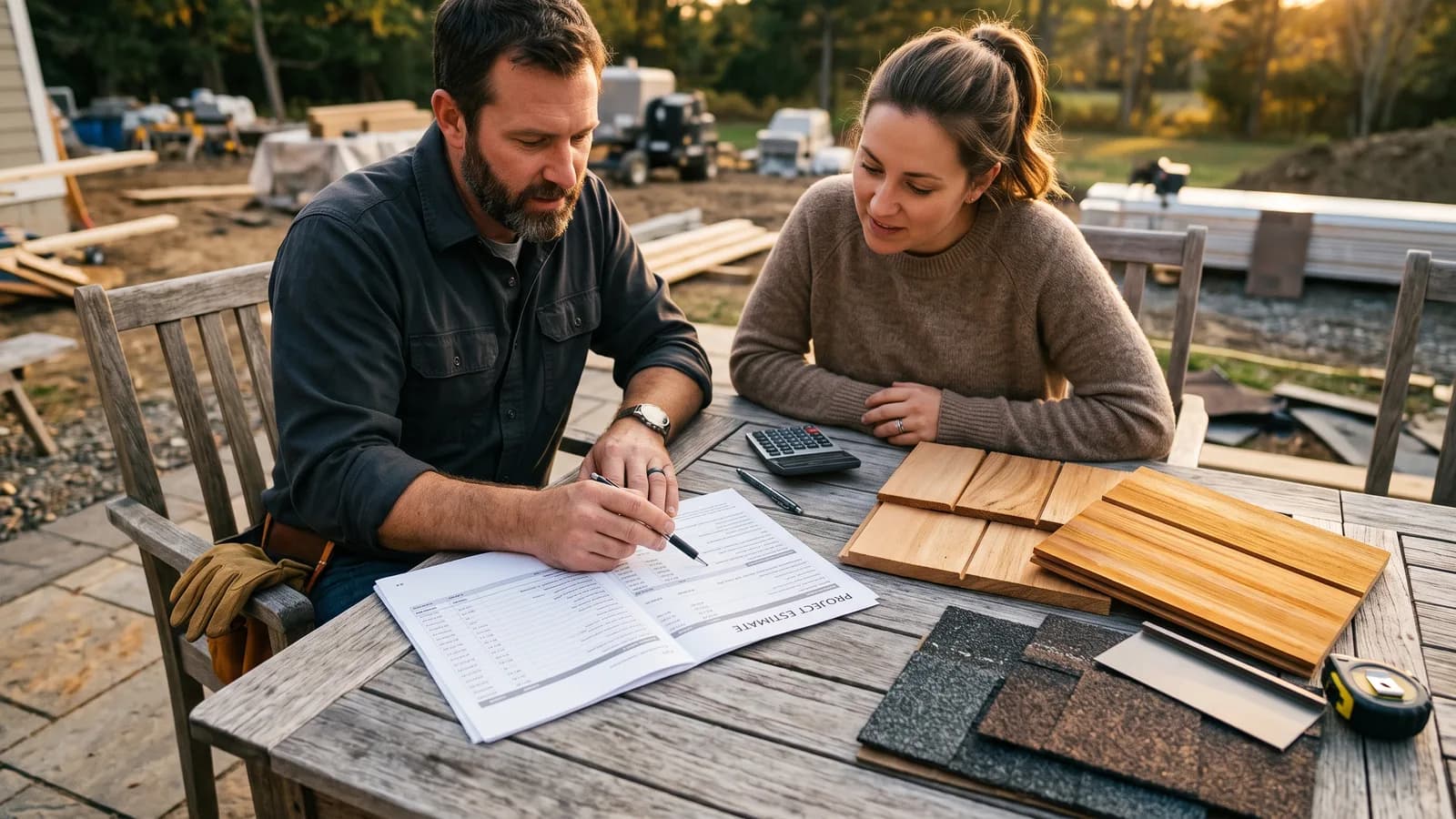
The estimate itself should lead with what is included rather than a single blended number, foundation type, framing and roofing package, electrical scope, any plumbing, and finish level for siding and interior surfaces. Breaking the quote into these categories lets a homeowner see exactly where the money goes instead of being asked to trust a total figure against a mental shed-price anchor. It also opens the door to talk about budget honestly early, which matters for a purchase this size. Structuring the financing conversation around the same itemized scope makes the number feel manageable rather than abstract, since the homeowner can see what a monthly payment is actually buying rather than reacting to one large total.
When a Simpler, Lower-Cost Option Is the Honest Answer
Sometimes a homeowner's real need is closer to covered storage than a finished living space, and the honest answer is a simpler structure at a lower price point rather than talking them into a fully finished pool house they do not need. Say a homeowner wants a basic covered space to store pool toys and cushions, offering that option alongside the finished cabana quote, clearly priced apart from the full build, builds trust and keeps the conversation about fit rather than about defending a number. That trust pays off later too, since resale value questions and upsell conversations about a bar cabana or outdoor kitchen both land better with a homeowner who already believes the builder priced the first quote honestly.
Ready to talk numbers on your own pipeline?
On the strategy call, we'll lay out the plan we'd run for your business and talk through how it fits your market.
Final thought
A cost-per-square-foot comparison against a prefabricated shed will keep coming up because it is the easiest number a homeowner knows how to reach for, not because it is a fair comparison. The fix is not arguing the number down, it is showing what the number actually includes, permitted electrical and plumbing, design integration with the pool and landscape, and a finish level that a storage structure was never built to match. Presented that way, the price holds up on its own.
Tagged