
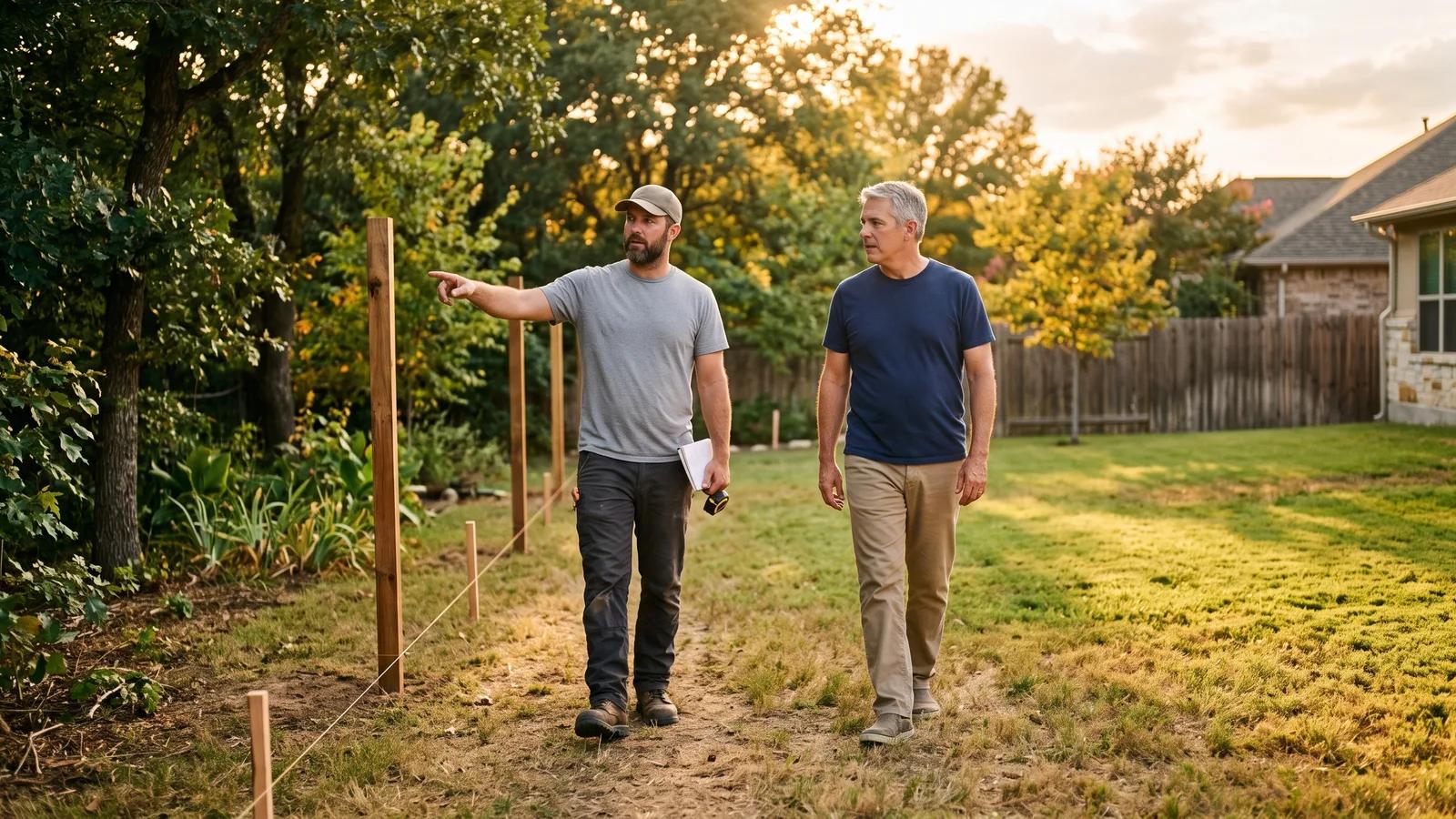
A fence consultation rarely runs as long as a kitchen or window sales visit, and that difference in length is not a minor scheduling detail, it changes what the visit can afford to include. There is less to design and less to finance, so a wandering conversation burns a much larger share of the available time than it would in a ninety-minute in-home appointment. A simple four-part structure, walk the line, confirm priorities, present a real number, ask for a next step, keeps a compressed visit productive without making the homeowner feel rushed through a decision.
Why a fence consultation is shorter than most home improvement visits
A window replacement or a kitchen remodel involves design choices, financing conversations, and often a second visit before anyone signs anything. A fence consultation is closer to a confirmation visit than a design session, because most of the real decisions, material, height, rough budget, should already be mostly settled by the time the estimator arrives. That compression is an advantage when the visit is structured well and a liability when it is not, since there is far less room to recover from twenty minutes spent on small talk or a tangent about a neighbor's old fence.
Walking the property line together before anything else
The visit should start outside, not at the kitchen table. Walking the actual line together, pointing out where corner posts and gates will land, does more in five minutes than a folder of photos could do in twenty. It gives the homeowner a concrete picture of the finished project, surfaces any obstruction, a tree root, a utility box, a slope, that the estimator needs to account for, and it builds trust simply because the contractor is treating the actual yard as the starting point instead of a generic pitch. This is also the moment to note anything that will affect the price before a number gets discussed later in the visit, so nothing about the quote feels like it appeared out of nowhere.
Confirming priorities that should already be mostly settled
Once the walk is done, the conversation moves back to the priorities that a good intake process and an earlier material conversation should have already surfaced. This step is a confirmation, not a discovery session. Reopening material choice or budget range from scratch at this point is usually a sign that an earlier stage of the process skipped a conversation it should have had. A short recap, restating what was discussed on the phone and asking the homeowner to confirm it still holds, takes less than a minute and catches the rare case where a spouse changed their mind about height or style after the first call.
What should already be resolved before the visit starts
- Material and style preference. Wood privacy, vinyl, aluminum or ornamental, chain link, or composite should be narrowed to one or two options before the estimator arrives, not chosen on the spot.
- A rough budget range. A homeowner who has not thought about budget at all is a different appointment than one ready to hear a real number.
- Any shared-line or neighbor consideration. Whether a neighbor is splitting cost or needs to be looped in changes the pacing of the visit and who needs to sign off.
Reopening a settled question wastes the walk
Presenting a real number on site instead of following up later
A fence visit that ends with “I will follow up with a number in a few days” gives the homeowner exactly the window they need to book a second and third estimate before deciding. Presenting a real number on site, built from the walk and the confirmed priorities, keeps the momentum from the visit intact and gives the homeowner something concrete to react to immediately rather than something to compare later from memory. Even a range with a short note that grade or gate placement will firm it up is stronger than a promise to call back. Estimators who arrive with rough pricing already loaded for the confirmed material and linear footage can usually adjust that number in the yard itself once the walk turns up anything unusual, a slope, a tight corner, a driveway gate wider than average, rather than starting the pricing exercise from a blank page after the visit ends.
Asking for a specific next step every time
Every visit should end with a clear ask, not a vague “let us know what you think.” That might be a signature on the spot, a scheduled follow-up call at a specific time, or a firm date for when the homeowner will decide. A visit that ends without a defined next step quietly becomes a lead the business has to chase later, usually with less energy behind it than the moment the estimator was standing in the yard. Running the material selection conversation without a stall earlier in the process is what makes this final ask land cleanly, and having already handled a neighbor cost-sharing conversation keeps a shared-line job from stalling on a signature that depends on someone who was not even in the yard. Watching for a covenant or association requirement that could still surface late is worth a final check before treating the visit as closed, since that is exactly the kind of issue that turns a signed visit into a stalled one a week later. The full walkthrough of this process is covered on how it works.
Ready to talk numbers on your own pipeline?
On the strategy call, we'll lay out the plan we'd run for your business and talk through how it fits your market.
Final thought
A short consultation is not a weaker one, it just has less room for anything that does not move the decision forward. Walking the line first, confirming what earlier conversations should have already settled, presenting a real number on site, and asking for a specific next step turns a compressed visit into one of the most efficient parts of the entire sales process instead of the part most likely to lose momentum. Estimators who follow the same four steps visit after visit also get faster at running them, and a structure that becomes second nature is what lets a fence business keep visit quality consistent even when the calendar is fully booked through a busy stretch of the season.
Tagged