
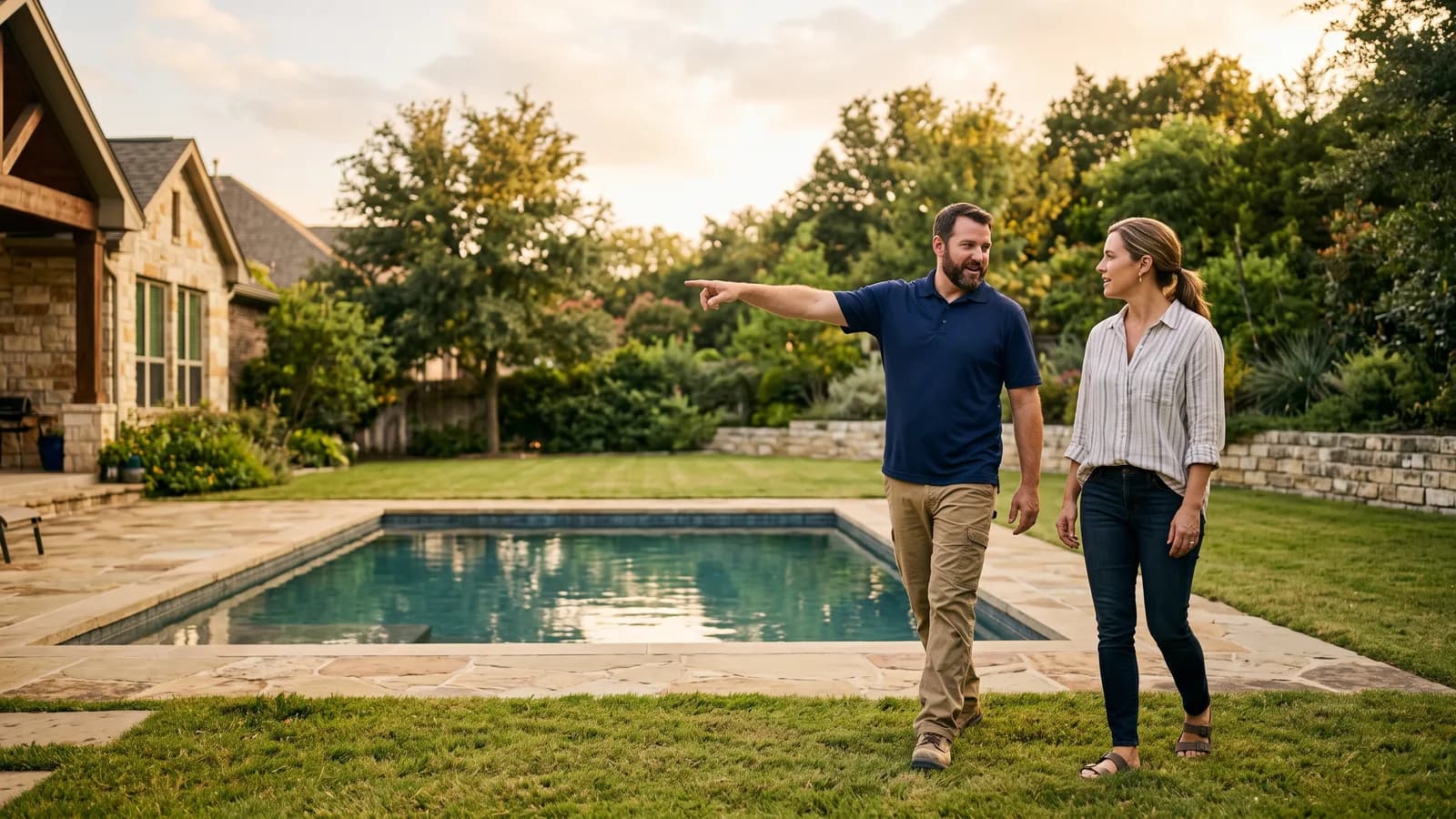
A cabana consultation does not happen across a desk with a catalog open. It happens standing in the homeowner's own yard, next to the pool the structure will sit beside, with the actual sun angle, the actual sightlines from the kitchen window and the actual fence line all present as part of the conversation. Structuring that visit deliberately, rather than treating it as a casual walkthrough before the real pitch, is what turns a site visit into a signed design agreement.
Why the Yard Itself Is Part of the Sales Pitch
A showroom-based trade sells a sample of the finished product and asks the homeowner to imagine it installed somewhere else. A cabana consultation skips that translation step entirely, because the finished structure has to relate physically to the pool, the patio, the house and the property line that are all standing right there during the visit. That immediacy is an advantage a builder should use on purpose. Pointing at the actual spot where a roofline would sit, or where a bar counter would face the pool, does more selling work in thirty seconds than a rendering can do across an entire follow-up call.
What to Walk Through Before Talking Numbers
Price comes up eventually, but the consultation earns the right to discuss it by first demonstrating that the builder understands the space better than the homeowner expected. Two elements matter more than any others during that early walkthrough.
Sightlines From the House
Walk the homeowner back to the kitchen window, the back deck or wherever they actually spend time indoors, and look out toward the proposed cabana location together. A structure placed without regard for what is visible from inside the house can block a favorite view or, just as often, create one worth having. Homeowners rarely think through sightlines on their own, which makes raising the question first a visible sign of expertise.
Sun Exposure and Pool Relationship
Orientation determines whether a cabana's shaded seating area actually stays shaded during the hours the family uses the pool, and whether a roofed bar cabana casts unwanted shadow across the water itself in the afternoon. Walking the site at the time of day closest to when the family typically swims, or asking directly about their routine, lets the builder place the structure to solve a real daily problem rather than simply filling open lawn space.
Walking the property line and noting existing electrical panel location, any visible utility markers, and the distance from the proposed footprint to the property boundary catches setback problems while they are still easy to solve on paper, before a design gets far enough along that moving the structure means starting over. A rough measurement on site, even before a formal survey, gives the homeowner an early, honest read on whether the space they are picturing actually fits.
Using the Site Visit to Pre-Empt the Resale Value Question
Almost every cabana consultation eventually reaches the question of whether the structure adds real value to the home or is simply an expensive amenity. Raising it proactively during the walkthrough, rather than waiting for the homeowner to ask, changes the tone of that conversation entirely. An honest, locally grounded answer to the resale value question lands better delivered standing in the yard, pointing at comparable outdoor spaces in the neighborhood, than it does later over the phone once the homeowner has already started to wonder if the builder is avoiding the topic.
Let the yard do the talking
Moving From the Walkthrough to a Design Agreement
Once sightlines, sun exposure and the value conversation are addressed, the consultation should move toward a concrete next step rather than ending on a vague promise to follow up. That usually means either a rough sketch drawn on site with the homeowner watching, or a commitment to a formal rendering produced within a specific number of days. A homeowner who watches a builder sketch their actual yard, with real measurements and real landmarks, is far closer to signing than one who is told to wait for a generic follow-up email.
What to Bring to Every Consultation
The physical kit for the visit matters almost as much as the conversation itself.
- A measuring wheel or laser measure. Rough pacing off a yard undermines credibility the moment a homeowner notices the estimate does not match what they can see.
- A tablet with prior project photography. Showing a comparable finished cabana, ideally with a similar pool shape or yard size, grounds the conversation in real outcomes rather than hypotheticals.
- A simple sketch pad or design app. Drawing the footprint on the spot, even roughly, gives the homeowner something tangible to react to before the visit ends.
- A written summary of setback and permit basics for the area. Addressing compliance during the visit, rather than after, removes one of the most common sources of later delay.
A well-run consultation is also the moment that confirms whether this was the kind of appointment worth the crew's time in the first place, since even careful intake screening cannot catch everything a thirty-minute walk through the actual yard reveals.
Ready to talk numbers on your own pipeline?
On the strategy call, we'll lay out the plan we'd run for your business and talk through how it fits your market.
Final thought
A cabana consultation succeeds or fails based on how well the builder uses the one advantage a showroom cannot offer, standing in the actual space with the actual homeowner. Walk the sightlines, account for sun and pool relationship, address the value question before it becomes an objection, and leave with a concrete next step rather than a vague promise. Done well, the site visit is not a preliminary step before the real sales conversation, it is the sales conversation.
Tagged