
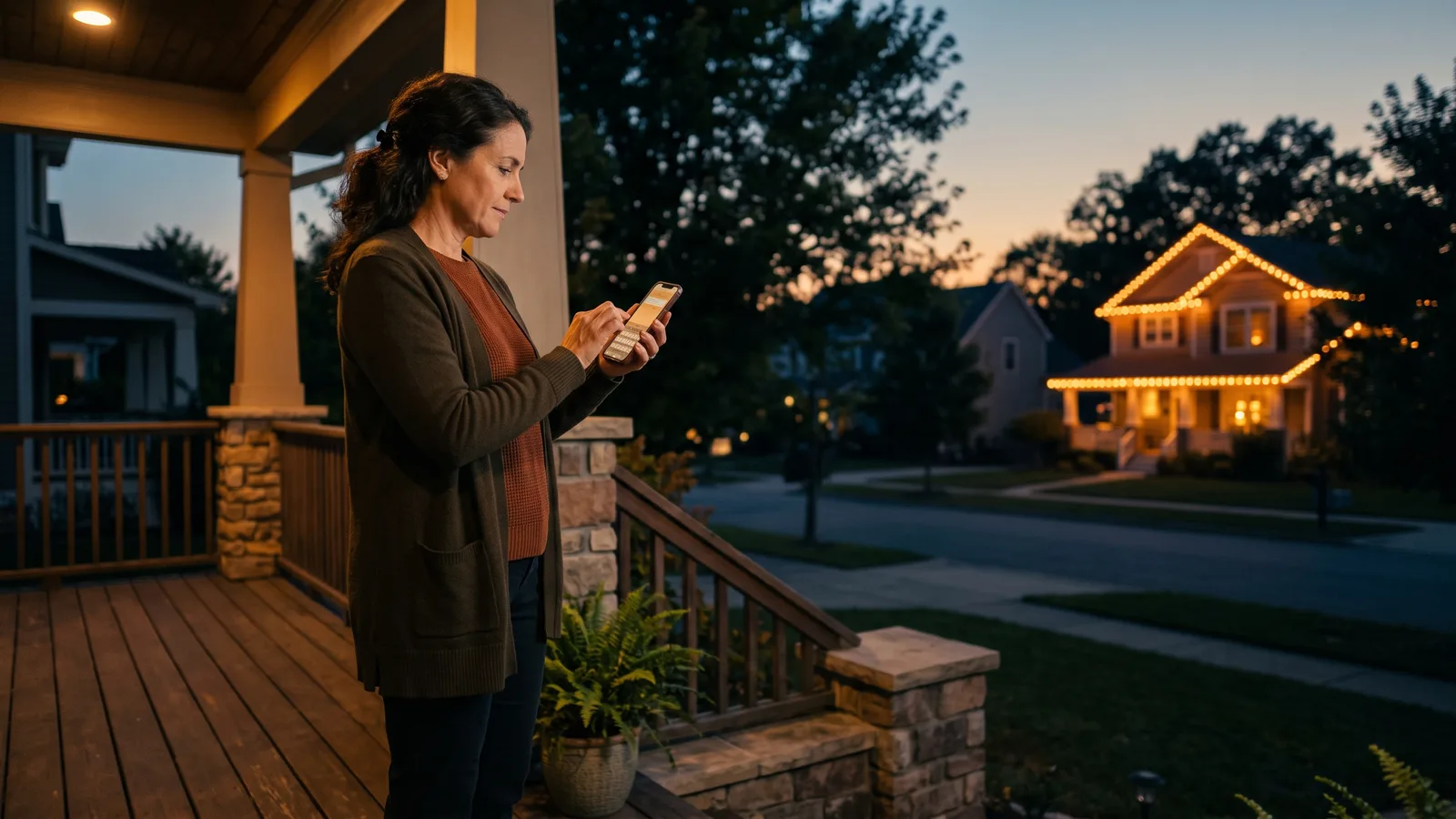
Most trades get their inquiries whenever a problem becomes visible, and problems do not keep office hours but tend to cluster during the day. Landscape lighting runs on a different clock entirely. The single biggest trigger for a new inquiry is a neighbor's house glowing at dusk, which means demand for this trade peaks in the evening, right as many small companies are locking up for the night and forwarding calls to voicemail.
Why the demand trigger for this trade happens after dark
A homeowner rarely wakes up thinking about landscape lighting. They think about it while standing on their own porch at sunset, phone in hand, looking at a neighbor's facade or roofline glowing warmly against the dusk sky. That moment of comparison, not a daytime search or a flyer in the mailbox, is what most often turns into a search on a phone and a call or form submission within minutes. The product itself is the marketing trigger, and the product is only visible after dark, which is a genuinely unusual pattern compared to almost any other home improvement category.
What an overnight-queued lead actually costs
The seasonal pattern makes this worse, not better. Both fall, when homeowners are watching neighbors put up more permanent lighting ahead of the holidays, and spring, when the first warm evenings send people back outside after a long winter, concentrate this evening trigger into a shorter window than the rest of the year. A company that only staffs its phones for daytime hours during those two peaks is losing a disproportionate share of its highest-volume season to a gap that a modest change in coverage would close.
A lead that arrives at 8:30 in the evening and sits until the next business morning has already cooled by the time anyone calls back. The homeowner who searched at dusk is often still awake, still curious, and often still looking at a handful of other results from the same search. A twelve-hour gap between inquiry and response gives every one of those other companies a full evening's head start, and by morning the original spark of interest, the neighbor's lit roofline still fresh in view the night before, has usually faded into something far less urgent than it felt at the time.
The window is narrower than it looks
Matching response coverage to evening demand
Border geography adds a small wrinkle worth planning around. A company serving both United States and Canadian properties near a shared market sees sunset times drift out of sync with whichever time zone the office defaults to, and a coverage window built around one side of the border can quietly leave the other side uncovered during exactly the hours that matter most.
Closing that gap means building coverage around when the demand trigger actually happens rather than around a conventional nine-to-five schedule. That does not necessarily mean a person answering the phone at all hours; it means having a defined process, staffed or automated, for the evening block when this trade's inquiries concentrate. Letting those calls go to voicemail undoes the advantage of having a strong online presence in the first place, since the homeowner who found the company is the same one who will move on to the next result if nobody answers within a ring or two.
What a fast evening response needs to accomplish
Speed alone is not the whole job. The response needs to gather the basics, property address, what prompted the call, and a rough sense of scope, while the homeowner's attention is still on the conversation. Not every evening call deserves a full design consultation slot, either; separating a quick repair request from a genuine design inquiry during that first call keeps evening booking slots reserved for the homeowners actually ready for a walk-through, rather than filled with requests a shorter phone conversation could have resolved.
Handing the lead to a booked consultation, not just a callback
Even a company that cannot staff live evening coverage every night of the week can close most of this gap with a narrower commitment, covering the two or three hours right after sunset on the evenings that matter most, rather than treating evening response as an all-or-nothing staffing decision. A partial window handled well still beats a full evening routed to voicemail by default.
The strongest version of evening coverage ends the call with a scheduled appointment, not a promise to call back. A homeowner who booked a consultation before hanging up rarely reconsiders overnight the way one waiting on a callback might. This also connects to how the inquiry was generated in the first place; an inspiration-driven inquiry like this one responds best to a design-focused next step, not a repair ticket buried in a general queue. Setting a clear lead quality standard for what counts as a bookable inquiry keeps evening coverage focused on the calls most likely to close.
Ready to talk numbers on your own pipeline?
On the strategy call, we'll lay out the plan we'd run for your business and talk through how it fits your market.
Final thought
This trade's biggest advantage over most other home improvement categories is also its biggest scheduling challenge: the product sells itself the moment someone sees it working, and that moment only happens after dark. Building response coverage around the evening hours when that trigger actually fires, rather than around a conventional office schedule, is the difference between capturing that impulse and watching it go to whichever competitor happened to answer the phone first that same night. A company that gets this right once rarely has to be convinced to keep doing it, since the booked consultations that follow make the case on their own.
Tagged