
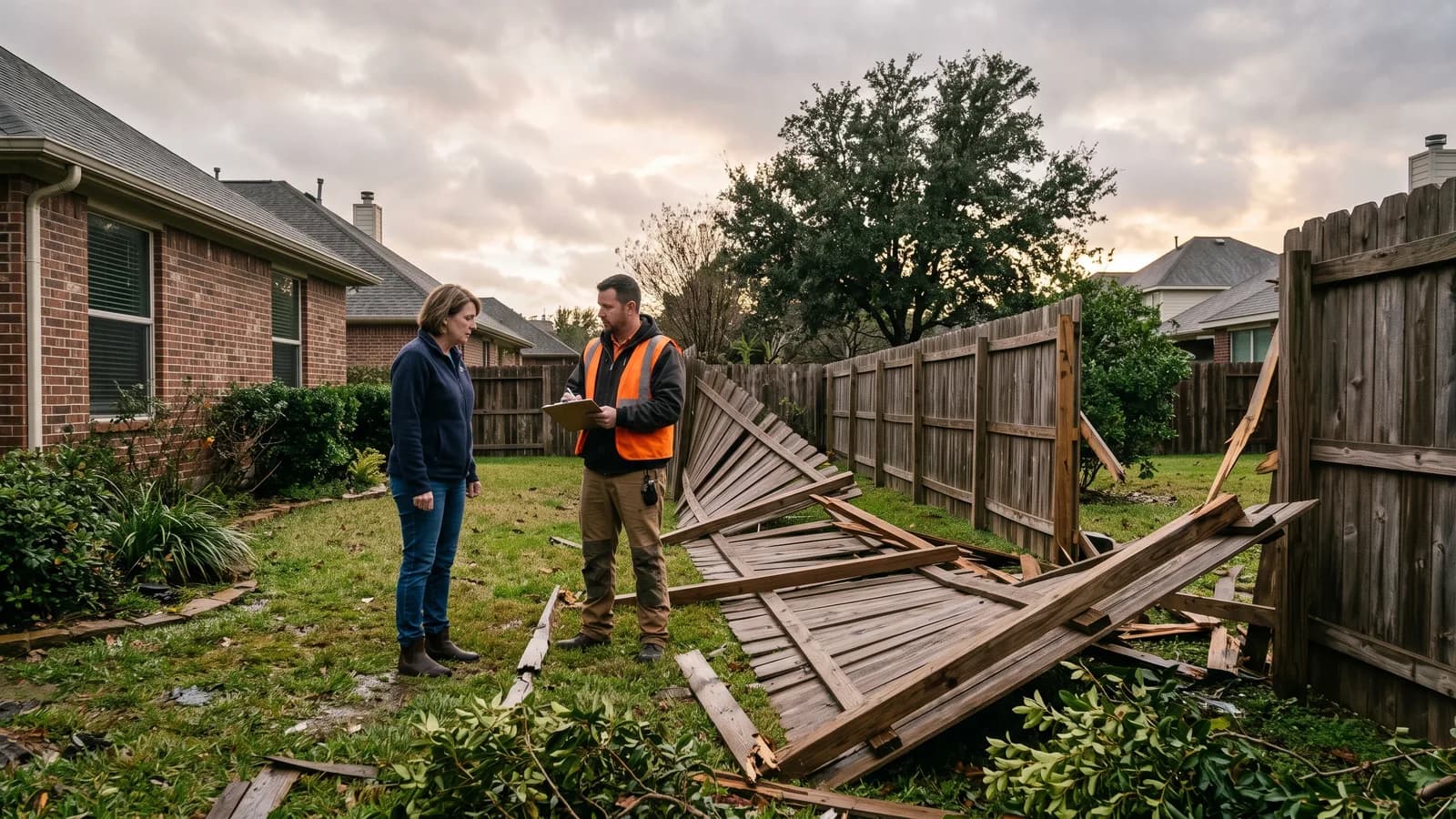
A single wind event can put more wood fence sections on the ground in a weekend than a normal month of everyday wear ever would. That kind of demand does not arrive as a steady drip the way a typical fence replacement season does, it shows up all at once, urgent, and often tied to a homeowner who now has a genuine safety or code problem in the yard. Building a real response plan around that pattern, ahead of the next storm rather than during it, turns a chaotic week into a repeatable growth channel instead of a scramble.
Why storm events create a distinct demand curve for fences
Wind, ice, and falling limbs do not damage a fence the way a decade of sun and rain does. A downed section is frequently an immediate problem, a pet can get out, a pool enclosure no longer meets code, a shared property line is suddenly wide open, which means the homeowner is not weighing whether to replace the fence so much as how fast someone can come look at it. That urgency compresses the buying decision into days rather than the weeks a routine upgrade usually takes, and it rewards the contractor who shows up first with a real answer over the one with the lowest price. It also draws in homeowners who would never have called about a fence otherwise, someone who had been putting off a routine wood-to-vinyl upgrade for two years will often move immediately once a storm forces the issue, which makes storm season a source of new customers, not just repeat replacement of what a household already had.
Building a response plan before the next storm, not during it
The contractors who capture this demand well have a plan sitting ready before severe weather ever shows up on a forecast, not one built from scratch the morning after. That means pre-written ad creative that can go live within hours, a phone and text intake script tuned for someone describing a fence on the ground, and a rough sense of which crews can be pulled onto storm response without abandoning work already on the calendar. Waiting until the storm has passed to figure any of this out means competitors with a plan already in motion get there first.
Geographic targeting around storm tracks
Storm damage is not evenly distributed, it follows the actual path of the wind or the ice, which means a broad service-area campaign is the wrong tool the day after an event. Narrowing ad targeting to the specific neighborhoods and zip codes that took the hit, using local weather reporting and, where available, utility outage maps as a rough proxy for where damage concentrated, puts spend in front of homeowners who actually have a fence on the ground rather than spreading it evenly across a service area where most yards are untouched.
Creative that matches an urgent moment without overreaching
The message that works here is plain and practical, not dramatic. A homeowner staring at a fallen fence section wants to know someone can come look at it soon and that the process from estimate to replacement is straightforward, not a company trying to capitalize on a bad week. Language built around response time, same-week estimates, help navigating an insurance claim, reads as useful. Language that leans hard on the disaster itself reads as opportunistic, and homeowners notice the difference when they are already stressed.
What the intake call should confirm
Coordinating storm response with a crew already booked for spring
The hard part is that storm season and the spring installation surge can land close together, and a crew already booked solid does not have open capacity waiting around for an emergency. Holding back a small reserved block of install time each week during storm-prone months, rather than filling every slot with standard bookings, gives dispatch somewhere to put genuine storm work without bumping a homeowner who has been waiting on the calendar for weeks. If that reserve goes unused in a quiet week, it simply becomes an early opening for the next scheduled job. The reserve does not need to sit idle for long, most storm windows clear within a week or two, and a shop that communicates clearly about which crew is handling storm work and which is holding the spring schedule avoids the confusion that otherwise shows up as a missed install date on someone else's job.
Following up with homeowners who are not ready to sign yet
Not every storm-damage call turns into a same-week contract. Some homeowners are waiting on an insurance adjuster, others are gathering a second quote before committing, and a quote request from a homeowner in this situation is rarely exclusive. A short, useful follow-up sequence, a reminder that a damaged section left exposed can be a liability, a note on how the insurance documentation process usually goes, keeps the contractor top of mind without pushing. For the homeowner who priced the job and went quiet, a retargeting sequence built for that exact moment brings a meaningful share of that stalled demand back once the insurance paperwork clears.
Ready to talk numbers on your own pipeline?
On the strategy call, we'll lay out the plan we'd run for your business and talk through how it fits your market.
Final thought
Storm damage will keep arriving on its own schedule, not a marketing calendar, which is exactly why the plan has to exist before the next event rather than after it. Geographic targeting that follows the actual damage, creative that reads as helpful rather than opportunistic, a reserved block of crew capacity, and a follow-up sequence for homeowners still sorting out insurance turn a chaotic week into one of the more predictable growth channels available to a fence contractor, provided the plan is written down before the wind picks up.
Tagged