
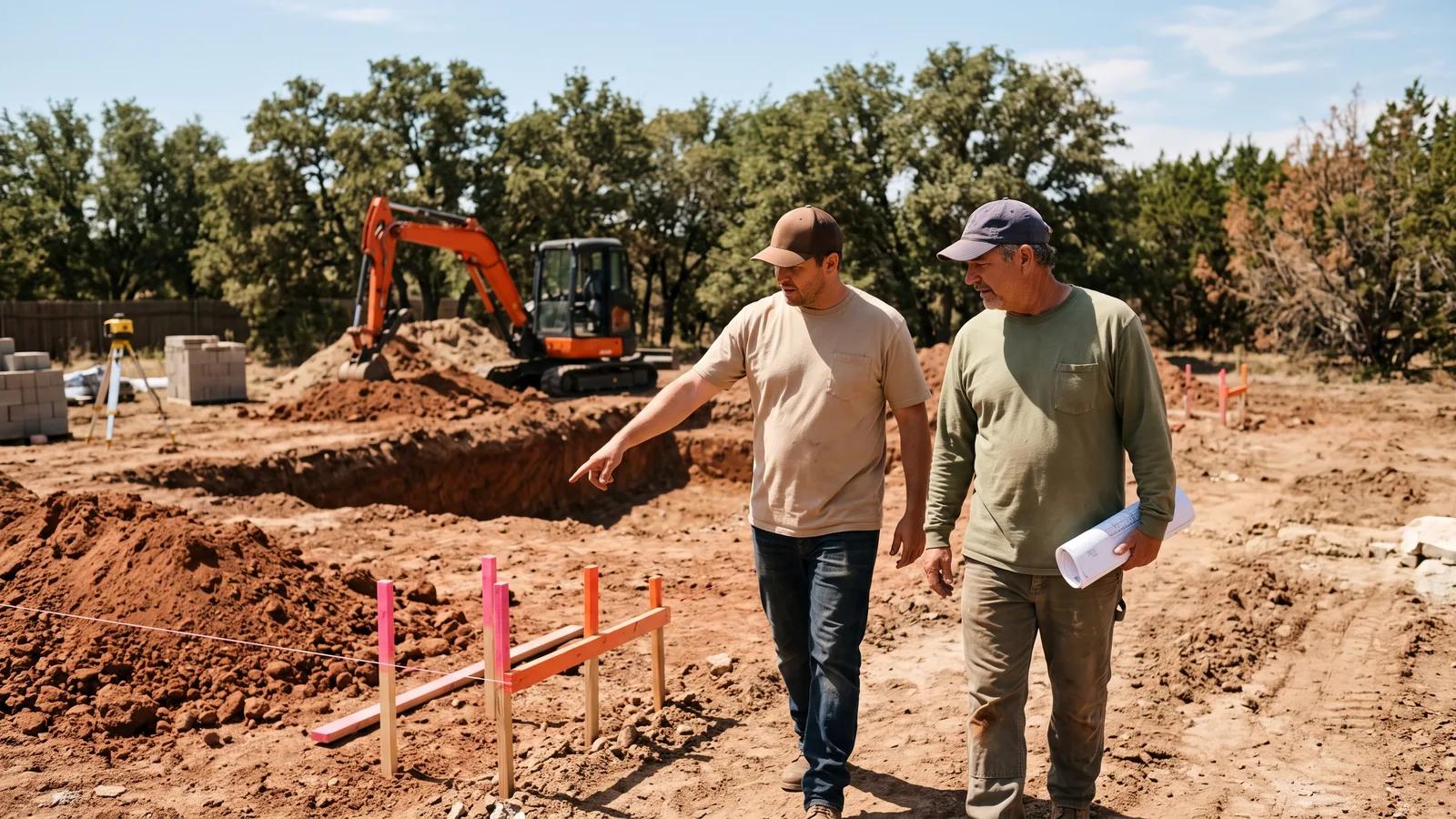
A new pool almost always creates a fencing requirement before the first inspection is scheduled, and a landscape redesign just as often means an existing fence line has to move, shorten, or come out entirely for the project to work. Both trades run into fencing as a side effect of their own work rather than as competition for it, which makes pool builders and landscapers two of the more natural referral partners a fence contractor can build a real relationship with.
Why pool and landscape projects create fencing side effects
Most jurisdictions in the United States and Canada require a code-compliant enclosure around a new residential pool before it can be signed off, which means a pool builder is thinking about fencing from the earliest stage of the project whether they want to be or not. Landscape projects create the overlap differently: a redesigned grade, a new patio footprint, or a retaining wall can put an existing fence line in the wrong place entirely, and a landscaper who does not want to touch fencing themselves still needs someone reliable to call when the plan requires it. In both cases, the fencing need is real, time-sensitive, and tied to a project the homeowner has already committed real money to, which makes it a warmer referral than almost anything paid advertising can produce. A pool builder who mentions the enclosure requirement partway through the sales process is already doing the fence contractor's qualification work for them, the homeowner arrives with a real budget, a real timeline tied to the pool's completion date, and a code requirement that is not optional, none of which has to be established from scratch on a cold lead.
Approaching the partnership conversation without sounding transactional
The wrong opening is a pitch about sending business back and forth before either side has seen the other's work. Pool builders and landscapers, like most trades, are protective of their own reputation and cautious about recommending someone they have not seen perform. A better starting point is a small, low-stakes first project, completing one referral well before asking for anything in return builds the credibility a formal arrangement needs to stand on. Once both sides have seen a job done on time and done right, the conversation about formalizing the relationship happens naturally instead of feeling like a sales pitch.
Structuring a two-way referral arrangement
A workable arrangement is usually simple, and it works best when it stays that way. Overcomplicating the structure with formal commission splits or exclusivity clauses tends to slow both sides down and invites disagreement over details that rarely matter as much as consistent follow-through does:
- Clear scope boundaries. A pool builder refers pool enclosure fencing; a landscaper refers fence relocations tied to a grading or planting plan. Neither side is expected to sell the other's services, only to mention them at the right moment.
- A named point of contact on each side. A referral that goes to a general office line dies faster than one that goes to a specific person who will actually follow up.
- An honest response-time expectation. Both trades work on timelines set by permits and inspections, so agreeing upfront on how quickly a referral gets a callback keeps the arrangement from quietly falling apart.
- A shared understanding of who follows up. Deciding in advance whether the fence contractor or the referring trade owns the next call avoids the awkward gap where a homeowner assumes someone is coming and nobody actually calls.
Keep it verbal and simple at first
Staying useful to the partner between active projects
Pool and landscape projects run on their own seasonal rhythm, which means referrals will not arrive on a predictable schedule. Staying visible between active jobs matters more than any single referral: a quick note when a shared client's project finishes well, an occasional check-in that has nothing to do with asking for work, or simply being the contractor who always answers when a partner calls with a question about a fence line keeps the relationship from going quiet during the slower months. Neither gesture needs to be elaborate, a short text saying a shared client's project turned out well does more for the relationship over a year than an occasional large favor ever will. This is the same discipline that keeps a realtor referral pipeline productive between listings, consistent low-effort contact outperforms an occasional big ask.
Measuring whether the partnership is actually producing work
A referral relationship that feels active in conversation but never converts into signed jobs is worth being honest about. Tracking where each new pool-enclosure or landscape-triggered fence job actually came from, even with something as simple as a note in the same system used for tracking every live fence job on the books, shows fairly quickly whether a partnership is producing real volume or just pleasant lunches. Pool-code fencing in particular is a strong enough lead trigger on its own, worth pursuing directly as well as through builder referrals, that a contractor should be able to see both channels clearly and invest time where it actually pays off.
Ready to talk numbers on your own pipeline?
On the strategy call, we'll lay out the plan we'd run for your business and talk through how it fits your market.
Final thought
Pool builders and landscapers are not competitors for fence work, they are two of the trades most likely to generate it as a byproduct of their own projects, and the fence work they generate arrives already qualified by a real budget and a real deadline. A partnership built on clear scope, a real point of contact, and consistent follow-through, rather than a one-time pitch, turns that overlap into a small but dependable source of warm referrals that cost almost nothing to maintain once the relationship is established.
Tagged