
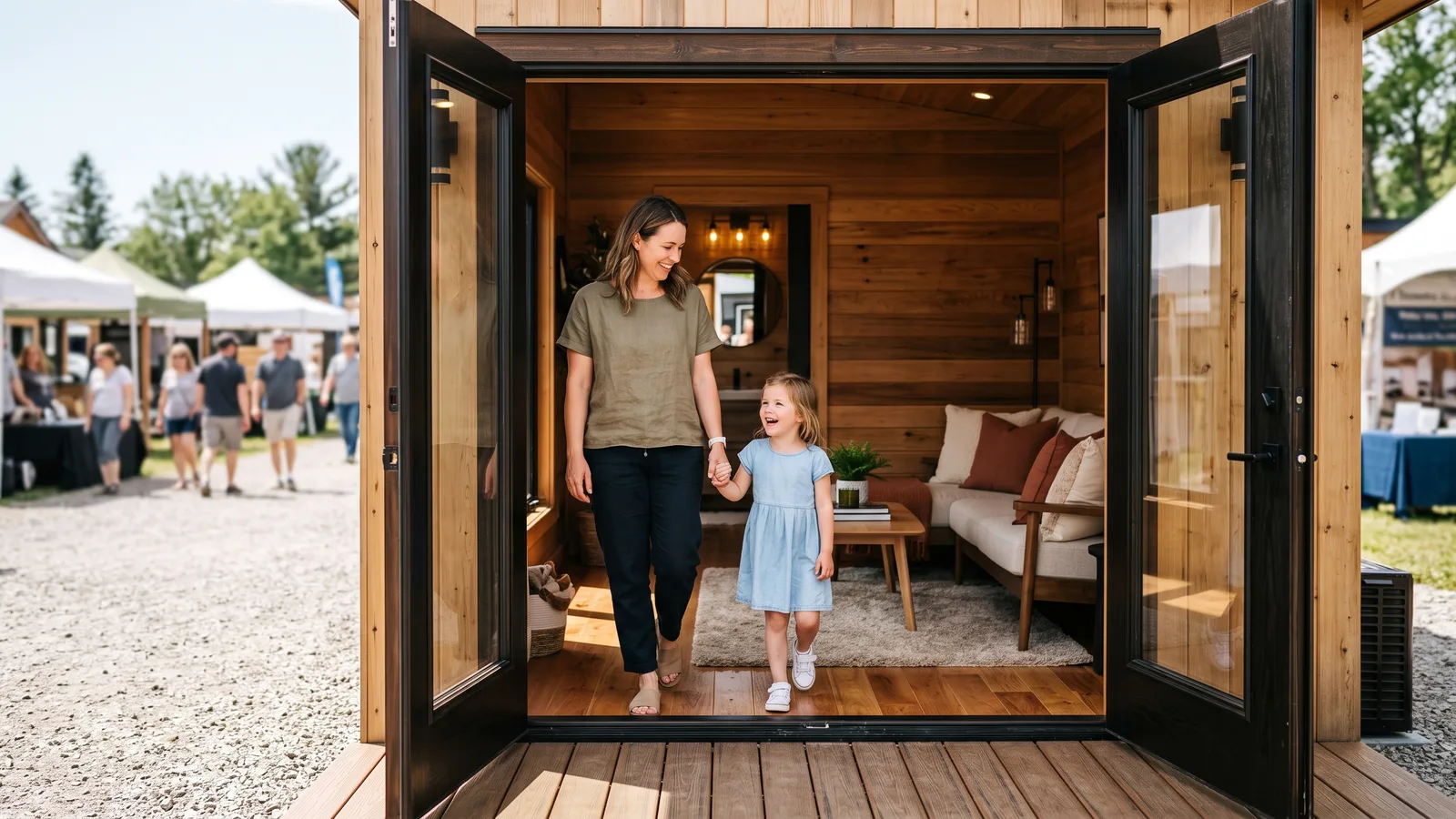
A rendering can show a homeowner what a cabana will look like from the outside, but it cannot settle the questions that only come from standing inside one, whether the ceiling feels tall enough, whether the finish material looks right up close, whether the scale actually matches what they pictured. A single display model, sited well and kept current, does that settling work automatically and can influence consultations for years after it is built.
Why a Physical Display Beats a Rendering for a Spatial Structure
Most home improvement categories sell a surface a homeowner will look at, new siding, a new roof, replacement windows. A cabana or pool house is different, it is a space someone will actually spend time inside, and spatial questions cannot be fully resolved by an image on a screen. A prospect who walks through a real display, feels the ceiling height, runs a hand along the actual counter material in a bar cabana, and notices how the light comes through the windows, resolves doubts a rendering only postpones. That tactile confirmation is unique to a trade building occupiable structures rather than surfaces applied to an existing house.
Where to Site a Display Model
The value of a display model depends heavily on where it sits, since foot traffic and context both shape how much selling work it does on its own.
A Supplier Lot or Home Show Location
Placing a display cabana at a lumber yard, pool supply dealer or a seasonal home and garden show puts it in front of homeowners who are already actively shopping for backyard projects, often the exact audience already talking to a pool builder about a matching structure. This option usually requires a partnership or a rental fee, but it reaches a concentrated, high-intent audience without the builder needing to generate the traffic itself.
The Builder's Own Property
A display model at the builder's own yard or office turns every in-person consultation into an opportunity to walk a prospect through it before or after discussing their own project. This option costs more in land and does not reach passive shoppers the way a home show location does, but it gives the builder full control over maintenance, staging and how the structure is presented, and it works as a backdrop for the kind of consistent photography that a rotating list of active job sites cannot always provide on demand.
A third option worth considering is placing the display model on a partner pool builder's property, ideally beside one of their own display pools, so the combined display reads as a finished backyard rather than two separate vendors' booths side by side. This arrangement can work well in both the United States and Canada, since it deepens the same referral relationship that already sends work in both directions, and it gives the pool builder a stronger display of their own in exchange for the space. It also puts the cabana in front of exactly the shoppers who have already committed to a pool, which is a higher-intent audience than the general foot traffic most other display locations attract.
A display model is also a photo studio
What the Display Model Needs to Demonstrate
A display model earns its cost only if it actually resolves the doubts a rendering leaves open, which means it needs to show real decisions, not just a generic structure.
- Realistic ceiling height and proportions. A display built at a scaled-down size to save on cost undermines the entire purpose, since the whole point is letting a prospect feel true-to-life scale.
- A range of finish materials side by side. Roofing, siding and counter material samples mounted where a homeowner can touch them directly answer more questions than a materials binder ever will.
- Furnished, lived-in staging. Outdoor furniture, lighting fixtures and a working ceiling fan or electrical outlet help a prospect imagine actual use rather than an empty shell.
- Visible construction quality. An accessible section showing framing or roofing detail, even briefly, reinforces the same build quality argument that matters when the resale value question comes up later in a real consultation.
In a climate with a real winter, the display model itself needs the same seasonal opening and closing routine the builder would recommend to any client, which doubles as a live demonstration of the maintenance relationship on offer rather than a separate talking point delivered only in words.
Keeping the Display Current as Materials and Trends Change
A display model that still shows five-year-old finish trends and outdated furniture works against the builder rather than for them, since it signals a business that is not keeping pace with current work. Refreshing finish samples annually, updating furniture and lighting as styles shift, and rotating in a newer feature, an updated bar counter design or a different roofline, keeps the structure functioning as a live sales tool rather than a museum piece. The same fresh material also strengthens the digital presence built around it, since current photography of the display model gives marketing a reliable, reusable source of images independent of client build schedules, and it gives winter design consultations somewhere tangible to walk a prospect through even when no active job sites are open.
Ready to talk numbers on your own pipeline?
On the strategy call, we'll lay out the plan we'd run for your business and talk through how it fits your market.
Final thought
A rendering opens the conversation, but a display model closes the gap between imagining a cabana and trusting one enough to sign a contract for it. Sited well, built to real scale and finish quality, and kept current as trends shift, a single showroom structure can influence consultations for years, functioning as both a sales tool and a standing piece of brand credibility that most competitors in this trade never bother to build. Few investments in this business keep paying back for as long.
Tagged