
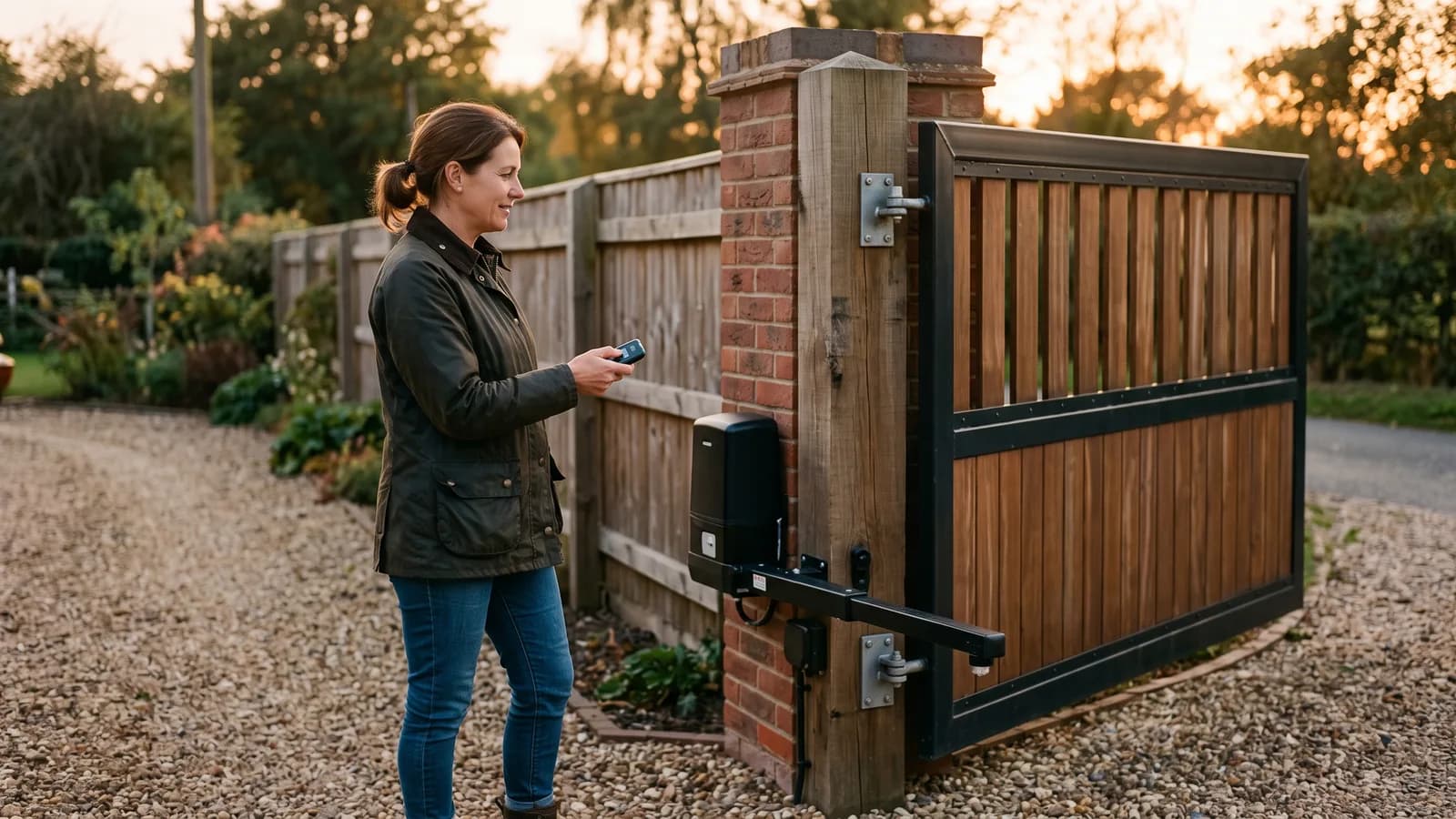
A privacy or security gate that opens itself is one of the few upgrades on a fence contract that a homeowner will actually ask for more of once they have seen it work, which makes it a real lever on average ticket size in a trade built on a high volume of comparatively smaller jobs. The common mistake is treating automation as a bolt-on mentioned near the end of the quote, after the homeowner has already anchored on a base price for a plain fence and gate. Priced and positioned correctly, it is one of the more reliable ways to raise average ticket size without changing anything about the crew, the material, or the lead flow feeding the business.
Why gate automation is a rare genuine upsell in this trade
Most of what a fence contract sells is fairly commoditized, material, linear footage, and labor, with limited room for a meaningful upgrade beyond choosing a better grade of picket or a heavier gauge of hardware. Gate automation is different because it changes daily behavior rather than just appearance. A homeowner who no longer has to get out of the car to open a driveway gate, or who can let a delivery through remotely, experiences the upgrade every single day, which is a far stronger basis for a premium price than a material upgrade the homeowner mostly stops noticing after the first week. It also pairs naturally with security, a household that already wants a fence for privacy or containment is frequently the same household thinking about who can reach the driveway, and an automated gate with a keypad or remote answers that question directly instead of leaving a manual latch as the only line of defense.
Where automation belongs in the sales conversation
Automation works best introduced as part of the initial design discussion, alongside gate placement and swing direction, rather than tacked on once a price has already been discussed. A homeowner deciding where the driveway gate goes and how it operates is already thinking about daily use, which is exactly the moment automation is easiest to justify, before the conversation has narrowed down to a single bottom-line number.
Introducing it before the base quote is anchored, not after
Once a homeowner has a specific number in mind for the base fence and gate, any addition afterward reads as scope creep, even a genuinely useful one. Raising automation earlier, while the design is still being worked out, means the eventual quote presents one complete figure rather than a lower number followed by an uncomfortable upsell attempt. This is the same sequencing discipline that works during the broader material selection consultation, where narrowing decisions in the right order keeps the homeowner engaged instead of anchored against anything added later.
Framing automation around daily convenience, not technology
The pitch that works is practical, not technical. “You will not have to get out of the car in the rain to open the gate” lands better than a description of the motor specifications or the remote system itself. Homeowners with young kids, guests who visit often, or a long driveway respond particularly well to a convenience-first pitch, since the upgrade solves a small daily annoyance they already have rather than introducing a feature they did not know to want. A short demonstration, even a video shown on a phone during the consultation, of a gate opening on approach and closing behind a vehicle does more to sell the upgrade than any verbal description, since the convenience is genuinely easier to show than to explain.
Lead with the moment, not the mechanism
What automation does to average ticket size across many jobs
A fence business runs on volume, many smaller tickets rather than a handful of large ones, which means a modest lift on average ticket size compounds meaningfully across a full season of contracts. Automation also tends to carry better margin than the base install, since the labor to add it is small relative to the material and equipment cost, which makes it a genuinely useful lever on the unit economics of a lower-ticket fence job without requiring any change to how leads are generated. It also sets up a longer relationship with the homeowner, since an automated gate is a mechanical system that eventually needs service, which feeds directly into the kind of warranty and repair revenue a plain fence rarely generates on its own. Tracking attach rate, the share of gate jobs that include automation, as its own number on the monthly scorecard, rather than folding it into overall revenue, makes it easier to see whether the sales team is actually raising the question early enough or letting it slide back into an afterthought during busy weeks.
A contractor weighing whether automation is worth building into the standard sales process for their own numbers can walk through the actual math on a strategy call, since the right answer depends on local labor cost and the equipment pricing available in a given market.
Ready to talk numbers on your own pipeline?
On the strategy call, we'll lay out the plan we'd run for your business and talk through how it fits your market.
Final thought
Gate automation earns its place on a fence contract because it changes something the homeowner experiences daily, not because it is the newest thing to offer. Introducing it early, before a base price has anchored the conversation, and framing it around convenience rather than mechanics, turns a genuine upgrade into an easy yes instead of an awkward add-on. Across a full season of contracts, that small, repeatable lift on average ticket size adds up to real money without adding a single new lead to the pipeline.
Tagged