
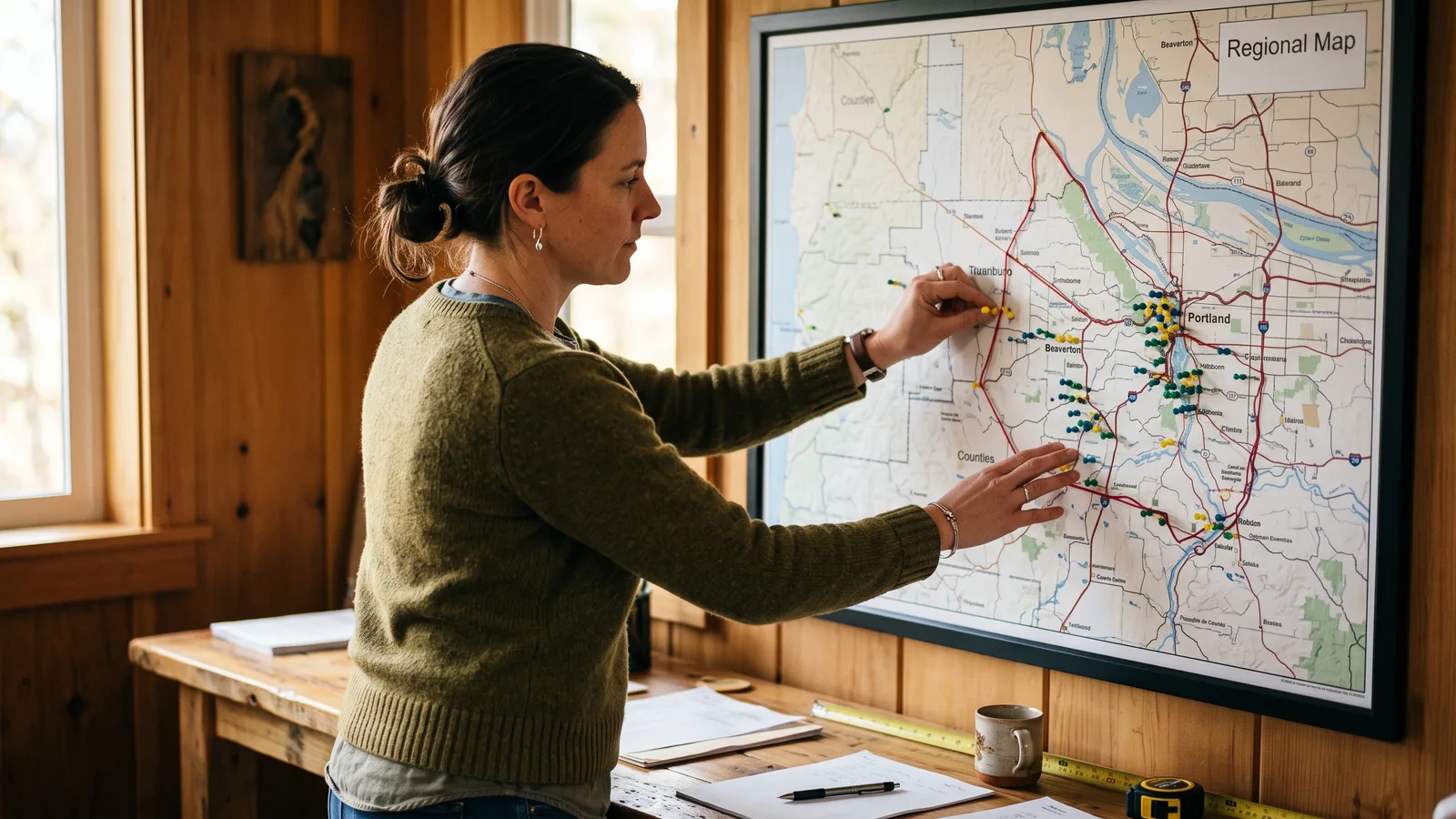
A wider service area looks like more addressable market on a map, and it is tempting to say yes to every deck lead a campaign turns up regardless of the drive. But a deck project is not a single visit, and every extra mile a crew drives gets multiplied by the number of trips the job actually requires before the margin shows up in the numbers.
Why deck projects require more site visits than a typical trade
A single deck build routinely involves an initial consultation to walk the yard and discuss design, a follow-up measurement visit once materials are decided, one or more permit-related inspection visits for footings and framing depending on the local jurisdiction, and finally the build itself, which can stretch across several days on site. A same-day repair trade might make this trip once. A deck project makes it four or five times before the crew packs up for good, which changes the math on how far away a job can reasonably sit. Homeowners association (HOA) approval, where it applies, can add yet another visit or two if the association requests a site walk-through or a revised plan before signing off, stretching an already multi-visit project even further before the first footing gets poured.
How drive time compounds across a multi-visit project
A thirty-minute drive each way does not sound significant until it is multiplied across every visit a deck project requires. A job an hour outside the usual territory can lose the better part of a productive day to travel alone once every trip is added up, time that a closer job would have spent framing or finishing instead. That lost time is real cost, even though it never appears as a line item on the estimate the way lumber or labor does. A crew paid hourly earns nothing while sitting in a truck, and a crew paid by the job still loses a productive slot that could have gone to a second, closer project on the same day.
- Consultation and measurement trips add up fastest. These early visits happen before a contract is even signed, meaning the drive time is spent on jobs that might not convert.
- Inspection visits are often unavoidable. Footing and framing inspections tied to local permitting cannot usually be skipped or combined, adding fixed trips regardless of distance.
- The build itself compounds daily. A multi-day build means the drive time is paid every single morning and evening for the length of the project.
Setting a radius around referral density, not just population
A radius drawn purely around population density can look attractive on paper while ignoring where the actual referral relationships live. Realtor and past-client referrals tend to cluster geographically, concentrated near neighborhoods a business has already built a reputation in. A tighter radius centered on that referral density often produces more profitable jobs than a wider one chasing raw population count, because those referral leads convert at a higher rate and require less paid marketing spend to reach in the first place.
Radius is a margin decision
Trade-offs of expanding into a second service area
Expanding into a new, more distant territory can make sense once a business has enough crew capacity to dedicate a team to it specifically, rather than stretching the existing crew thinner across a wider map. Treating a new area as its own small market, with its own local advertising and its own referral-building effort over time, tends to work better than simply widening the radius on existing campaigns and hoping drive time sorts itself out. A second area without dedicated capacity usually just dilutes the first one. A useful test before committing is whether the new area has enough referral or repeat-client potential of its own to eventually reduce reliance on paid leads, the same way the original territory likely did over time, rather than staying permanently dependent on ads to fill a map that was expanded for volume alone.
Communicating radius limits to leads outside the zone
A lead from outside the service radius does not have to be a dead end. A polite, honest response, explaining the business focuses on a specific area to keep response times and pricing consistent, and offering a referral to a trusted contractor in that homeowner's area when possible, protects the reputation instead of either ghosting the inquiry or accepting a job that quietly erodes the margin. Strong local project photography also naturally filters some of this at the source, since it tends to attract homeowners from the neighborhoods actually being photographed rather than from far outside them. Ad targeting settings should reinforce the same boundary rather than fighting it, since a campaign that technically reaches a homeowner two counties away only creates a lead the business will have to decline anyway.
Ready to talk numbers on your own pipeline?
On the strategy call, we'll lay out the plan we'd run for your business and talk through how it fits your market.
Final thought
A wide service radius feels like more opportunity, but a deck project's multiple site visits mean distance costs more here than it does in most trades. Set the radius around where referral relationships and crew efficiency actually live, treat expansion as a deliberate capacity decision rather than a wider net, and handle out-of-zone leads with a clear, honest boundary. The result is fewer miles driven per dollar earned, and a crew that spends its limited season building decks instead of sitting in traffic. Reviewing the radius itself once a year, against the actual drive-time data from the past season rather than the map drawn when the business first opened, keeps the boundary honest as referral density and crew size both shift over time.
Tagged