
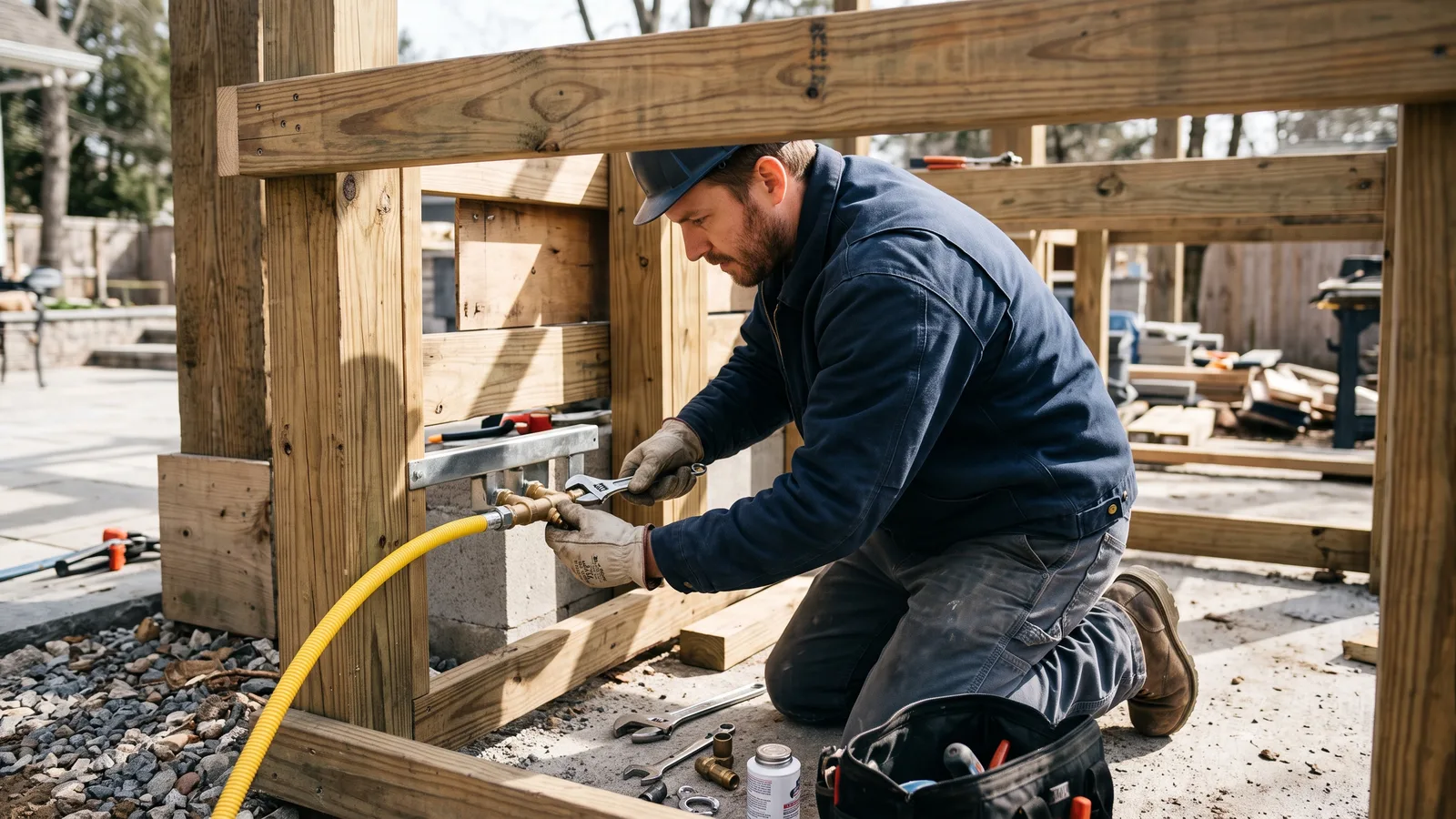
A built-in grill with a gas line and a run of task lighting is not a weekend installation, even once the concrete is cured and the island frame is set. Gas and electrical connections trigger licensed sub-trade requirements and a local permit process in nearly every municipality in the United States and every province in Canada. Marketing that skips this reality, or implies the whole build can be finished and lit in a single visit, sets up a trust problem the moment a buyer's own research turns up what the permit office actually requires.
Why gas and electrical work triggers a permit requirement
A propane or natural gas line feeding a built-in burner, and a dedicated electrical circuit feeding task lighting, an outdoor refrigerator, or a weatherproof outlet, are life-safety systems, not decorative extras. Most jurisdictions require a permit any time a gas line is extended, tapped, or connected to a new appliance, and the same is true for new outdoor electrical circuits. The permit exists to trigger an inspection: someone independent of the builder confirms line pressure, bonding, ground-fault protection, and clearances are correct before the countertop goes on top and hides the work for good.
Licensed sub-trade requirements across the United States and Canada
Requirements vary by state and by county in the United States, but gas work generally requires a licensed plumber or gas fitter, and electrical work requires a licensed electrician; a general contractor license alone often does not cover either scope. In Canada, gas work typically requires a certified gas technician working under the applicable provincial gas code, and electrical work requires a licensed electrician registered with the provincial electrical safety authority. A design-build company can manage the sub-trades and coordinate the inspection, but it cannot substitute for the license itself. Buyers researching a builder deserve a plain answer about which parts of the build the company's own crew performs and which parts are handled by a licensed sub-trade brought in specifically for that scope. A covered structure adds a separate building-permit layer on top of the gas and electrical scope, so the two conversations often need to happen together, not as an afterthought once framing starts.
What buyers research on their own before calling
A homeowner planning an outdoor kitchen searches “do I need a permit for a backyard gas line” or “outdoor kitchen electrical code” well before filling out a lead form. If a company's own marketing implies the whole project happens without inspection or oversight, the gap between what the marketing says and what the buyer's own search results say becomes a credibility problem before the first call happens. A prospective client weighing a project in the tens of thousands of dollars is not looking for the cheapest possible path around the permit office. They are looking for a builder who explains the process without hesitation, because hesitation reads as inexperience or, worse, as something being hidden.
What confidence looks like in writing
Addressing permit timelines in marketing without scaring off buyers
The goal is to fold permitting into the confidence-building content rather than treat it as a caveat buried in the contract. Service page copy, case studies, and consultation scripts can state plainly that gas and electrical work is coordinated with a licensed sub-trade and inspected before finish materials go on, framed as a quality signal rather than a delay disclaimer. Pair that with a realistic timeline: many municipalities and provinces process a straightforward residential gas or electrical permit in a couple of weeks once the application is complete, so say a design consultation happens in November for a build the following May, there is ample runway to file early and clear the paperwork long before ground can even be broken. Setting that expectation during the design-stage consultation keeps it from landing as a surprise once contracts are signed.
What happens when a buyer wants to skip the permit
Some buyers will suggest skipping the permit to save time or money, especially on a smaller island without a full roof structure. The answer should stay consistent regardless of project size: unpermitted gas and electrical work creates liability for the homeowner at resale, can jeopardize an insurance claim if something goes wrong later, and puts the builder's own license at risk. Presenting that case calmly, and holding the line every time it comes up, does more for a company's reputation than any single sale would. The same qualification conversation that checks site access is a natural place to confirm the buyer understands the permit requirement before a design fee is ever collected.
- Explain it once, early. Cover the permit and sub-trade process in the first consultation, not in the fine print of the signed proposal.
- Name the sub-trade by role, not by favor. Tell the buyer which licensed gas technician or electrician is coordinating that portion of the work and how the inspection fits the schedule.
- Hold the line on requests to skip it. A firm, calm explanation of the resale and insurance risk closes the conversation faster than an argument does.
Ready to talk numbers on your own pipeline?
On the strategy call, we'll lay out the plan we'd run for your business and talk through how it fits your market.
Final thought
The permit process is not a competitive disadvantage, it is one of the few parts of an outdoor kitchen build a homeowner can independently verify after the fact. Treating it as a selling point instead of paperwork, and being specific about which licensed sub-trade handles which scope, differentiates a builder doing the work correctly from one who is not, and it holds up under the buyer's own research long after the sales conversation has ended.
Tagged