
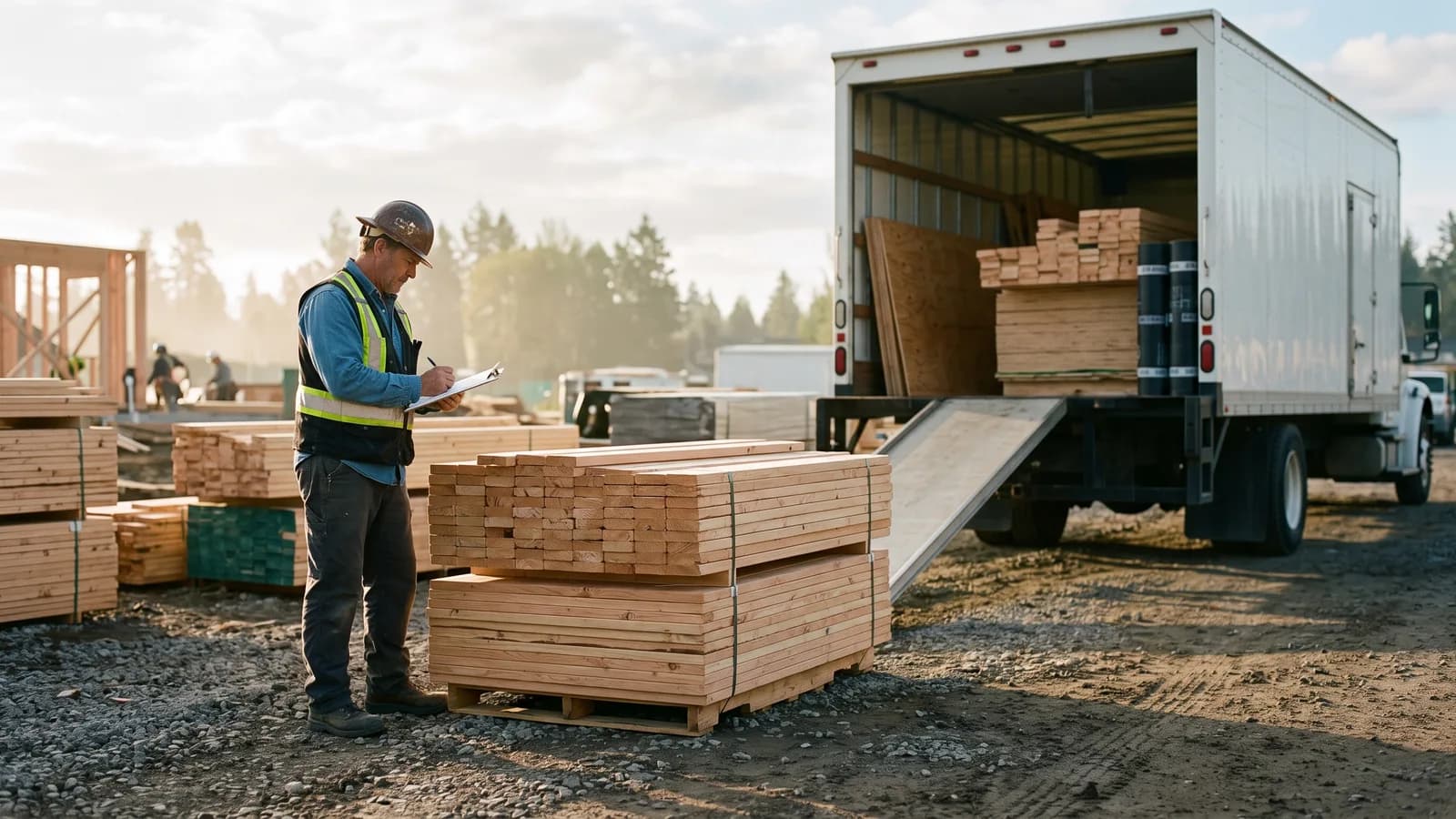
A cabana build depends on framing lumber, roofing components and sometimes prefabricated kit pieces arriving on a predictable schedule, not simply at a competitive price. A supplier who quotes a modestly lower price but runs two weeks slower on delivery can end up costing far more once the crew sits idle waiting on materials that should already be on site. Evaluating dealer and supplier relationships around lead time, not just unit cost, is one of the most underrated operational decisions in this trade.
Why Lead Time Matters More Than Unit Price for This Trade
A short, fixed build season already leaves little room for slack. In a trade where a materials delay simply pushes a single day job back a few days, an unreliable supplier is an inconvenience. On a cabana project already scheduled tightly against a limited crew's capacity, a two-week delay on roofing materials does not just push that one project back, it pushes every project scheduled after it, because the crew has nowhere else productive to go while they wait. The math rarely favors the cheaper, slower supplier once idle labor and cascading schedule slippage are counted honestly against the modest savings on unit price.
What to Evaluate Before Committing to a Supplier
Price still matters, but it should be evaluated alongside a small set of operational questions that predict how a supplier actually performs during the busiest weeks of the season.
Delivery Reliability History
Asking a prospective supplier directly about their on-time delivery rate during peak season, and asking other local builders about their actual experience rather than relying on the supplier's own claim, surfaces the real pattern faster than a sales conversation ever will. A supplier who is candid about occasional delays during their busiest weeks is often more trustworthy than one who promises perfect reliability with no qualification at all.
Willingness to Hold Seasonal Stock
Some suppliers will pre-commit a portion of roofing or framing stock to a builder ahead of the season in exchange for a forecasted order volume, which removes the risk of competing with every other local contractor for the same materials during the busiest weeks. This arrangement usually requires the builder to commit to a rough seasonal volume estimate in advance, which rewards builders who have already done the capacity and backlog planning to produce a credible number.
Lumber and roofing pricing can also move differently on either side of the border depending on currency and trade conditions in a given season, and a supplier relationship built on a single-country supply chain carries more schedule risk when that market tightens. A Canadian builder near a border region sometimes finds a United States supplier can fill a gap when local stock runs short, and the reverse holds true as well. Building at least a loose familiarity with a cross-border option before it is needed, rather than scrambling to find one during a shortage, is a small amount of extra work that pays off exactly when the primary domestic supplier cannot.
Ask about their worst week, not their best
Building a Backup Supplier Relationship
Relying on a single supplier for a material category creates a single point of failure that a busy season will eventually expose. Maintaining an active, if smaller, relationship with a second roofing or framing supplier, even one used only occasionally, keeps that backup channel functional rather than theoretical when the primary supplier hits a shortage or a delivery failure. A backup relationship that has never actually processed an order is far less reliable in a real emergency than one that gets used periodically enough to stay current.
Electrical fixture suppliers deserve the same scrutiny as the framing and roofing side, even though the dollar volume is usually smaller. A mini-split unit, outdoor-rated lighting, or a specific panel component on backorder can hold up a final electrical inspection just as easily as a missing roofing shipment holds up a dry-in date, and a builder who only maintains lead-time relationships on lumber and shingles is still exposed on the systems side of the build.
Negotiating Priority During Peak Build Season
Builders who commit to a predictable order volume, communicate that forecast early in the year, and pay reliably on agreed terms are usually in a strong position to negotiate priority handling during the weeks when every local contractor is placing the same order at once. That priority is worth more than a marginal price discount during the exact weeks when a delay does the most damage to the season's schedule. Tracking supplier performance alongside material warranty terms and logging delivery history inside whatever system coordinates the project overall makes it easier to have this negotiation from a position of data rather than memory when the relationship comes up for renewal.
- Forecast volume early. A supplier who knows what to expect from a builder months ahead can plan stock accordingly instead of reacting to a surprise order.
- Pay on agreed terms without exception. Reliable payment history is one of the simplest ways to earn priority treatment when demand spikes.
- Put the priority commitment in writing. A verbal understanding tends to fade under pressure during the supplier's own busiest weeks, a written agreement holds up better.
Ready to talk numbers on your own pipeline?
On the strategy call, we'll lay out the plan we'd run for your business and talk through how it fits your market.
Final thought
A cabana schedule already runs tight against a short build season, which means an unreliable supplier does more damage here than in almost any other residential trade. Evaluating dealer relationships on delivery reliability and seasonal stock commitment, maintaining an active backup supplier, and negotiating priority through forecasted volume and dependable payment all protect the schedule far more than chasing the lowest unit price ever could. The cheapest material quote is rarely the cheapest way to build a season.
Tagged