
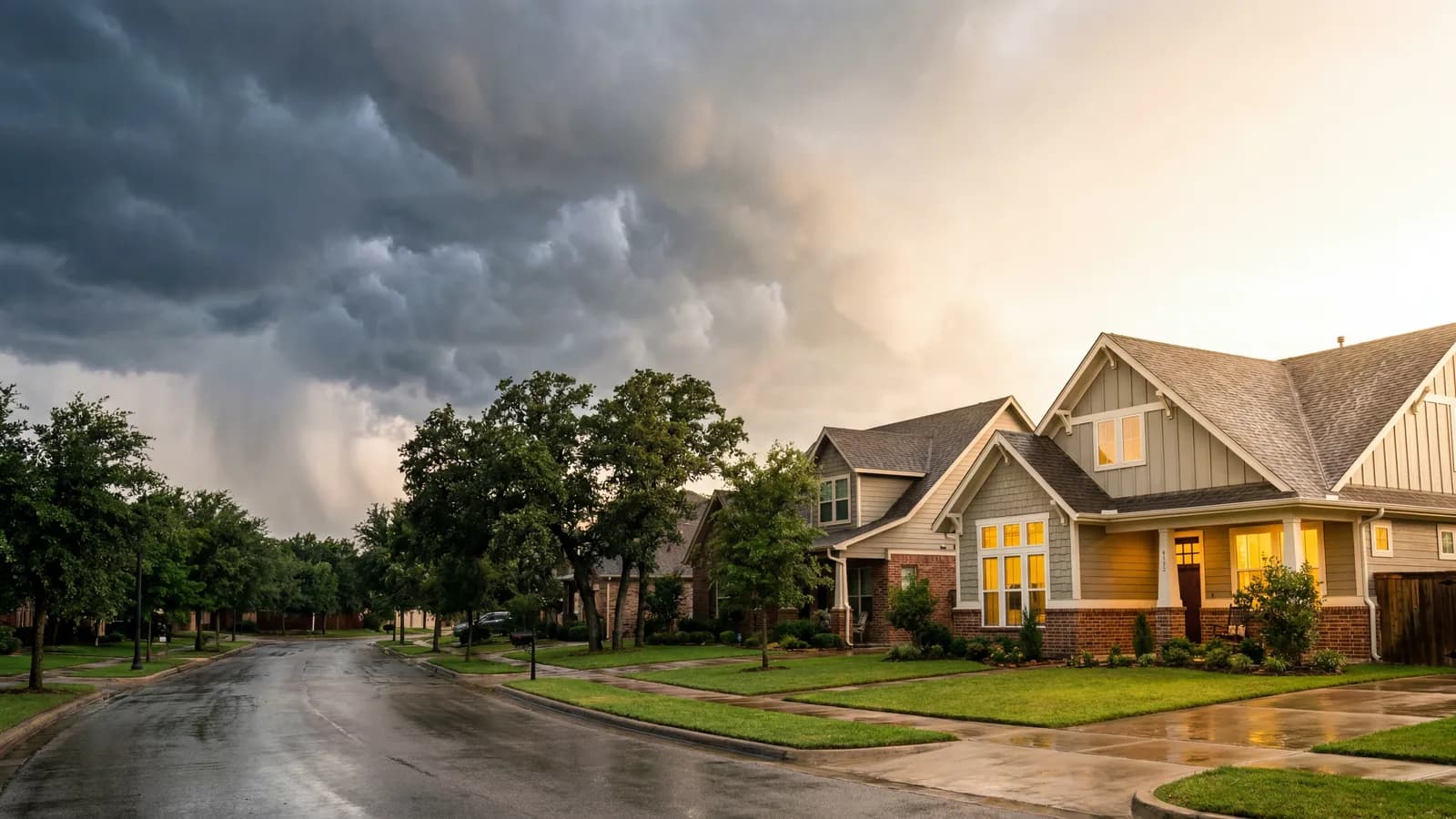
Two opposing marketing philosophies dominate the residential window & door replacement industry. Storm-chase marketing rides weather events, hailstorms, ice storms, severe wind, to capture concentrated post-event demand. Evergreen marketing builds a year-round predictable lead flow independent of weather. Both have a legitimate place in a contractor's mix. Treating them as interchangeable, or running both through the same operational systems, is one of the most expensive strategic mistakes we see.
How storm-chasing actually works
After a significant weather event in a service area, demand for window replacement, glass repair, and storm-related damage assessment spikes for 2-12 weeks. Insurance claims drive a meaningful share of the demand; uninsured damage drives the rest. Contractors who specialize in this:
- Run real-time geo-targeted ads activated within hours of the event, with creative tied to the specific storm.
- Send canvassing teams door-to-door in affected neighborhoods.
- Set up satellite operations or partner with local installers in the impacted region.
- Operate aggressively on insurance-claim partnerships.
For specialized storm-chase contractors, the unit economics can be excellent, concentrated demand, less price sensitivity (insurance is paying), shorter sales cycles. The trade-offs are heavy: travel costs, regulatory complexity, reputation risk, and dependence on weather variance.
How evergreen marketing actually works
Evergreen marketing assumes consistent demand for window replacement exists year-round in any service area, driven by:
- Old windows reaching end-of-life (typical lifespan 15-30 years).
- Energy-efficiency upgrade decisions.
- Aesthetic / renovation choices.
- Pre-listing-the-house upgrades.
- Damaged or broken windows from non-storm causes (kids, falling branches, gradual seal failure).
The contractor builds Meta + Google + Local Service Ad + SEO + direct mail + referral programs producing a steady weekly lead flow. Volume per week is lower than a storm-chase spike, but predictable across the calendar.
The mistake of treating them as interchangeable
Most generalist contractor marketing approaches lump these together. The result is operations that handle neither well:
- Storm-chase ad creative running during non-storm periods, where it under-performs because the urgency is artificial.
- Evergreen lead-response systems applied to storm-chase volume, where 2-day callback is fatal because adjusters have already toured the neighborhood and signed homeowners to competitors.
- Crew capacity planned for storm-chase peaks running idle during evergreen off-cycles.
- Brand positioning that tries to own both, leading to a confused buyer experience where neither value proposition lands cleanly.
The reputation risk asymmetry
The strategic question for most contractors
For a residential window & door replacement contractor with $1M-$10M revenue, the right base strategy is almost always evergreen. The reasons:
1. Predictable cash flow supports growth
Storm-chase volume comes in lumpy spikes. Cash flow management for a lumpy revenue contractor is brutal, fixed costs (rent, insurance, payroll) keep ticking during dry spells.
2. Crew utilization economics are better
Two install crews running 80% utilization year-round on evergreen demand are dramatically more profitable than three crews running 110% during storm spikes and 40% during normal periods.
3. Brand equity compounds
Evergreen marketing builds reviews, referrals, repeat family / neighborhood traffic, and SEO equity that accumulate across years. Storm-chase doesn't, each storm starts with a fresh effective brand awareness in the new service zone.
4. Regulatory and reputation surface area is smaller
Evergreen contractors don't generate the canvassing- regulation issues, the insurance-claim-fraud allegations, or the AG-investigation patterns that storm-chase operations sometimes attract.
When storm-chase belongs in your mix
That said, storm-chase has a legitimate role for evergreen contractors when:
- A storm hits inside your existing service area, opportunistic response, not specialized chase.
- You have crew capacity, evergreen volume slowing seasonally, and a major event creates short-term concentrated demand.
- Your insurance-claim infrastructure is genuinely strong, adjusters relationships, scope-documentation discipline, xactimate experience.
- You can mobilize an ethical, license-clean response within 72-96 hours.
In those cases, opportunistic storm-response on top of an evergreen base is sound strategy. Pure storm-chase is a different business with different fundamentals.
Building the evergreen engine first
For most contractors, the right sequence is:
- Build evergreen lead-gen first. Meta + Google Search + Local Service Ad + GBP + retargeting. Steady weekly flow. See channel mix.
- Wire the response infrastructure. Sub-2-minute response, AI receptionist, pre-qualification. Lead-response math.
- Layer brand-equity assets. Reviews, referral program, blog content, GBP authority. GBP optimization here.
- Add opportunistic storm response. When weather creates concentrated local demand, you have the machine to mobilize quickly without rebuilding from scratch.
The compounding advantage
The hybrid trap
The strategic position contractors most often misjudge is the “hybrid”: trying to run dedicated storm- chase operations alongside evergreen, splitting budget and operational focus. Almost always, the result is two sub-scale operations rather than one strong one. Pick the primary engine, build it to scale, and treat the secondary approach as opportunistic only.
80/20
Recommended evergreen vs storm-chase split for most residential window and door contractors with $1M-$10M revenue. The 20% storm capacity is opportunistic capability layered onto an evergreen engine, not a parallel operation.
Ready to talk numbers on your own pipeline?
On the strategy call, we'll lay out the plan we'd run for your business and talk through how it fits your market.
Final thought
Storm-chase and evergreen are different businesses masquerading as the same business. For most residential window & door replacement contractors building sustainable growth, evergreen is the right primary strategy, predictable cash flow, brand equity that compounds, lower regulatory risk, better unit economics across the calendar. Storm response is a capability to layer on top, not a strategy to build around. Get the order right and the next decade of growth gets dramatically easier.
Tagged