
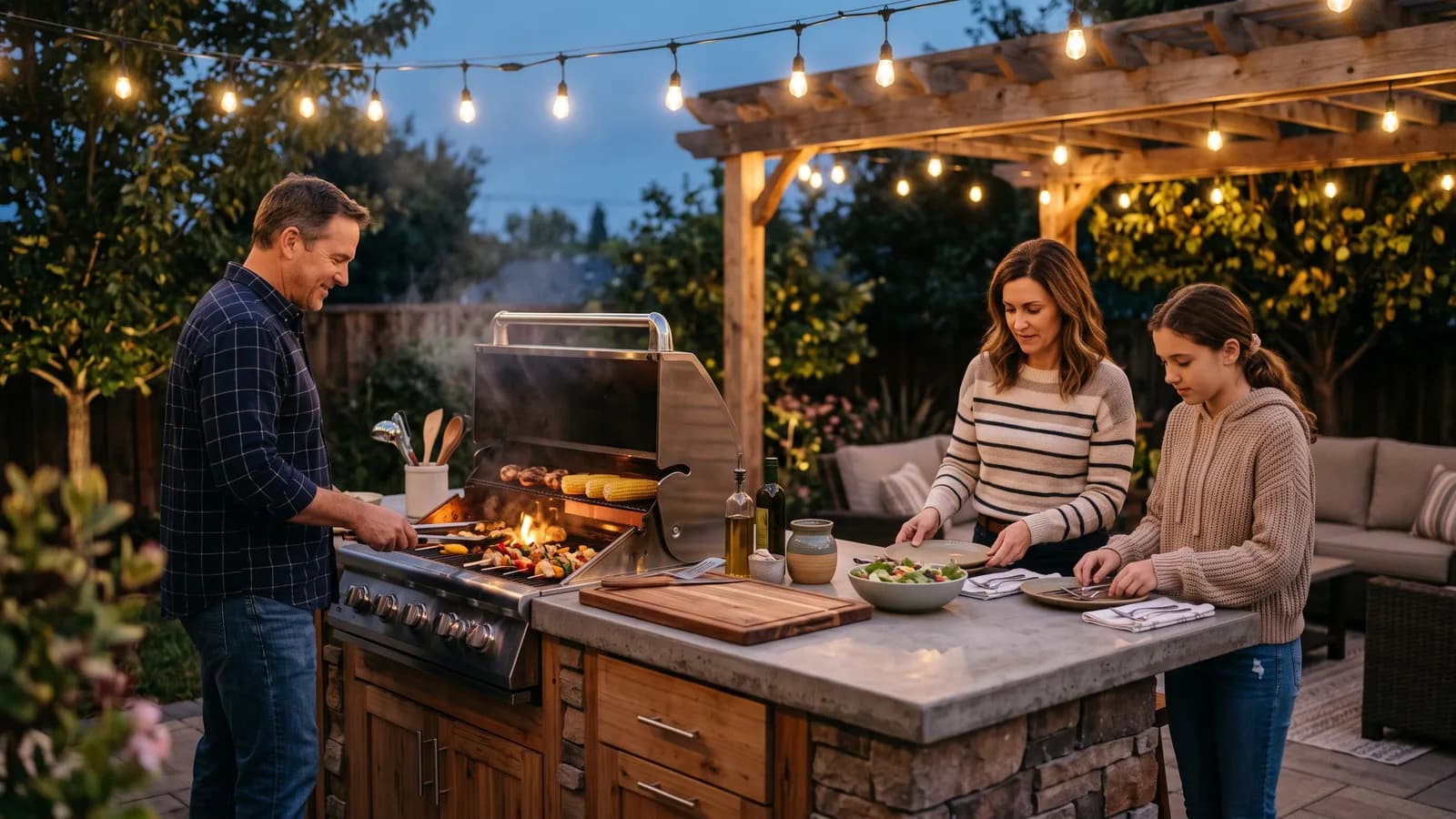
Feature-first creative describing cabinet materials and appliance specifications rarely stops a scroll the way a lived-in entertaining scene does, because the outdoor kitchen purchase is ultimately about the life a buyer imagines having in that space. Creative angles built around entertaining moments, transformations, and seasonal use consistently outperform spec-sheet framing for this category.
Why feature-first creative underperforms for this trade
A weather-rated cabinet box, a marine-grade hinge, or a specific countertop material are things a buyer genuinely needs to know eventually, but nobody scrolling through a social feed stops on a photo of a cabinet interior to learn about hinge hardware. Feature specifications answer questions a buyer has already decided to ask, which means they belong later in the funnel, on a service page or in a consultation, not in the first three seconds of an ad that has to earn attention from someone who was not thinking about their backyard a moment ago. Creative that leads with specifications is essentially skipping straight to the part of the conversation a cold audience has not earned yet.
Entertaining-lifestyle angles that convert attention into inquiries
The angles that consistently earn a stopped scroll all center on a moment rather than a material: a family gathered around a lit island at dusk, a backyard mid-party with the grill in use, a couple cooking together on a weekend evening. These images sell the outcome, the life a buyer pictures having once the project is done, rather than the components that get them there. The specification content still matters, it just belongs downstream, in the landing page and the consultation, once the ad has already done its job of earning the click.
Before-and-after transformation creative
A side-by-side or sequential before-and-after, an unused, empty patch of yard next to the finished island in use, performs well because it makes the outcome concrete without requiring the viewer to imagine anything. This angle works especially well for buyers who are still in an early research phase, since it plants the idea that their own unused yard space could become something similar, without asking for a decision yet.
Masonry builds tend to produce the most dramatic before-and-after creative, since the transformation runs from bare dirt or a crumbling patio slab to a finished stone structure, a visible arc that photographs well across every stage. Modular island projects transform faster, often installed in a day or two, so the more effective creative there is less about the multi-week build arc and more about the immediate transformation, an empty corner of the patio one week and a finished, in-use island the next. Both stories work, they just need to be told on the timeline that matches how each construction method actually unfolds.
Seasonal entertaining moments as ad hooks
Creative that ties to a specific entertaining occasion, a graduation party, a summer holiday weekend, a fall gathering under string lights, tends to outperform generic lifestyle shots because it gives the viewer a specific reason this matters right now rather than a vague someday. In the United States and Canada alike, this seasonal framing should shift with the calendar, warm-weather entertaining creative through the build season, and cozier evening or holiday gathering scenes during the design season when a buyer is planning for next year rather than building this week.
Save the spec sheet for later
A rendering, however polished, rarely performs as well as a real finished-project photograph in this creative mix either. A rendering reads to a scrolling viewer as a concept rather than proof, and this category sells on proof of a life already being lived outdoors. Renderings still have a role, in the consultation itself once a buyer is already engaged, but the cold-audience ad slot belongs to real photography of a real family using a real finished island.
Matching creative to the landing page it feeds
An entertaining-lifestyle ad that clicks through to a page dominated by technical specifications creates a jarring handoff, the buyer clicked because of a feeling and landed on a feature list. The landing page should open with the same lifestyle framing the ad used, project photography and a short description of the experience, before it moves into the practical detail a buyer needs once they are already engaged. This same logic should carry into how retargeting is sequenced after the first click, since a buyer who has already seen the lifestyle creative is ready for more specific content on the second or third touch, not a repeat of the same opening hook. Planning the photo shoot for a finished project with this creative strategy in mind, capturing lived-in moments and not just clean empty shots of the island, keeps the ad pipeline stocked with the material that actually performs.
Whether this lifestyle-first approach needs to carry the entire acquisition strategy on its own, or work alongside search demand a buyer generates themselves, depends on the market and the stage of demand. The channel mix question is worth answering separately, but regardless of the split, the creative itself should lead with the life the buyer imagines, not the parts list behind it.
- Lead with a moment, not a material. A lit, in-use island earns attention that a cabinet interior photo never will.
- Use transformation creative for cold audiences.An empty-yard-to-finished-island sequence makes the outcome concrete without asking for a decision yet.
- Save specifications for warmer audiences.Construction and material detail belongs on retargeting and the landing page, not the first impression.
Ready to talk numbers on your own pipeline?
On the strategy call, we'll lay out the plan we'd run for your business and talk through how it fits your market.
Final thought
An outdoor kitchen is sold on the life it makes possible long before it is sold on how it is built. Creative that respects that order, lifestyle first, specifications once a buyer is already leaning in, consistently earns more attention and more qualified clicks than creative that tries to make the case for cabinet hardware to someone who was not thinking about their backyard a second ago.
Tagged